The Hidden Palaces of Orchha and Mandu: Discovering Madhya Pradesh’s Most Spectacular Heritage Trail
While the white marble monuments of Agra and the pink sandstone fortresses of Rajasthan draw millions of international travelers each year, the true heart of India’s royal history beats silently in Madhya Pradesh. Far from the crowded tourist corridors, the hidden palaces of Orchha and Mandu offer an unparalleled journey through time. These two ancient citadels, separated by the vast expanses of the Malwa plateau and the rugged Vindhya hills, form one of the most spectacular heritage trails in Central India.
From the dramatic, mist-shrouded ruins of Mandu—perched precariously on a mountain ridge—to the towering, river-facing spires of Orchha, this trail captures the essence of a bygone era. It is a world of architectural experimentation, where Islamic dome engineering seamlessly blended with Rajput courtyard designs, and where legendary tales of romance, betrayal, and spiritual devotion are carved into every stone block. This comprehensive travel guide explores the hidden architectural gems, historical legends, and scenic routes of the Orchha-Mandu heritage trail to help you organize a flawless, deeply enriching exploration with SortMyTrip.
Orchha: The Riverside Fortress of the Bundelas
Our heritage trail begins on the banks of the pristine Betwa River in the historic region of Bundelkhand. Founded in 1531 by the Bundela Rajput chief Rudra Pratap Singh, Orchha—which literally translates to "hidden place"—was established as a heavily fortified capital protected by dense forests and twisting river bends. Today, it remains an remarkably intact medieval gem, frozen in time and untouched by rapid modernization.
The Architectural Marvel of Jehangir Mahal
Towering over the river island complex, the Jehangir Mahal is a striking masterpiece of Indo-Islamic architecture. Built by the local ruler Raja Bir Singh Deo to commemorate the single-night visit of the Mughal Emperor Jehangir, this multi-storied palace represents a unique pinnacle of architectural synthesis.
The structure features a classic square courtyard layout traditional to Hindu fortresses, but it is dramatically embellished with grand Mughal domes, delicate stone jali screens, and complex turquoise tiled brackets. As you climb up the narrow, labyrinthine stone staircases to the upper balconies, you are rewarded with sweeping panoramic views of the dense surrounding forest canopy and the roaring waters of the Betwa River.
Raj Mahal: The Seat of Divine Art
Located right next to Jehangir Mahal within the main fort enclave, the older Raj Mahal features a plain, austere exterior designed to withstand heavy military siege. However, stepping across its threshold reveals a vibrant internal world.
The inner royal chambers are completely adorned with magnificent, preserved 16th-century murals and frescoes. Utilizing completely natural vegetable and mineral dyes, these ancient paintings vividly depict complex scenes from the Hindu epics Ramayana and Mahabharata, alongside lively portraits of Bundela court life, royal hunting expeditions, and celestial dancers.
Rai Praveen Mahal: Built for a Muse
Tucked away in the neatly landscaped Anand Mahal gardens, this double-storied clay and stone villa was specially constructed for Rai Praveen. She was a legendary 16th-century poetess, highly gifted classical musician, and courtesan who completely captivated Raja Indramani with her intellect and beauty. The structure is carefully designed to stay naturally cool during the peak of the intense central Indian summer, featuring cooling underground tunnels, decorative fountains, and stone niches carved to resemble wind-catching tree leaves.
The Chhatris (Royal Cenotaphs) on the Betwa Bank
No visit to Orchha is complete without a slow walk down to the Kanchana Ghats along the Betwa River. Here, fourteen massive stone Chhatris, or memorial cenotaphs, stand in a majestic row, dedicated to the deceased rulers of the Bundela dynasty.
Resembling towering temple spires rather than conventional tombs, these structures create a dramatic skyline. Photographers and history lovers should aim to view them across the water during the golden hour, when the setting sun bathes the ancient stone carvings in a deep, radiant orange glow.
Mandu: The City of Joy and Floating Palaces
Traveling southwest across the fertile plains of Madhya Pradesh brings us to the historic Malwa plateau, where the dramatic tabletop fortress of Mandu rests. Perched safely on a natural rock ridge overlooking the vast Narmada Valley, Mandu was renamed Shadiabad—The City of Joy—by its medieval rulers. Unlike the warrior-like atmosphere of Orchha, Mandu is a site dedicated to poetry, romantic architectural indulgence, and sophisticated water management systems.
Jahaz Mahal: The Ship That Never Sails
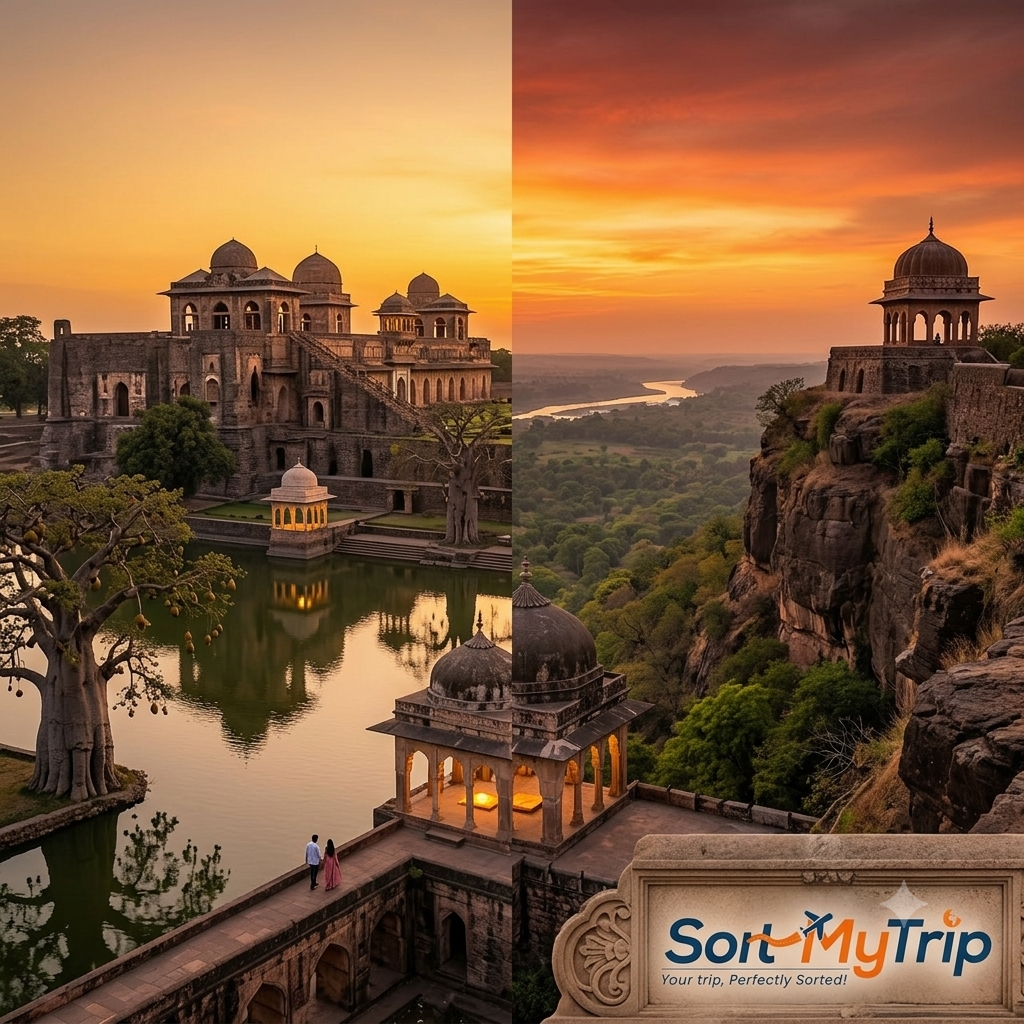
The undisputed crown jewel of Mandu’s historic architecture is the Jahaz Mahal, or Ship Palace. Constructed in the late 15th century under the rule of Sultan Ghiyas-ud-din Khilji, this narrow, 120-meter-long double-storied palace is built over a thin strip of land flanked by two massive artificial lakes: the Munj Talao and the Kapur Talao.
When the heavy monsoon rains fill these reservoirs, the stone palace appears to float gracefully on the water like a massive royal ship. The roof features open pavilions, private terrace pools, and spiral water channels designed to cool the building naturally, showcasing the unmatched hydrological engineering of the era.
Hindola Mahal: The Swinging Palace
Located a short walk from Jahaz Mahal, the Hindola Mahal is a grand audience hall famous for its extremely thick, sloping outer side walls. This unique 77-degree architectural incline creates a striking optical illusion, making the massive stone building appear to sway gently like a swinging royal cradle. The interior features a wide, open hall supported by grand pointed arches that reflect the clean, unadorned structural beauty of early Afghan construction techniques.
The Royal Love Story: Roopmati’s Pavilion and Baz Bahadur’s Palace
High up on the southernmost edge of the mountain ridge, looking down over the winding silver thread of the Narmada River, stands Rani Roopmati’s Pavilion. Originally built as an elite military watchtower, it was extensively modified into a beautiful residential palace by Sultan Baz Bahadur, the last independent ruler of Mandu, for his consort, Rani Roopmati.
Roopmati was a legendary classical singer of unmatched beauty who agreed to live in Mandu on one condition: she must be able to see her revered Narmada River every morning before taking her meals. The pavilion features delicate open arches and stone chatris on its roof where the queen would offer her morning prayers facing the river valley. Below this tower sits Baz Bahadur’s Palace, filled with wide, sun-drenched courtyards, acoustics-optimized singing halls, and deep rainwater cisterns that once echoed with the couple's musical duets before their reign was tragically ended by a Mughal invasion.
Combining Two Worlds: The Route and Road Trip Experience
Connecting Orchha and Mandu into a single, comprehensive travel itinerary offers an incredible road trip experience across the diverse geography of Madhya Pradesh.
Traveling the Trail
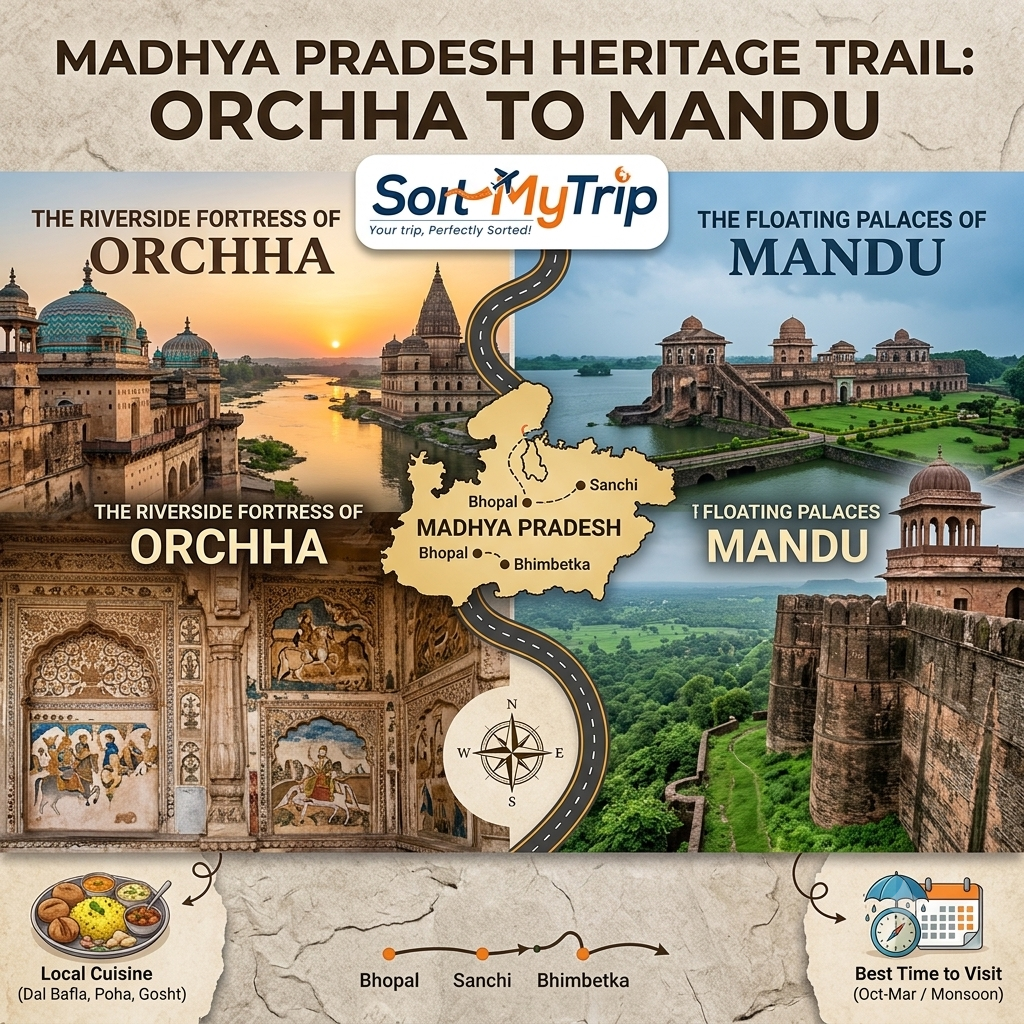
The distance between Orchha and Mandu is approximately 530 to 550 kilometers. While it is possible to cover this distance in a single, intense 10-hour drive, the best way to experience the trail is by breaking up the journey. This approach allows you to stop and explore fascinating cultural and geographical highlights along the way.
Ideal Midpoint Stops
-
Bhopal: The state capital offers a wonderful blend of historic mosques, modern arts centers, and scenic lakes. It serves as a perfect city stopover for a comfortable night’s rest.
-
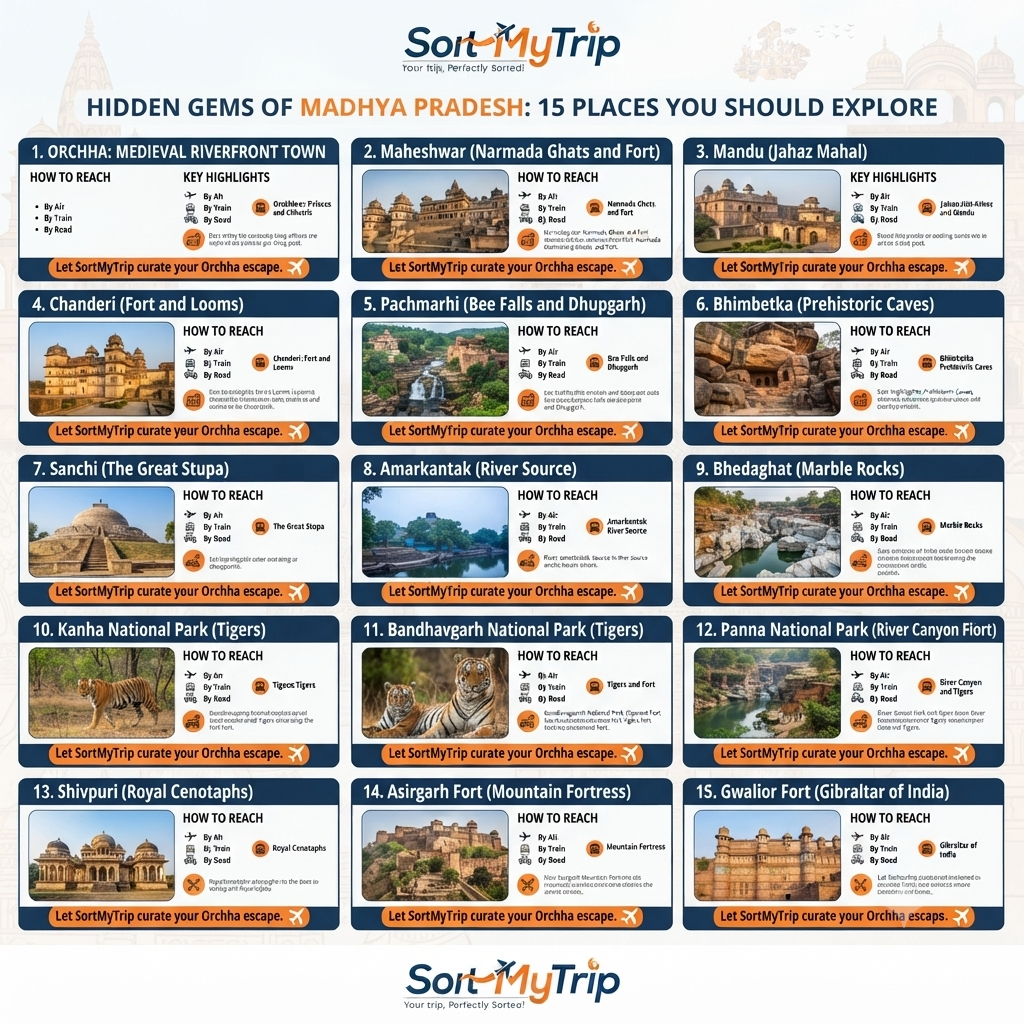
Sanchi Stupa: Located just a short detour from the main highway, this UNESCO World Heritage Site houses some of the oldest and most beautifully preserved stone Buddhist structures in the world, dating back to the 3rd century BCE.
-
The Rock Shelters of Bhimbetka: Tucked deep within the Vindhya range, these ancient caves contain prehistoric rock paintings created by early human hunter-gatherers over 10,000 years ago, offering a profound glimpse into humanity’s earliest creative artistic expressions.
Practical Travel Information for the Heritage Trail
To ensure a smooth, rewarding, and culturally respectful journey through Central India, keep these essential travel details in mind:
Best Months to Explore Central India
The absolute best time to explore the Orchha and Mandu heritage trail runs from October to March. During these winter months, the weather remains pleasantly cool and dry, creating ideal conditions for walking through the expansive, open-air palace complexes.
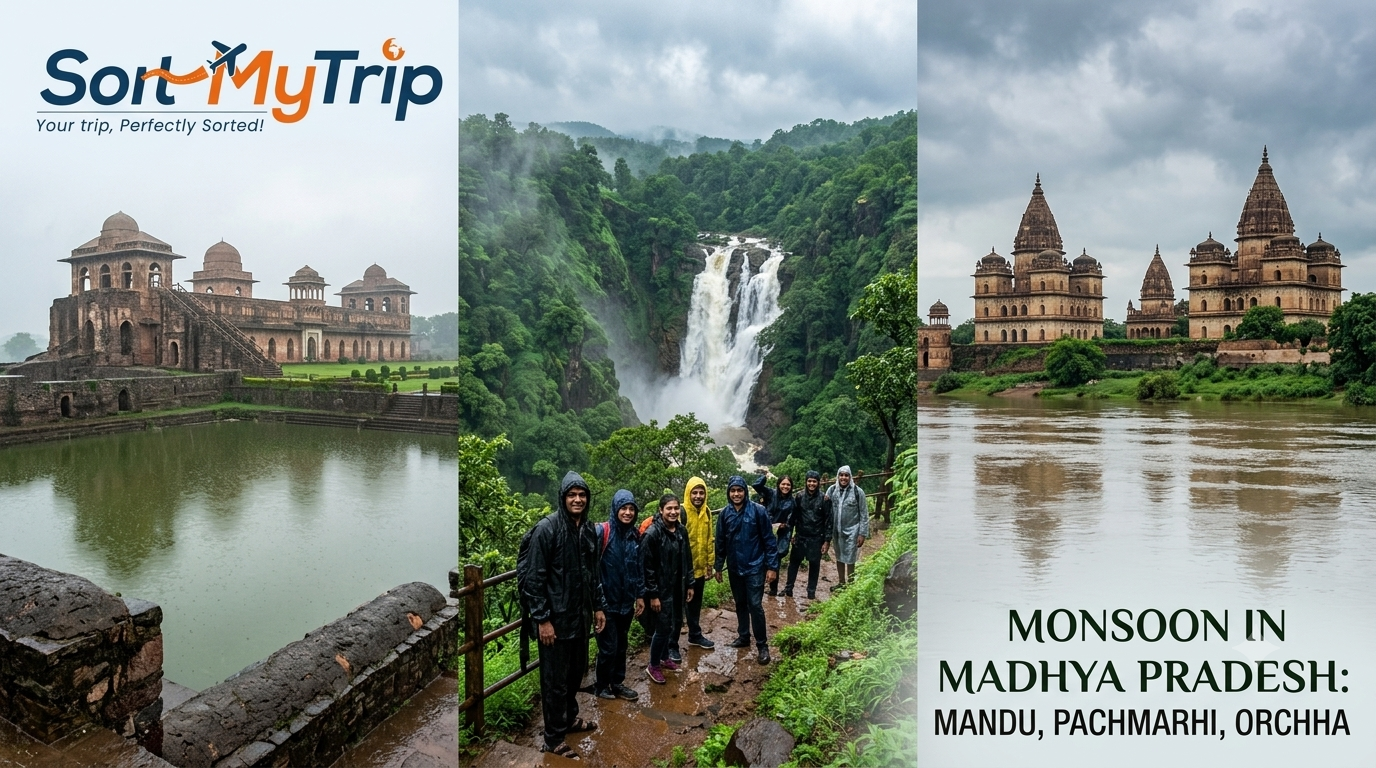
Alternatively, visiting Mandu during the heavy monsoon season (July to September) offers an entirely different, incredibly romantic experience. The dry surrounding valleys transform into lush, emerald-green landscapes, and the old stone lakes fill completely, bringing the true floating character of the Jahaz Mahal to life.
Local Cuisine Highlights
This heritage trail is an absolute paradise for food lovers, showcasing a unique mix of culinary traditions. In the northern Bundelkhand region around Orchha, make sure to try authentic Bundeli Gosht or rich, ghee-laden lentil dishes paired with Thaggu ke Laddu.
In the southern Malwa region around Mandu, do not miss the chance to indulge in Dal Bafla—steamed and baked wheat balls dipped in pure clarified butter and served with spicy lentil curries—alongside sweet Mawa Bati and the famous, spiced Indori Poha for a perfect morning breakfast.
Photography and Sightseeing Guidelines
Both Orchha and Mandu feature sprawling archaeological sites that require substantial walking over uneven stone steps and dirt paths. Be sure to wear sturdy, comfortable walking shoes and carry a reusable water bottle.
To capture the best architectural shots without the midday glare or crowds, aim to arrive at the major palaces right when the gates open at sunrise. Most heritage sites allow conventional photography, but using professional tripods or commercial drone equipment requires prior written permission from the Archaeological Survey of India (ASI).
Plan Your Heritage Journey with SortMyTrip
Uncovering the hidden history, grand palaces, and romantic legends of Orchha and Mandu requires meticulous, expert travel planning. Coordinating a multi-city route across Madhya Pradesh involves several intricate logistics, from booking heritage boutique hotels near the monuments to securing reliable private transportation for long highway drives and arranging expert local guides who can bring the ancient stone carvings to life with authentic storytelling. That is exactly where SortMyTrip comes in to make your journey completely seamless.
SortMyTrip specializes in creating deeply immersive, custom-tailored historical and cultural itineraries designed around your specific travel preferences. Whether you are looking for a comprehensive 7-day royal tour through Central India’s finest palaces, a romantic photography-focused weekend escape to the ruins of Mandu, or a comfortable family vacation complete with private car rentals and handpicked luxury stays, SortMyTrip manages all the operational details flawlessly.
When you trust your central Indian exploration to SortMyTrip, you unlock an array of premium travel benefits:
-
Direct bookings at handpicked heritage hotels, royal palaces-turned-resorts, and luxury tented camps.
-
Premium, well-maintained private vehicles with experienced outstation drivers who know the highways and local routes inside and out.
-
Curated detours to nearby iconic attractions, including the UNESCO sites of Sanchi and Bhimbetka, or boat safaris through the marble rocks of Bhedaghat.
-
Fully transparent, upfront pricing with no hidden fees, backed by 24/7 dedicated travel support throughout your trip.
Stop reading about India's forgotten royal history and step straight into it. Reach out to the destination experts at SortMyTrip today to customize your perfect Orchha and Mandu heritage package, and get ready to experience the timeless magic of Madhya Pradesh.
.png)