Why Mandu is Madhya Pradesh’s Most Romantic Forgotten City
When travelers dream of romantic destinations in India, their minds almost instantly drift toward the iconic, white marble of the Taj Mahal in Agra or the shimmering lake palaces of Udaipur. These destinations have long held a monopoly on the romantic imagination of travelers worldwide. Yet, nestled deep within the Malwa region of Madhya Pradesh, perched precariously on a forested plateau of the Vindhya Range, lies an ancient, sun-drenched fortress city that rivals them all in sheer poetic beauty and tragic romance.
Welcome to Mandu, or Mandavgarh. Once known proudly as Shadiabad—the City of Joy—Mandu is perhaps India's most magnificent, yet deeply forgotten, monument to love.
Unlike the manicured gardens of Udaipur or the bustling, crowded streets surrounding the Taj Mahal, Mandu offers a romance of a completely different texture. It is a sprawling, 2,000-acre open-air museum of majestic, weather-beaten stone palaces, giant baobab trees imported centuries ago from Africa, massive rain-water aqueducts, and structural pavilions that look out over boundless, misty valleys.
If you are tired of commercialized tourist tracks and long for a destination where history, poetry, architecture, and nature intertwine without the distraction of chaotic crowds, it is time to uncover Mandu. Here is an in-depth exploration of why this ancient fortress is Madhya Pradesh’s most romantic hidden gem, and how you can plan your perfect, seamless journey here with sortmytrip.
The Immortal Legend of Baz Bahadur and Rani Roopmati
To understand the stones of Mandu, one must first understand the melody that echoes through them. The soul of this city belongs entirely to the 16th-century love story of Baz Bahadur, the last independent Sultan of Malwa, and Rani Roopmati, a Hindu shepherdess gifted with an ethereal singing voice.
As local folklore goes, Baz Bahadur was out hunting in the dense forests near the Narmada River when he chanced upon Roopmati singing by the water. Captivated by her extraordinary voice and striking beauty, the Sultan begged her to accompany him to his capital at Mandu. Roopmati agreed, but on one sacred condition: she would only live in a palace from where she could daily gaze upon her beloved river Narmada, which she worshiped as a goddess.
Baz Bahadur agreed, building her a magnificent pavilion on the highest crest of the Mandu plateau. For years, the couple lived in a world dictated not by politics or warfare, but by music, poetry, and profound devotion.
However, their idyllic romance met a tragic end. The Mughal Emperor Akbar, envious of Malwa’s prosperity and captivated by descriptions of Roopmati’s beauty, sent a massive army led by Adham Khan to conquer Mandu. Baz Bahadur fought bravely but was defeated and forced to flee. Rather than succumb to capture and enter the Mughal harem, Rani Roopmati chose to end her life by consuming crushed diamonds and poison, immortalizing her fidelity and love forever.
Walking through Mandu today is not merely an architectural tour; it is a walk through the physical stages of this grand, tragic opera.
1. Roopmati’s Pavilion: The Ultimate Sunset of Love
Perched dramatically on the very edge of a 1,200-foot cliff, Roopmati’s Pavilion is the crown jewel of Mandu’s romantic landscape. Originally built as an army observation post due to its sweeping, strategic vantage point over the Nimar plains, Baz Bahadur artistically modified the structure into a palace for his queen.
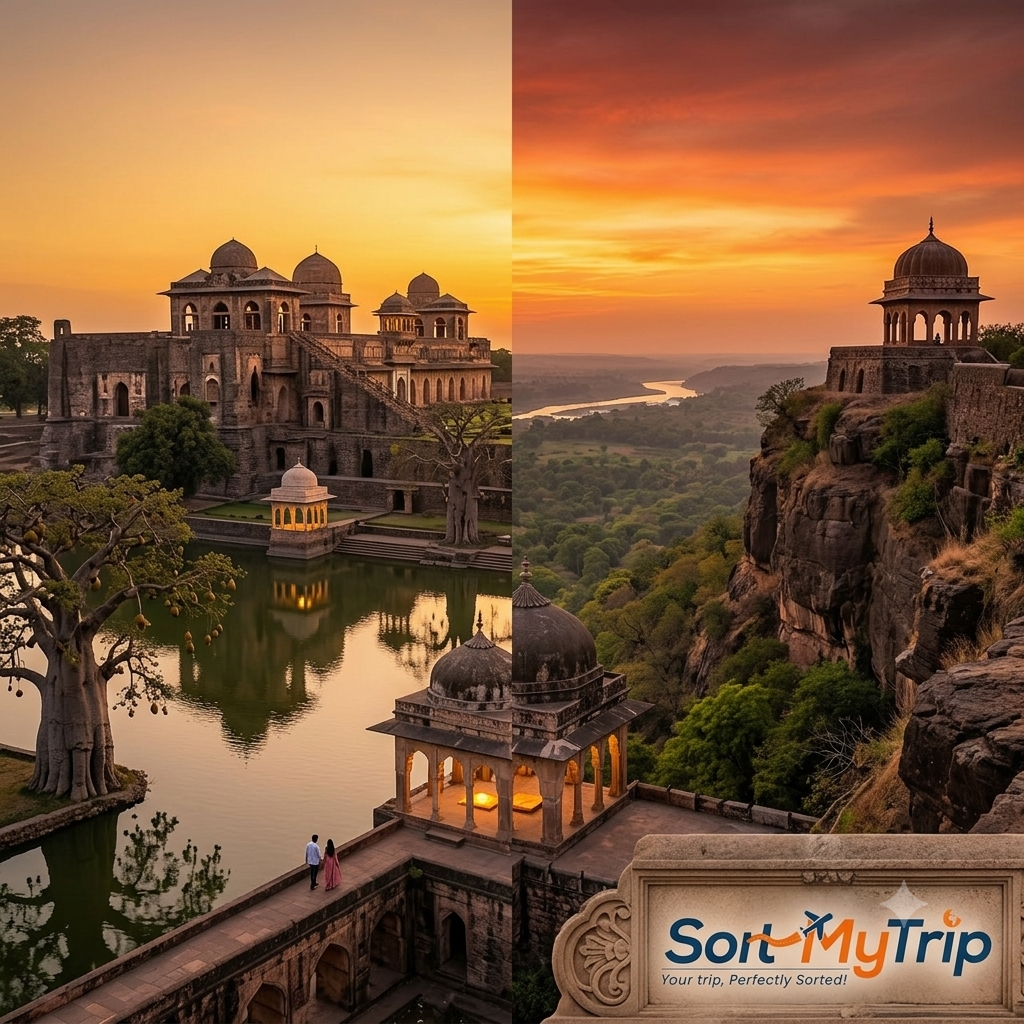
The pavilion features two identical, delicate domed kiosks (chhatris) that sit atop the roof. It is designed to capture every passing mountain breeze. Standing inside these arched corridors, you can look south and view the thin, silver thread of the Narmada River glistening in the far distance, just as Roopmati did five centuries ago.
While the view is spectacular at any time of day, arriving here in the late afternoon is a transformative experience. As the sun begins its descent, the entire Malwa plateau is bathed in a warm, amber glow. The stone arches of the pavilion frame a vast sky shifting from brilliant gold to deep violet and crimson. With no modern city sounds to interrupt, watching the sunset from Roopmati's Pavilion feels like stepping into a living, breathing painting.
2. The Jahaz Mahal: A Ship of Stone Floating on Water
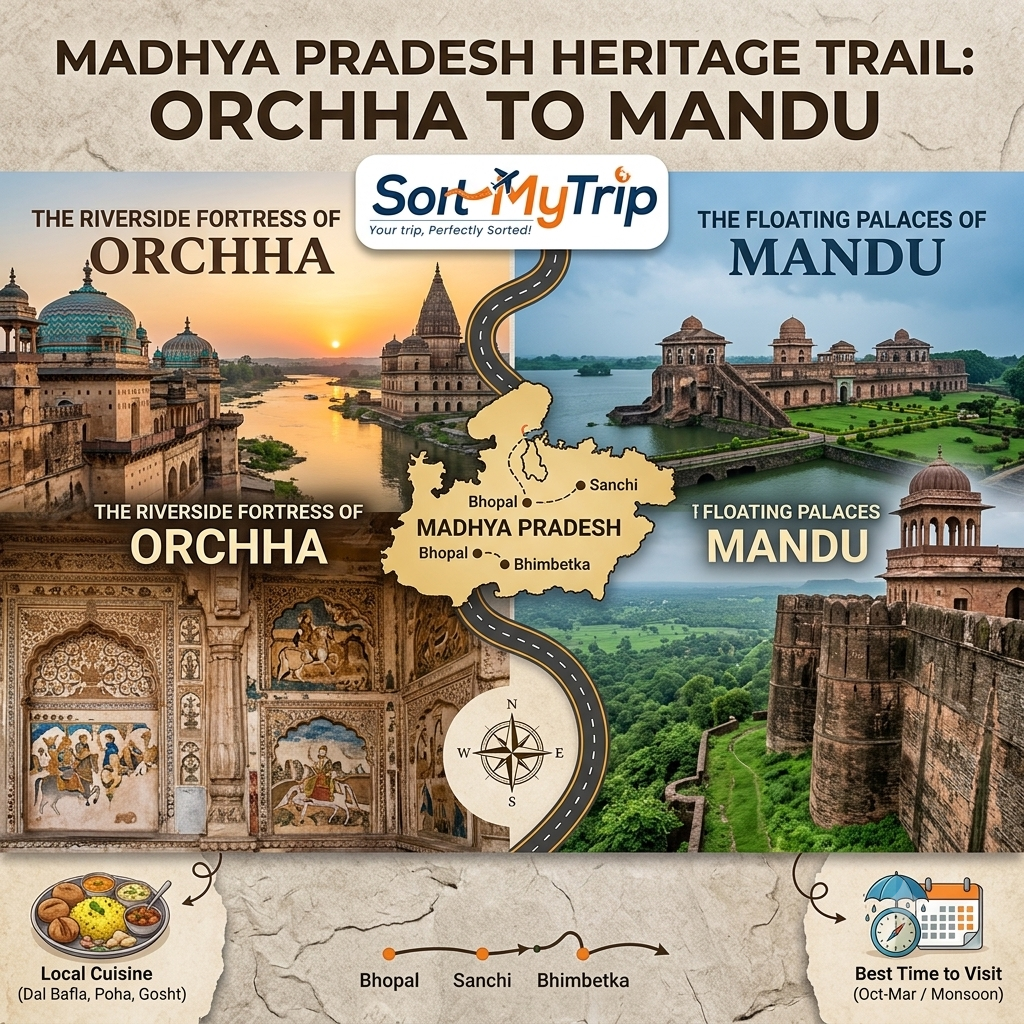
If Roopmati’s Pavilion represents the airy heights of romance, the Jahaz Mahal (Ship Palace) represents its absolute architectural brilliance. Built in the late 15th century by Sultan Ghiyas-ud-din Khalji, this colossal structure is a masterful optical illusion.
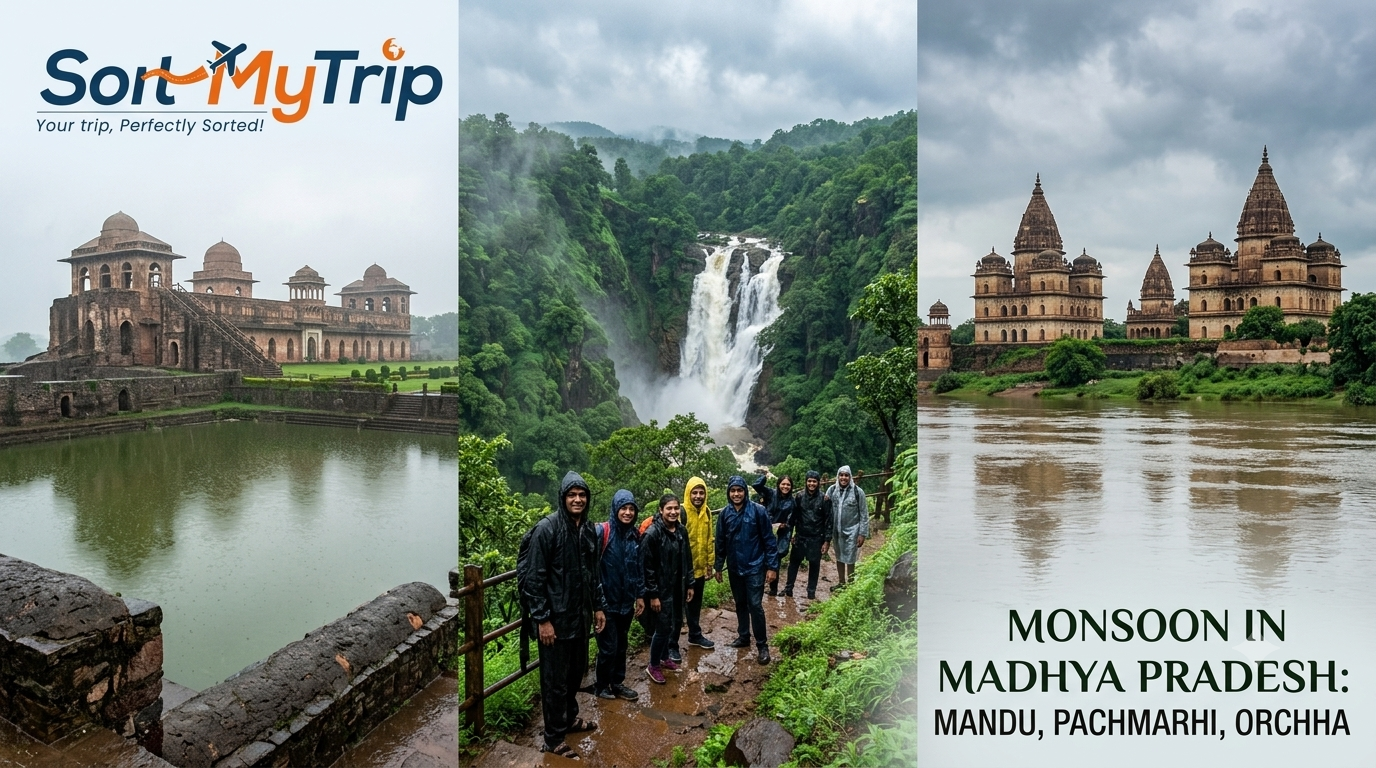
Constructed on a narrow strip of land sandwiched between two artificial lakes—the Munj Talao and the Kapur Talao—the Jahaz Mahal is designed to look exactly like a massive, multi-decked royal ship anchored in the middle of the water. When the monsoon rains arrive and fill the twin lakes to their brims, the stone palace appears to float gracefully on the water's surface.
The architecture is a brilliant blend of Afghan strength and Indian grace, featuring open-air terraces, cooling water pavilions, and intricate balconies. The roof of the palace houses beautifully designed, star-shaped swimming pools that were used by the women of the royal court.
Strolling across the vast terrace of the Jahaz Mahal as the cool monsoon wind ripples across the lakes is incredibly romantic. It is easy to visualize an era when the air was thick with the scent of jasmine, and lamps flickered gently across the water.
3. The Hindola Mahal and the Soul of Monsoons
Right next to the Ship Palace lies the Hindola Mahal, or the Swinging Palace. The name comes from its unique architectural design—the massive side walls of this audience hall slope inward at an angle of 77 degrees, creating an illusion that the entire structure is gently swaying or swinging like a giant cradle.
Mandu is a city that is inextricably linked to the Indian monsoon. While most tourist destinations shut down or slow down during the rainy season, Mandu truly comes alive.
When the dark monsoon clouds roll over the Vindhya Range, the ancient grey sandstone monuments turn deep charcoal, contrasting beautifully against the sudden, exploding emerald-green carpet of the plateau. Moss covers the ancient domes, mini-waterfalls cascade down centuries-old steps, and a gentle mist settles permanently over the valleys. The Hindola Mahal, with its dramatic sloping lines and wide open-arched windows, becomes the perfect sanctuary to watch the mountain rain reshape the landscape.
4. Architectural Marvels: The Blueprints for the Taj Mahal
Beyond its romantic folklore, Mandu holds an incredibly important place in the history of global architecture. Many travelers are shocked to learn that the blueprint for the Taj Mahal was born right here in these forgotten hills.
Hoshang Shah’s Tomb
Located within the central monument complex, this is India’s very first monumental marble structure. Constructed in the 1430s, this magnificent mausoleum is a masterpiece of Afghan architecture, featuring a massive, perfectly proportioned dome, delicate marble latticework (jaalis), and squinch arches.
The structure was considered so architecturally flawless that Emperor Shah Jahan sent his court architects, including Ustad Ahmad Lahori, to Mandu to study this tomb before designing the Taj Mahal. A Persian inscription on the doorway still bears testimony to this historic pilgrimage. Walking into the cool, silent interiors of this marble sanctuary, where sunlight cuts through the lattice windows in sharp, geometric beams, is a profoundly peaceful and awe-inspiring experience.
The Jama Masjid
Adjoining the tomb is Mandu's grand Jama Masjid, modeled after the great Umayyad Mosque in Damascus. Characterized by its minimalist grandeur, huge open courtyard, and an endless forest of pink-hued sandstone pillars, the mosque possesses an acoustic design that allows a whisper at the pulpit to be heard clearly across the entire courtyard.
5. The Eclectic Culinary Flavors of the Malwa Plateau
A romantic journey is never complete without indulging in the local flavors, and Mandu offers a culinary palette that is as rich and distinct as its history.
Because of its geographic location, Mandu’s food scene blends the rustic, spice-rich heritage of Madhya Pradesh with the refined culinary techniques of the Malwa Sultans. When visiting, you must try:
-
Dal Bafla: A close cousin of Rajasthan's Dal Baati, these are hearty balls of wheat, boiled and then baked over cow-dung cakes until golden brown, then drowned in pure desi ghee and served with a spicy lentil dal, garlic chutney, and sweet ladoos.
-
Malwi Khichdi and Poha: Perfect for a crisp morning breakfast, local food stalls serve fragrant, steam-cooked poha topped with crunchy sev, fresh coriander, and pomegranate seeds.
-
The Imlee Experience: Mandu is home to massive, ancient Baobab trees (locally called Khorasani Imli), brought here by African guards of the Sultans. The trees produce a large, fuzzy fruit with a unique, tart, tangy pulp. Locals use it to make refreshing summer drinks and unique sour candies that you won't find anywhere else in India.
Practical Travel Tips for Your Journey to Mandu
Because Mandu has remained blissfully away from mainstream commercial circuits, planning your transport and timing properly is essential to enjoy its romantic isolation:
-
The Best Time to Visit: Mandu is beautiful from October to March, but if you want to experience its true, magical romance, visit during the Monsoon season (July to September). The combination of mist, rain, lush greenery, and dark stone monuments is incomparable.
-
How to Get There: The nearest airport and major railway station are located in Indore, approximately 100 kilometers away. From Indore, Mandu is a smooth, highly scenic two-to-three-hour drive through rolling hills and tribal villages.
-
Getting Around: The monuments of Mandu are spread out across a wide plateau. While you can hire local auto-rickshaws or taxis, one of the most romantic ways for couples to explore the town is by renting bicycles or e-scooters, letting you explore the hidden ruins at your own unhurried pace.
Plan Your Romantic Mandu Escape with Sortmytrip
Mandu is a destination where time stands still—a place where you can wander through ancient royal courts without being jostled by crowds, and listen to the wind carry centuries-old love songs. However, because it remains an offbeat gem, arranging high-quality heritage stays, hiring knowledgeable local guides who can bring the history alive, and coordinating smooth transport links from Indore require expert planning.
This is exactly where sortmytrip steps in to curate your flawless romantic escape.
At sortmytrip, we specialize in crafting highly personalized, immersive travel itineraries that break away from standard, cookie-cutter packages. We believe that an offbeat cultural treasure like Mandu deserves a finely tuned travel plan that balances luxury, exploration, and complete relaxation.
When you choose to design your Mandu holiday with sortmytrip, we take care of every detail:
-
Boutique and Heritage Stays: We secure the finest accommodations available in the region, including premium lakeside resorts or cozy heritage properties that offer beautiful views of Mandu's natural landscape and exceptional local hospitality.
-
Seamless Private Transits: We provide well-maintained vehicles and professional, reliable drivers to pick you up from Indore airport or railway station, ensuring your drive up the winding roads of the Vindhya Range is completely safe, scenic, and comfortable.
-
Expert Storytelling Guides: To truly appreciate Mandu, you need more than a map; you need its stories. We connect you with certified local historians who can paint a vivid picture of Baz Bahadur’s court, decode the architectural secrets of the Jahaz Mahal, and share the local poetry of Rani Roopmati.
-
Custom Malwa Itineraries: Want to combine your romantic getaway to Mandu with a spiritual visit to the river ghats of Maheshwar, the island temple of Omkareshwar, or the street-food hubs of Indore? We design perfect multi-day regional circuits that match your pace and preferences.
Let the commercial crowds have the standard tourist hubs. Choose an epic, forgotten sanctuary of love for your next vacation. Contact sortmytrip today to customize your ultimate romantic itinerary to Mandu, and let us get your next great adventure perfectly sorted.
.png)