.png)
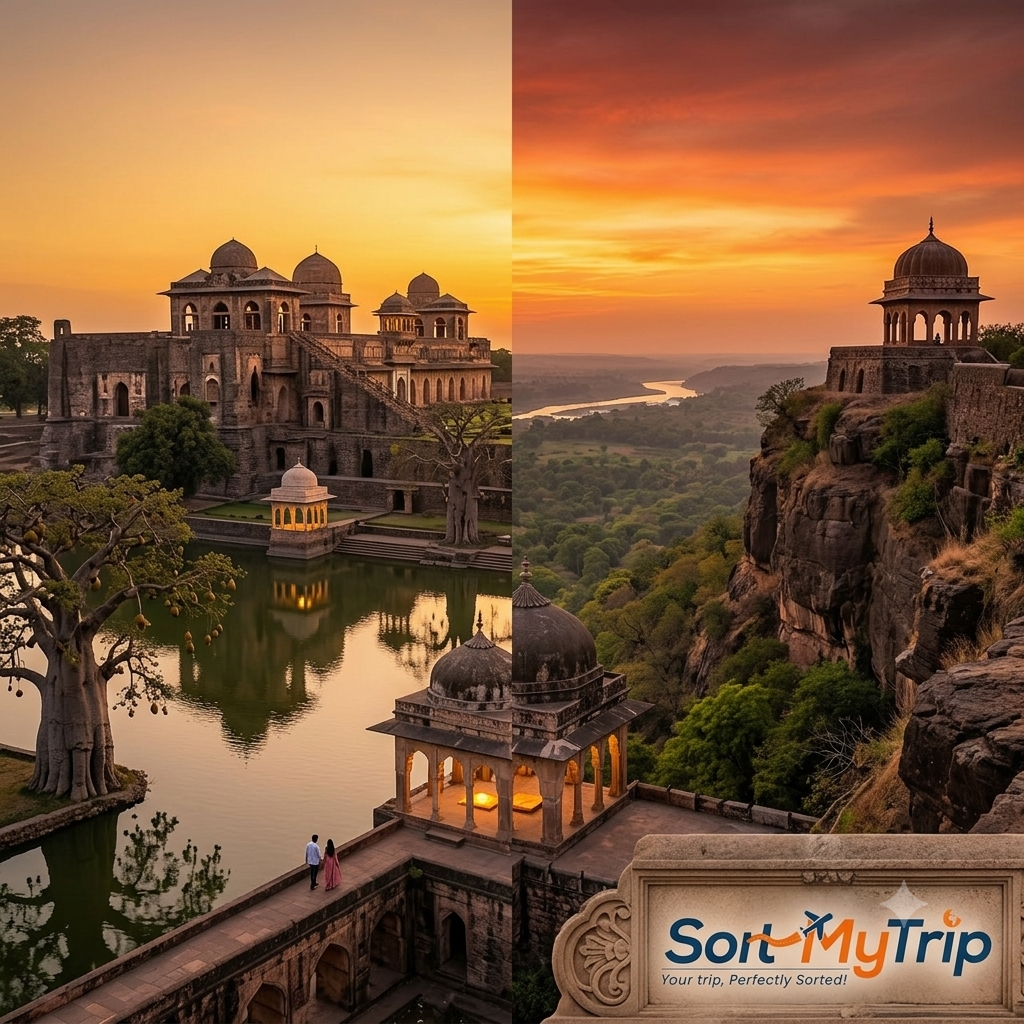
Tucked away between the rolling hills of the Vindhyachal range in Ashoknagar district, Madhya Pradesh, lies Chanderi. A historic town where time slows down to the rhythmic clacking of handlooms, Chanderi is surrounded by dense forests, scenic lakes, and impressive rocky ridges. It is a destination that beautifully weaves together the remnants of powerful medieval dynasties with a living, breathing textile heritage.
Whether you are a history enthusiast looking to scale magnificent battlements, an architecture lover intrigued by ancient water systems, or a textile collector eager to see the birth of a royal fabric, Chanderi offers an enriching escape from the ordinary. This ultimate travel guide uncovers the best places to visit, the fascinating stories behind its monuments, and how you can experience its incredible craft traditions first-hand.
The Strategic Heart of Central India: A Quick History
To fully appreciate Chanderi, one must understand its geographical significance. Positioned on the borders of Malwa and Bundelkhand, the town served as a vital trade route connecting northern India to the Deccan ports. Consequently, it became a coveted prize for various rulers throughout history.
From the Pratiharas and the Delhi Sultanate to the Mughals, the Bundela Rajputs, and the Scindias of Gwalior, each dynasty left behind an architectural footprint. Walking through the town today feels like flipping through the pages of a living history book, where Islamic arches effortlessly stand alongside intricate Rajput stone screens.
Exploring the Imposing Forts and Gateways
The skyline of Chanderi is defined by its defensive structures, built to withstand legendary sieges and guard the wealthy trading town below.
Chanderi Fort (Kila Kothi)
Perched on a dominant hill rising roughly 71 meters above the town, Chanderi Fort stands as a massive stone sentinel. Initially established during the Pratihara era, the fort complex was expanded by subsequent Muslim and Rajput governors.
As you pass through the imposing Khilona Gate, you enter a vast expanse containing ruins of palaces, barracks, and reservoirs. The fort offers a stunning, uninterrupted view of the town below, dotted with ancient domes and minarets. Inside the complex, you will find the Johar Monument, a somber memorial dedicated to the Rajput women who committed mass self-immolation in 1528 when Babur captured the fort from Medini Rai.
The Monumental Kati Ghati Gateway
Carved entirely out of a single living rock ridge, Kati Ghati is one of Chanderi’s most dramatic architectural marvels. Standing 80 feet high and 39 feet wide, this giant gateway was commissioned in 1480 by Jiman Khan, the son of the then Governor of Chanderi, Sher Khan.
Local folklore tells a fascinating, poignant story about its construction. The Governor announced a massive reward for any craftsman who could cut a gateway through the mountain in a single night to welcome an arriving royal convoy. One master mason succeeded, but in his haste, he forgot to carve slots for secure gate doors. Realizing his architectural mistake would leave the passage defenseless against invaders, the devastated craftsman took his own life on the spot. Today, it stands as a breathtaking monument to engineering skill and human drama.
The Ingenious Architecture of Stepwells and Water Palaces
Chanderi is renowned for its traditional water conservation systems. The town and its surroundings are dotted with unique baolis (stepwells) and water bodies that combine structural utility with artistic elegance.
Chakranagar and Battisi Baoli
Built in 1485 during the reign of Sultan Ghiyas-ud-din Khilji of Malwa, Battisi Baoli is the largest and most famous stepwell in the region. It gets its name from the 32 steps that lead down to the water levels. The structure is perfectly square, featuring beautifully carved double-storeyed galleries and stone brackets. It was designed not just to store fresh mountain water but to provide a cool, luxurious retreat for the royalty during the scorching summer months.
Shahzadi Ka Rauza
Though primarily a tomb rather than a water palace, Shahzadi Ka Rauza is structurally connected to the serene Parmeshwar Tal (lake). Built by the governors of the Malwa Sultanate, this elegant sandstone tomb is dedicated to a royal princess. The monument is celebrated for its incredible geometric stone jali work and delicate arches that look particularly beautiful at sunset, reflecting off the nearby waters.
The Living Heritage: The Art of Chanderi Sarees
While the monuments hold the whispers of the past, the heartbeat of contemporary Chanderi resides within its bustling weaving clusters. The art of weaving Chanderi sarees has been passed down through generations for over seven centuries.
A Royal Fabric Born of Silk and Cotton
Mentioned as far back as the Vedic period and later patronized by Mughal Emperor Akbar, Chanderi fabric is famous for its lightweight, sheer texture, and luxurious feel. Traditionally, weavers combine fine cotton yarn with raw silk to create a translucent base fabric.
The defining feature of a genuine Chanderi saree is its intricate zari border and the hand-woven motifs (bootis). These motifs are inspired by local flora, fauna, and architectural elements found on the walls of the nearby fort.
Visiting the Weaving Clusters
To experience this craft, one must walk through neighborhoods like Bahar Shah or Sadar Bazar. The air here is filled with the musical rhythm of wooden foot-pedals and shuttles darting across looms. Meeting the artisans reveals the immense patience required for the craft; a single complex saree can take anywhere from a week to a month of continuous, highly detailed hand-work. Buying directly from these weavers or certified local cooperatives ensures that the benefits go straight to preserving this incredible Geographical Indication (GI) tagged art form.
Other Notable Stops Around Chanderi
If you have an extra day, Chanderi has several hidden gems scattered across its forested outskirts:
-
Badal Mahal Gate: A spectacular, free-standing monumental arch built in the 15th century. It features beautiful dual minarets and intricate carvings, serving as a iconic symbol of Chanderi’s unique architectural style.
-
Koshak Mahal: Located about 4 kilometers away, this grand four-storeyed palace was commissioned by Mahmud Khilji of Malwa in 1445. It features large, open-air courtyards and massive arched halls built out of local white sandstone.
-
Chanderi Archaeological Museum: An excellent place to start your tour. It houses a vast collection of stone sculptures, medieval weaponry, and ancient inscriptions discovered during regional excavations.
Practical Travel Tips for Your Journey
-
Best Time to Visit: The ideal time to explore Chanderi is from October to March when the weather is pleasantly cool, making it perfect for walking around the hillside forts and open monuments.
-
How to Reach: Chanderi does not have its own airport. The nearest major airport is in Gwalior (about 210 km away). The closest railway station is Lalitpur in Uttar Pradesh (approx. 40 km away), which is well-connected to major Indian rail routes. From Lalitpur, you can easily hire a local taxi or board a regional bus.
-
Local Food: Do not miss trying the traditional Bundelkhandi cuisine, including local varieties of daal baafla, spicy curries, and traditional sweets like mawa bati.
Plan Your Heritage Journey With SortMyTrip
Unlocking the multilayered history of Chanderi requires more than just a standard map. Navigating the hilltop paths to the fort, organizing curated walks through hidden weaving workshops, and finding authentic heritage accommodations can be complicated without expert regional planning.
That is where SortMyTrip makes all the difference. As your dedicated travel partner, SortMyTrip takes the guesswork completely out of your vacation. We specialize in designing deeply immersive, custom-tailored cultural itineraries across Central India.
Whether you want a private guide to narrate the legends of Kati Ghati, a curated textile tour to buy authentic sarees straight from master weavers, or a seamless road trip layout connecting Chanderi with nearby hubs like Orchha and Gwalior, we have you covered. Let us manage the logistics, transport, and local bookings while you immerse yourself in the timeless beauty of Chanderi. Contact SortMyTrip today to book your perfectly sorted heritage getaway.