The Ultimate Jim Corbett Safari Guide: How to Book, Best Zones for Tiger Sighting, and Costs
Nestled in the foothills of the Himalayas in Uttarakhand, Jim Corbett National Park stands as a legendary sanctuary for wildlife enthusiasts and adventure seekers. Established in 1936 as Hailey National Park, it holds the proud distinction of being India’s oldest national park and the birthplace of the iconic Project Tiger initiative. Spanning over 520 square kilometers of core and buffer areas, this magnificent reserve is a rich tapestry of dense sal forests, sprawling grasslands (chaurs), and the pristine Ramganga River network.
For many, a trip to Jim Corbett is a pilgrimage to witness the majestic Bengal Tiger ruling its natural habitat. However, planning the perfect safari can be overwhelming. With multiple ecotourism zones, strict booking windows, varying vehicle options, and fluctuating costs, you need a flawless strategy to maximize your chances of a successful sighting.
In this comprehensive guide, we break down everything you need to know about booking a Jim Corbett safari, identifying the best zones for tiger sightings, analyzing the costs, and outlining practical tips for an unforgettable wilderness expedition.
Why Jim Corbett National Park Should Be Your Next Adventure
Jim Corbett is not just another wildlife sanctuary; it is a bio-geographic marvel. The park's unique location—where the plains meet the lesser Himalayas—creates a spectacular diversity of landscapes. From riverbeds and ridge tops to vast alluvial grasslands, the topography changes dramatically every few kilometers.
While the Royal Bengal Tiger is undoubtedly the star attraction, Corbett is home to an incredible array of biodiversity:
-
Mammals: Asian Elephants, Leopards, Sloth Bears, Himalayan Black Bears, Sambar Deer, Spotted Deer (Chital), Barking Deer, and the rare Hog Deer.
-
Avian Wealth: Over 600 species of resident and migratory birds, making it a paradise for birdwatchers. Look out for the Crested Serpent Eagle, Pallas’s Fish Eagle, Blossom-headed Parakeet, and various species of Kingfishers.
-
Reptiles: Gharials, Mugger Crocodiles, and Indian Rock Pythons thriving along the Ramganga riverbanks.
Whether you are a professional wildlife photographer, a family looking for an immersive nature retreat, or a solo traveler seeking the thrill of the wild, Jim Corbett promises an experience that stays with you forever.
Understanding the Safari Zones: Where to Go for the Best Tiger Sightings
To manage tourism and preserve the delicate ecosystem, Jim Corbett National Park is divided into distinct ecotourism zones. Each zone has its own entry gate, unique landscape, permitted safari types, and varying probability of tiger sightings. Choosing the right zone is the single most critical factor in planning your trip.
1. Dhikala Zone: The Crown Jewel
Dhikala is globally renowned as the ultimate wildlife viewing zone in India. Located deep inside the core area of the reserve, it features the massive Dhikala Chaur (grassland) and offers breathtaking panoramic views of the Ramganga reservoir.
-
Landscape: Expansive grasslands, dense riverine forests, and massive water bodies.
-
Tiger Sighting Probability: Extremely High. The open grasslands provide excellent visibility, and the high density of prey attracts top predators.
-
Safari Types Allowed: Canter Safari (for day visitors) and Jeep Safari (strictly reserved for guests staying overnight in government forest rest houses inside the zone).
-
Best Time to Visit: November 15 to June 15.
2. Bijrani Zone: The Photographer’s Paradise
Located close to Ramnagar town, Bijrani is famous for its scenic beauty and dense population of tigers. It was once a preferred hunting ground for British officials, but today it stands as a prime conservation sector.
-
Landscape: Pure Sal forests mixed with lush bamboo shoots, stream beds, and open packaging grounds.
-
Tiger Sighting Probability: Very High. The zone features several water holes where tigers are frequently spotted cooling off during warmer months.
-
Safari Types Allowed: Open Jeep Safari.
-
Best Time to Visit: October 15 to June 30.
3. Jhirna Zone: The Year-Round Sanctuary
Jhirna is located in the southern boundary of the park and is highly favored for its accessibility. Unlike core zones that close during the monsoon, Jhirna remains open throughout the year, subject to weather conditions.
-
Landscape: Dry deciduous forests, wide river beds (Laldhang), and secondary vegetation.
-
Tiger Sighting Probability: Moderate to High. Known for excellent sightings of Sloth Bears and wild Asian Elephants alongside tigers.
-
Safari Types Allowed: Open Jeep Safari.
-
Best Time to Visit: Open all year; however, October to May offers the best wildlife viewing.
4. Dhela Zone: The Ecological Haven
Added to the tourism map in 2014, Dhela is a beautiful buffer zone that has quickly earned a reputation for fantastic tiger sightings. It covers an area that was previously a degraded forest sector but has regenerated beautifully.
-
Landscape: Dominated by large water bodies, raw forest pathways, and mixed forests.
-
Tiger Sighting Probability: High. It has become a highly active territory for tigresses with cubs in recent seasons.
-
Safari Types Allowed: Open Jeep Safari.
-
Best Time to Visit: Open throughout the year (dependent on track conditions during heavy rains).
5. Garjiya Zone: The Rising Star
Introduced to accommodate the growing number of tourists, the Garjiya tourism zone (also known as Ringora) offers stunning forest landscapes that mirror the neighboring Bijrani zone.
-
Landscape: Hilly terrains, steep ridges, and dense mixed forests.
-
Tiger Sighting Probability: High. Because it shares a boundary with Bijrani, tigers frequently cross over, providing thrilling encounters.
-
Safari Types Allowed: Open Jeep Safari.
-
Best Time to Visit: November 15 to June 30.
6. Durga Devi Zone: The Birdwatcher’s Dream
Situated in the north-eastern corner of the park, Durga Devi is characterized by highly mountainous terrain and pristine river streams.
-
Landscape: Deep gorges, hilly tracks, and direct access to the Ramganga and Mandal rivers.
-
Tiger Sighting Probability: Moderate. It is less crowded, offering a peaceful wilderness experience. It is the premier zone for spotting the endangered Mahseer fish and rare birds.
-
Safari Types Allowed: Open Jeep Safari.
-
Best Time to Visit: November 15 to June 15.
7. Phato Zone: The Eco-Tourism Novelty
Phato is one of the newest zones open to tourists and has gained massive popularity for its unique treehouse accommodations and tranquil ambiance.
-
Landscape: Dense tree canopy, scenic pathways, and pocket water bodies.
-
Tiger Sighting Probability: Moderate. Excellent for spotting wild elephants, leopards, and diverse deer species.
-
Safari Types Allowed: Open Jeep Safari.
-
Best Time to Visit: Open throughout the year.
Types of Safaris in Jim Corbett
When planning your excursion, you can choose from three main modes of safari transport, depending on your group size, budget, and selected zone.
Jeep Safari (4x4 Open Gypsies)
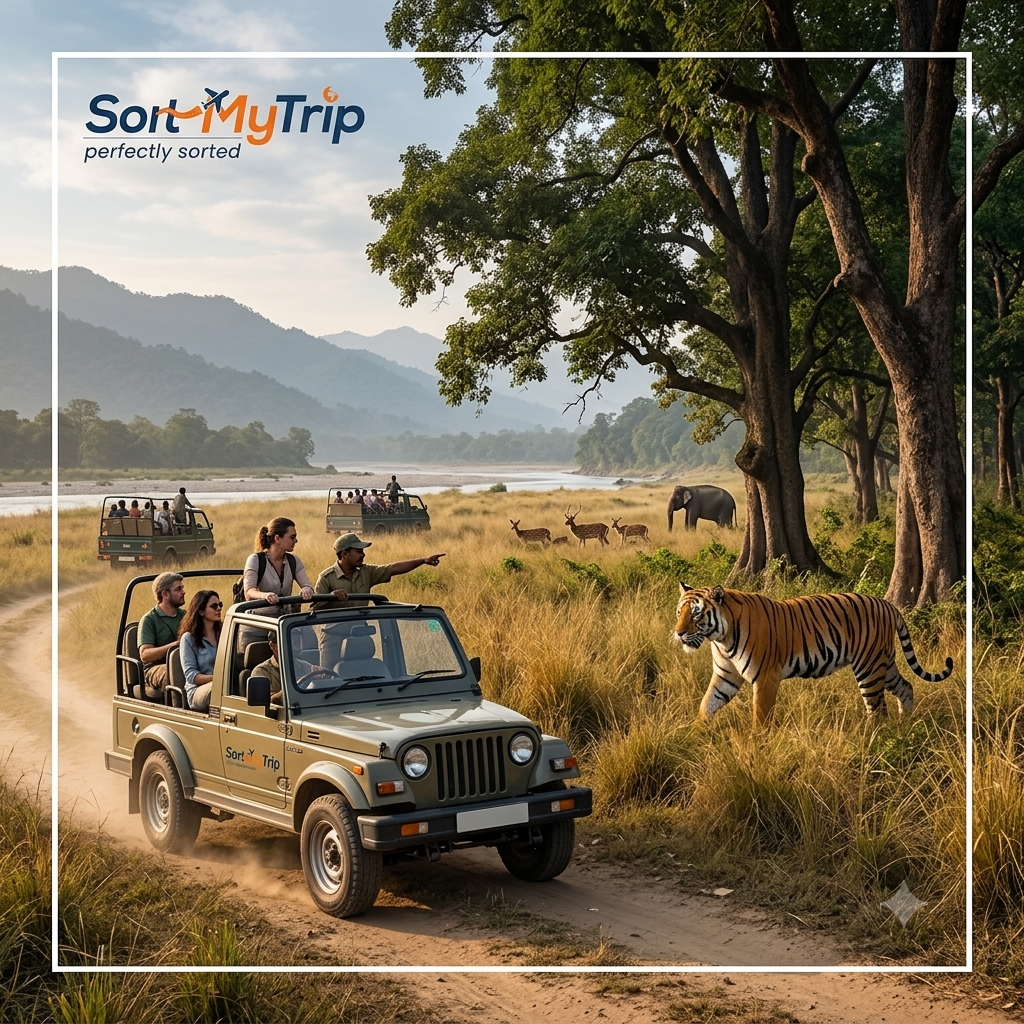
This is the most popular, private, and flexible way to explore Jim Corbett. Accommodating up to 6 adults and 2 children, a Jeep allows you to navigate rugged terrain, zip through narrow forest tracks, and pause whenever you need to capture the perfect photograph. Jeeps operate in all day-visitation zones (Bijrani, Jhirna, Dhela, Garjiya, Durga Devi, Phato).
Canter Safari (Open Bus)
The Canter Safari is a budget-friendly, shared open-air vehicle that accommodates up to 16 people. It is the only option available for day visitors who wish to explore the iconic landscapes of the core Dhikala Zone. It is highly recommended for solo travelers and large groups who want to experience Dhikala without booking an expensive overnight forest lodge.
Elephant Safari
In line with wildlife conservation and ethical guidelines, traditional long-distance elephant safaris inside the core national park boundaries have been highly restricted or phased out. However, controlled elephant rides are sometimes available in peripheral buffer zones or private reserves bordering the park, offering a unique, elevated perspective of the jungle.
Step-by-Step Guide: How to Book Your Jim Corbett Safari
Booking a safari at Jim Corbett requires advanced planning, as the Uttarakhand Forest Department strictly regulates the number of vehicles allowed inside each zone per day to prevent ecological disturbance. Permits sell out months in advance, especially for peak dates, weekends, and holidays.
Step 1: Decide on Your Dates and Travel Preferences
Identify the dates of your travel and determine which zones you want to prioritize based on your target wildlife (e.g., Dhikala for premium tiger spotting, Durga Devi for birdwatching).
Step 2: Understand the Two-Tier Booking System
A complete safari booking consists of two separate components:
-
The Forest Department Entry Permit: This is the official entry pass issued per vehicle. It requires the full names, ages, genders, and government-approved photo ID proofs (Aadhaar Card, Passport, Voter ID, or Driving License) of all passengers.
-
The Vehicle and Guide Hiring Charges: Once you have the permit, you must hire an registered open 4x4 Gypsy and a certified naturalist guide.
Step 3: Online Booking Windows
-
Indian Nationals: Safari permits generally open 45 days in advance.
-
Foreign Nationals: Safari permits can be booked up to 90 days in advance.
Step 4: Keep Essential Documents Ready
During the booking process, you must upload or enter valid ID card details. The exact same original physical ID card must be presented at the entry gate during your safari. Failure to produce the matching ID will result in immediate cancellation of the permit without a refund.
Step 5: Choose Safari Timings
Safaris operate in two shifts daily:
-
Morning Shift: Typically starts between 5:45 AM and 6:30 AM (lasts for about 3.5 to 4 hours). This shift offers cool temperatures and high animal activity near water resources.
-
Evening Shift: Typically starts between 1:30 PM and 3:00 PM (lasts until sunset). The golden hour provides spectacular lighting for photography as predators begin their nocturnal movements.
Note: Exact timings change slightly depending on the summer and winter seasons.
Cost Breakdown of Jim Corbett Safaris
Budgeting for a wild adventure requires understanding the various cost components. Here is an estimated pricing structure for Jim Corbett safaris to help you plan your finances effectively.
1. Jeep Safari Pricing (Estimated per Jeep / up to 6 Persons)
-
Indian Residents: INR 4,500 to INR 6,000 per Jeep.
-
Foreign Residents: INR 8,500 to INR 12,000 per Jeep.
What’s Included: Forest entry permit, vehicle rental fee, driver charges, forest guide fee, and applicable government taxes.
2. Canter Safari Pricing (Estimated per Seat in Dhikala Zone)
-
Indian Residents: INR 1,600 to INR 2,200 per Person.
-
Foreign Residents: INR 3,500 to INR 4,500 per Person.
What’s Included: One seat on the shared 16-seater canter, entry permit, and guide fees.
3. Overnight Forest Rest House (FRH) Stay Costs
Staying inside the historic forest rest houses (such as Dhikala, Gairal, Sultan, or Bijrani) offers an unmatched, raw jungle experience. This requires a specialized booking.
-
Indian Residents: INR 6,500 to INR 12,000 per room per night (varies by lodge category and zone).
-
Foreign Residents: INR 14,000 to INR 25,000 per room per night.
Note: Food costs inside FRHs are handled separately via mandatory buffet systems at the rest house canteens, costing approximately INR 1,000 to INR 1,500 per person per day.
Expert Tips to Maximize Your Tiger Sighting Success
While wildlife sightings always depend on luck and nature, implementing these expert strategies will significantly tilt the odds in your favor:
-
Book Multiple Safaris across Different Zones: Do not pin all your hopes on a single safari. Book at least 2 to 3 safaris across alternating zones (e.g., one in Bijrani, one in Dhela, and a Canter safari in Dhikala). This broadens your geographical coverage and increases your exposure to different tiger territories.
-
Listen closely to Jungle Alarms: Tigers are apex predators. When they move, the entire jungle reacts. Train your ears to listen for langur drop-calls, barking deer alarm cries, and spotted deer warning whistles. Experienced drivers and guides use these auditory cues to track down moving tigers.
-
Travel during Peak Summer Months for Sighting: If your primary goal is to photograph a tiger, plan your trip between March and June. As water bodies inside the deep forest dry up, tigers are forced to emerge from dense cover frequently to drink and submerge themselves in prominent river beds and designated water holes.
-
Maintain Absolute Silence: Tigers are incredibly shy and sensitive to sound. Avoid loud talking, wearing bright neon colors (stick to earth tones like olive green, khaki, beige, and grey), and moving abruptly inside the vehicle. A quiet safari vehicle allows the driver to hear natural distress calls and keeps the wildlife comfortable enough to step out into view.
-
Hire Experienced Naturalists: A knowledgeable guide transforms a simple forest ride into an educational masterclass. Always request or hire certified naturalists who understand tiger behavioral patterns, territorial boundaries, and seasonal movements.
Packing Essentials for a Corbett Safari
To ensure a comfortable and safe journey into the wilderness, make sure your packing list includes:
-
Clothing: Light, breathable cotton layers for summer. For winter safaris (November to February), pack heavy woolen jackets, beanies, gloves, and windcheaters, as early morning open-jeep rides are freezing cold.
-
Gear: A good pair of binoculars is highly recommended. For photographers, a DSLR/Mirrorless camera with a telephoto lens (at least 300mm or higher) is ideal. Bring extra batteries and high-speed memory cards.
-
Sun and Dust Protection: The forest tracks can get extremely dusty. Carry a scarf or face mask to cover your nose and mouth, polarized sunglasses, a wide-brimmed hat, and high-SPF sunscreen.
-
Hydration and Wellness: Carry your own reusable water bottle to reduce plastic waste. Pack basic personal medications, mosquito/insect repellent, and wet wipes.
Plan Your Perfect Wildlife Escape with Sortmytrip
Planning an expedition to Jim Corbett National Park should be an exhilarating experience, not a stressful administrative hassle. Managing permits, coordinating safari jeeps, finding verified guides, and selecting the ideal resort can quickly become overwhelming when done independently. That is where Sortmytrip steps in to curate your dream wilderness vacation.
At Sortmytrip, we specialize in crafting seamless, tailor-made wildlife itineraries designed around your preferences. Whether you want a thrilling weekend jeep safari package, a comprehensive photography-focused tour, or a luxurious stay at a premium riverside eco-resort bordering the park, our team handles all the heavy lifting.
Why Choose Sortmytrip for Your Jim Corbett Adventure?
-
Guaranteed Permit Coordination: We monitor booking windows meticulously to secure your entry permits for high-demand tiger zones like Dhikala and Bijrani the moment they open.
-
Handpicked Stays: From rustic, authentic forest rest houses inside the core zones to ultra-luxurious private resorts complete with modern amenities, we offer accommodations that match your style and budget.
-
Elite Drivers and Guides: We connect you with highly experienced, certified local drivers and naturalists who possess deep knowledge of the terrain and tiger tracking techniques, maximizing your sighting potential.
-
End-to-End Logistics: We organize stress-free transfers from Delhi, Pantnagar Airport, or Ramnagar Railway Station, ensuring your transition from the city to the wild is completely smooth.
-
24/7 Travel Support: Our dedicated customer support team is always available to assist you with live updates, entry gate confirmations, and sudden itinerary adjustments.
Don’t leave your wild encounter to pure chance. Let the destination experts plan an unforgettable, personalized holiday that balances comfort, thrill, and responsible ecotourism.
Contact Sortmytrip today to book your comprehensive Jim Corbett safari package, choose your favorite tiger zone, and take the first step toward witnessing the majestic roar of the Indian wilderness in person!


.png)