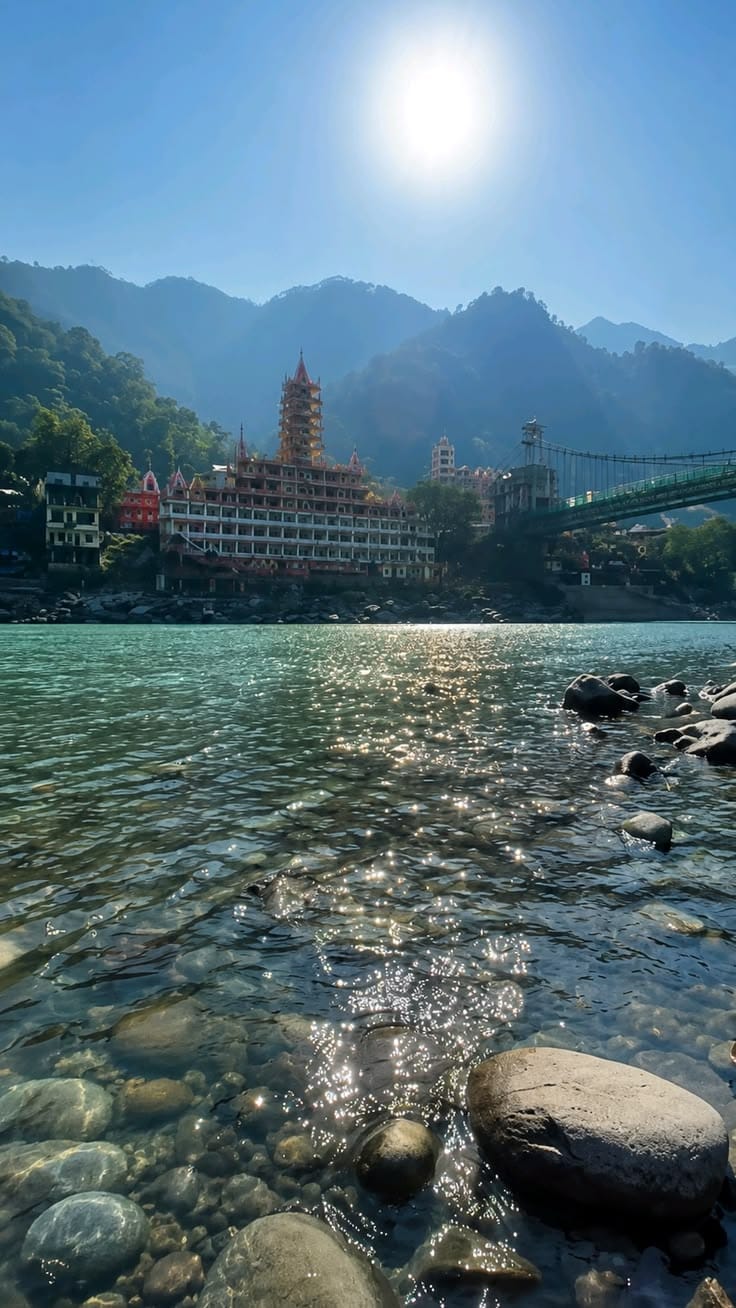
Ganga Aarti in Rishikesh is one of them.
As evening approaches, the banks of the Ganga begin to change. The daylight gradually fades behind the Himalayan landscape, lamps appear along the river, devotional music fills the air and visitors gather quietly along the ghats.
For a first-time visitor, the experience can feel both fascinating and unfamiliar.
What exactly happens during Ganga Aarti? Where should you go? How early should you arrive? What should you wear? Can you take photographs? Do you need to participate in the prayers?
This beginner's guide answers these questions and helps you experience Ganga Aarti in Rishikesh respectfully and comfortably.
Whether you are travelling to Rishikesh for the first time, planning a family holiday, taking a spiritual trip or simply looking for a meaningful experience beyond yoga and adventure activities, attending Ganga Aarti can become one of the most memorable parts of your journey.
What Is Ganga Aarti?
Ganga Aarti is a Hindu devotional ceremony in which lamps are offered as part of prayers to the River Ganga, revered as a sacred and divine presence.
At Rishikesh, the ceremony is accompanied by devotional singing, chanting, lamps and other rituals.
Parmarth Niketan describes its evening Ganga Aarti as a ceremony of prayer, gratitude and devotion to Mother Ganga. The ashram explains that the ceremony includes the offering of lamps and takes place at its Ganga Ghat around sunset. (Parmarth)
You do not need to know Sanskrit or understand every chant to appreciate the atmosphere.
For many visitors, the experience is less about understanding every individual ritual and more about being present in a peaceful riverside setting surrounded by prayer, music and the glow of lamps.
Why Is Ganga Aarti Important in Rishikesh?
Rishikesh has long been associated with yoga, meditation, Hindu spirituality and pilgrimage.
The city sits beside the Ganga and is home to numerous ashrams, temples and spiritual institutions. Uttarakhand Tourism describes Rishikesh as a destination known for its ashrams, temples, yoga and spiritual traditions. (Uttarakhand Tourism)
The river is central to the identity of the city.
For devotees, the Ganga is not simply a river. It has profound religious significance and is revered as a sacred mother.
That spiritual relationship is expressed through rituals such as Ganga Aarti.
For travellers, witnessing the ceremony provides an opportunity to observe an important living tradition rather than simply visiting a monument.
Where Can You Experience Ganga Aarti in Rishikesh?
There are several places along the Ganga where religious ceremonies take place, but two names are particularly important for visitors:
Parmarth Niketan
Triveni Ghat
Both offer different settings and atmospheres, so understanding the difference can help first-time visitors plan their evening.
Ganga Aarti at Parmarth Niketan
Parmarth Niketan is one of Rishikesh's best-known ashrams and is located on the banks of the Ganga in Swargashram. (Parmarth)
Its evening Ganga Aarti has become internationally recognised and attracts visitors from different countries, backgrounds and faiths.
According to Parmarth Niketan's official information, the Aarti takes place at sunset, with timings changing according to the season. The ashram recommends checking the daily timing with reception. It also states that the yagna begins approximately 30 minutes before the Aarti. (Parmarth)
This is important for beginners.
Instead of arriving just when the Aarti begins, consider reaching the ghat earlier so you can find a comfortable place and experience the atmosphere leading up to the ceremony.
Parmarth's current daily schedule lists the Sacred Ganga Yagya and Aarti from 5:15 PM to 6:45 PM, but the ashram explicitly notes that timings can change and advises visitors to confirm the daily schedule. (Parmarth)
Ganga Aarti at Triveni Ghat
Triveni Ghat is another important place to experience Ganga Aarti in Rishikesh.
Uttarakhand Tourism describes Triveni Ghat as one of the city's best-known bathing ghats and notes that its evening Aarti is accompanied by lamps, drums and chanting. (Uttarakhand Tourism)
The state tourism board also includes attending the Ganga Aarti at Triveni Ghat as part of its suggested Rishikesh itinerary. (Uttarakhand Tourism)
For travellers staying around central Rishikesh, Triveni Ghat can be a convenient option.
If you are specifically interested in the well-known Parmarth Niketan ceremony, however, plan your evening around Parmarth instead.
Parmarth Niketan or Triveni Ghat: Which Should a Beginner Visit?
There is no need to treat the two ceremonies as a competition.
They are different settings within Rishikesh's broader spiritual landscape.
Parmarth Niketan offers the setting of a large spiritual ashram, with its well-known sunset ceremony on the Ganga Ghat.
Triveni Ghat offers the experience of attending an evening Aarti at one of Rishikesh's major public ghats.
If you have enough time in Rishikesh, you can experience each on different evenings.
That gives you the chance to appreciate the different atmospheres rather than trying to compare them.
What Happens During Ganga Aarti?
If you have never attended an Aarti before, knowing what to expect can make the experience more comfortable.
The exact sequence can vary depending on the location and occasion, but the atmosphere generally develops gradually.
Before the main Aarti, people gather along the river.
At Parmarth Niketan, the official schedule includes a Sacred Ganga Yagya before the Aarti. (Parmarth)
As the ceremony progresses, you may hear:
Sanskrit chants
Devotional songs
Bells
Conch sounds
Drums
Prayers
Lamps are then offered as part of the ceremony.
As darkness settles over the river, the glow of the lamps becomes one of the most striking elements of the experience.
You may see priests or spiritual leaders conducting the rituals while visitors sit or stand along the ghat.
Some people participate actively in prayer.
Others simply sit quietly and observe.
Both approaches can be appropriate as long as visitors remain respectful.
Do You Have to Participate in the Prayer?
No.
As a visitor, you can simply observe.
You do not need to know the prayers, chant along or perform any ritual unless you personally wish to participate.
The official Parmarth Niketan website notes that its Ganga Aarti welcomes people from different cultures, languages, religions and backgrounds. (Parmarth)
The best approach for a first-time visitor is to remain attentive, respectful and open to the experience.
How Early Should You Arrive for Ganga Aarti?
One of the most common mistakes beginners make is arriving just a few minutes before the ceremony.
The ghats can become busy, particularly during popular travel periods, weekends and special occasions.
A good general approach is to arrive 30 to 60 minutes before the expected Aarti time.
At Parmarth Niketan, this also gives you an opportunity to observe the yagna and settle into the atmosphere before the main ceremony begins. The ashram states that the yagna starts about half an hour before Aarti. (Parmarth)
Exact crowd levels can vary, so arriving earlier is especially useful if you want a particular viewpoint.
What Should You Wear for Ganga Aarti?
You do not need to wear traditional religious clothing to attend.
However, modest and comfortable clothing is the best choice.
Consider wearing:
Comfortable trousers or long pants
A modest kurta
A long dress or skirt
A comfortable shirt
A light shawl or stole
Comfortable footwear
If you are visiting an ashram or temple environment, avoid very revealing clothing.
Parmarth Niketan's own guidelines ask visitors to wear clothing that covers the shoulders, midriff and calves and recommend avoiding tight clothing as a sign of respect for the local culture. (Parmarth)
The same general principle is useful for visitors attending religious ceremonies elsewhere in Rishikesh.
Can You Take Photos During Ganga Aarti?
Yes, photography may be possible, but this is where sensitivity matters.
The ceremony is not simply a performance arranged for tourists.
It is a religious experience for many people.
Avoid putting cameras or phones directly in front of people who are praying.
Do not use flash unnecessarily.
Do not enter restricted areas just to get a photograph.
And always respect signs or instructions from organisers.
If you want to photograph the lamps, river and overall atmosphere, wider compositions taken quietly from your place are generally more respectful than moving constantly through the crowd.
Sometimes the best photograph is also the one you take after spending a few minutes simply watching.
Should You Carry a Camera or Phone?
A phone is more than enough for most visitors.
If you carry a larger camera, keep your equipment secure because the ghats can become crowded.
A small bag is easier to manage than a large backpack.
Also keep your phone charged if you want to capture photographs or navigate back to your hotel after the ceremony.
Most importantly, don't allow photography to become the entire experience.
Give yourself some time to put the phone away.
What Should Beginners Carry?
For an evening at the Ganga Ghat, keep things simple.
Carry:
Small water bottle
Phone
Minimal cash
Power bank
Light shawl depending on the season
Small bag
Hand sanitiser
Comfortable footwear
If you plan to sit on the ground, a small scarf or light cloth can also be useful.
Avoid carrying unnecessary valuables.
What Is the Best Time to Experience Ganga Aarti?
Ganga Aarti is an evening ceremony, and its timing is connected with sunset.
This means the exact start time changes throughout the year.
Parmarth Niketan states that its Aarti begins every day at sunset and that the exact timing varies by season. Visitors are advised to check with reception for the day's timing. (Parmarth)
For your trip planning, do not rely on an old blog post or a fixed time mentioned online.
Check the official information on the day of your visit.
This is particularly important if you are planning transport, dinner reservations or another evening activity.
What Is the Best Season for Ganga Aarti in Rishikesh?
Ganga Aarti takes place throughout the year, so there is no single season when you can experience it.
However, the overall comfort of your Rishikesh trip can vary considerably by season.
The cooler months are generally comfortable for sitting outdoors during an evening ceremony.
Spring can offer pleasant conditions as well.
Summer evenings may still be warm, while the monsoon season can bring rain and changing river conditions.
Winter evenings can become chilly, so carrying an extra layer is useful.
If Ganga Aarti is one of the main reasons for your trip, check the weather forecast and local conditions before heading to the ghat.
Ganga Aarti Etiquette for First-Time Visitors
A little awareness goes a long way.
Keep your voice low: Religious ceremonies are not the right time for loud conversations.
Follow local instructions: Organisers and temple or ashram staff may direct visitors where to sit or stand.
Dress modestly: Especially when visiting ashrams and religious spaces.
Don't push through crowds: If you arrive late, find a suitable place without disturbing others.
Avoid unnecessary flash photography: It can disturb people and reduce the atmosphere of the ceremony.
Don't touch religious objects without permission: Observe rather than assuming everything is available for public handling.
Keep the river clean: Do not throw plastic, food packaging or other waste into the Ganga.
Respect personal space: People may be engaged in prayer, meditation or personal reflection.
These simple habits allow visitors to participate in the atmosphere without turning a sacred ceremony into a conventional tourist attraction.
Can Children Attend Ganga Aarti?
Yes, families can attend.
However, parents should keep young children close because ghats can become crowded.
Explain beforehand that the ceremony is a religious event and that they should remain quiet during prayers.
Children may particularly enjoy watching the lamps and listening to the bells and music.
For families, arriving early can make the experience much easier because you have more time to find a comfortable place before the crowd increases.
Is Ganga Aarti Suitable for Foreign Travellers?
Absolutely.
Rishikesh attracts visitors from around the world, and Parmarth Niketan specifically states that its Aarti draws people from different cultures, languages, religions and backgrounds. (Parmarth)
You do not need to be Hindu to appreciate the ceremony.
You also do not need to understand every Sanskrit prayer.
Approach the experience with curiosity and respect.
Observe what people around you are doing and follow the atmosphere rather than trying to control it.
What Should You Do After Ganga Aarti?
Do not rush away immediately.
If circumstances allow, spend a few quiet minutes beside the river after the ceremony.
You can then walk towards your accommodation, explore nearby markets or have dinner at a local restaurant.
If you are staying around Swargashram, you can explore the surrounding area after the Aarti.
If you attended Triveni Ghat, central Rishikesh offers plenty of options for an evening meal.
Just remember that crowds may disperse gradually, so allow some extra time when arranging transport.
A Simple Beginner's Evening Plan
If this is your first time experiencing Ganga Aarti, you can follow a simple schedule.
4:00 PM – Explore the Area
Spend some time walking around the nearby streets, ashrams or riverfront.
4:45 PM – Reach the Ghat
Arrive early enough to avoid last-minute rushing.
5:00 PM – Find Your Place
Choose a comfortable location where you can observe without blocking others.
Before Sunset – Observe the Preparations
At Parmarth Niketan, the yagna takes place before the Aarti. (Parmarth)
Sunset – Experience the Aarti
Put your phone away for at least part of the ceremony and experience it directly.
After the Aarti – Take a Quiet Moment
Watch the lamps and river for a few minutes before leaving.
Evening – Dinner
Enjoy a relaxed meal and reflect on the experience.
The exact timing of each step should be adjusted according to the current Aarti schedule.
Things to Do in Rishikesh Before Ganga Aarti
You can easily combine Ganga Aarti with a full day of sightseeing.
Depending on your interests, consider:
Ram Jhula: Explore the area around one of Rishikesh's famous suspension bridges.
Laxman Jhula Area: Explore the surrounding spiritual and riverside neighbourhoods, while checking current access arrangements because bridge access can change.
Ashrams: Rishikesh is home to numerous ashrams offering yoga and spiritual programmes. Uttarakhand Tourism identifies Swargashram as an important cluster of ashrams on the eastern bank of the Ganga. (Uttarakhand Tourism)
Bharat Mandir: Uttarakhand Tourism identifies Bharat Mandir near Triveni Ghat as one of the city's old temples. (Uttarakhand Tourism)
Yoga and Meditation: Rishikesh is internationally associated with yoga and meditation.
River Activities: Depending on season and local conditions, travellers can explore adventure activities such as rafting.
This makes it possible to combine adventure, wellness, sightseeing and spirituality in one trip.
Ganga Aarti and Responsible Tourism
The Ganga is both a sacred river and an important natural resource.
That means visitors have a responsibility to keep the river and its surroundings clean.
Avoid:
Throwing plastic into the river
Leaving flowers wrapped in plastic
Disposing of food packaging on the ghat
Using single-use plastic unnecessarily
Damaging plants or public spaces
Treating religious rituals as props for photographs
A meaningful spiritual experience should also encourage responsible behaviour towards the environment.
Parmarth Niketan has also connected Ganga Aarti with wider awareness and conservation efforts surrounding the river. (Parmarth)
Common Mistakes First-Time Visitors Should Avoid
Arriving at the last minute
You may struggle to find a comfortable viewing spot.
Treating the ceremony like a stage show
Remember that this is a religious ceremony, not a performance arranged solely for visitors.
Taking too many photographs
You can capture the atmosphere without photographing every moment.
Wearing uncomfortable footwear
You may need to walk or stand for some time.
Carrying a large backpack
A smaller bag is much easier in a crowded ghat environment.
Ignoring local instructions
Staff and volunteers may have specific arrangements for visitors.
Leaving immediately
Give yourself a few quiet minutes after the ceremony to absorb the experience.
Is Ganga Aarti Free to Attend?
For visitors attending the public ceremony, there is generally no need to think of Ganga Aarti as a ticketed tourist attraction.
However, arrangements can vary depending on the specific venue, special events or programmes.
If you are staying at an ashram, there may also be separate rules and participation expectations.
For example, Parmarth Niketan's current visitor and guest information explains that its ashram community encourages participation in its daily spiritual activities, including Ganga Aarti. (Parmarth)
Always follow the official instructions of the venue you choose.
How to Make Your Ganga Aarti Experience More Meaningful
The biggest suggestion for beginners is simple:
Slow down.
Do not arrive thinking only about taking photographs.
Arrive early.
Watch the river.
Listen to the sounds around you.
Observe how local devotees participate.
Notice the changing light.
Listen to the chants.
Watch the lamps being offered.
And allow yourself a few minutes without your phone.
You do not need to force yourself to feel anything specific.
Simply being present can make the experience more meaningful.
A Beginner's Checklist for Ganga Aarti in Rishikesh
Before leaving your hotel, remember:
☑ Check the day's Aarti timing
☑ Arrive 30–60 minutes early
☑ Wear comfortable, modest clothing
☑ Carry minimal valuables
☑ Keep your phone charged
☑ Carry a light layer in winter
☑ Follow local instructions
☑ Ask before photographing people
☑ Keep the ghat clean
☑ Keep some time after the ceremony
☑ Enjoy the experience without rushing
Final Thoughts: Experience the Ganga, Not Just the Aarti
For a first-time visitor, Ganga Aarti in Rishikesh can initially seem unfamiliar.
There may be chants you do not understand, rituals you have never seen before and traditions that are completely different from your everyday life.
That is precisely what makes the experience interesting.
Rishikesh is a city where the Ganga is woven into daily life, spirituality and travel.
At Triveni Ghat, the evening Aarti takes place in one of the city's best-known public ghats. At Parmarth Niketan, the sunset ceremony brings together visitors and spiritual seekers from around the world. (Uttarakhand Tourism)
You do not need to know every prayer.
You do not need to participate in every ritual.
You simply need to arrive with respect and an open mind.
Watch the lamps illuminate the river.
Listen to the bells and chants.
Feel the evening air along the Ganga.
And for a few moments, let Rishikesh slow down around you.
That is the beauty of experiencing Ganga Aarti in Rishikesh.
Let SortMyTrip Help You Experience Rishikesh
A Rishikesh trip can be much more than a quick visit to the famous ghats.
From Ganga Aarti and yoga to temples, ashrams, waterfalls, cafés, nature experiences and adventure activities, Rishikesh offers different experiences for different kinds of travellers.
Let SortMyTrip Help you with this curated package and plan a Rishikesh holiday around your preferred travel dates, hotel category, sightseeing interests and budget.
Whether you are planning a family trip, couple getaway, friends' holiday, spiritual journey or a wider Uttarakhand tour, we can help you create an itinerary that gives you enough time to experience Rishikesh rather than simply ticking attractions off a list.
Frequently Asked Questions About Ganga Aarti in Rishikesh
What is Ganga Aarti in Rishikesh?
Ganga Aarti is an evening devotional ceremony in which lamps are offered as part of prayers to the sacred River Ganga. In Rishikesh, major Aarti experiences take place at locations including Parmarth Niketan and Triveni Ghat. (Uttarakhand Tourism)
Where is the most famous Ganga Aarti in Rishikesh?
Parmarth Niketan is particularly well known for its sunset Ganga Aarti. Triveni Ghat is another major location for experiencing an evening Aarti in Rishikesh. (Parmarth)
What time does Ganga Aarti start at Parmarth Niketan?
The Aarti begins around sunset, and the exact timing changes according to the season. Parmarth Niketan advises visitors to check the daily timing with reception. (Parmarth)
How early should I reach Ganga Aarti?
For a comfortable experience, arriving around 30 to 60 minutes before the expected ceremony time is a practical approach. At Parmarth Niketan, arriving early also allows visitors to experience the yagna that precedes the Aarti.
Is Ganga Aarti free in Rishikesh?
The public experience at the ghats is generally accessible without treating it as a conventional ticketed attraction, but arrangements can vary by venue and special event. Check the specific venue's current information before visiting.
Can tourists attend Ganga Aarti?
Yes. Visitors are welcome to observe the ceremony, but they should follow local rules and behave respectfully. Parmarth Niketan specifically describes its Aarti as welcoming people from different cultures, religions and backgrounds. (Parmarth)
What should I wear to Ganga Aarti?
Wear comfortable and modest clothing. If visiting an ashram such as Parmarth Niketan, follow its specific dress guidelines, which ask visitors to cover the shoulders, midriff and calves. (Parmarth)
Can I take photographs during Ganga Aarti?
Photography may be possible, but avoid flash, respect people's privacy and do not interrupt the ceremony or move into restricted areas for photographs.
Is Ganga Aarti suitable for children?
Yes. Families can attend, although parents should keep young children close because the ghats may become crowded.
What else can I do in Rishikesh?
You can combine Ganga Aarti with yoga, meditation, temple visits, ashram experiences, riverside walks, local cafés and adventure activities. Uttarakhand Tourism also highlights attractions such as Triveni Ghat, Bharat Mandir and the city's ashrams. (Uttarakhand Tourism)
How many days are enough for Rishikesh?
Two to three days can provide a good introduction to Rishikesh, while longer stays allow time for yoga, wellness, adventure activities, nearby attractions and a slower exploration of the city.
Why should Ganga Aarti be part of a Rishikesh trip?
Because it offers a chance to experience one of the city's living spiritual traditions beside the Ganga rather than simply visiting Rishikesh as a sightseeing destination.