Kutch Beyond the White Desert: Crafts, Communities and Culture
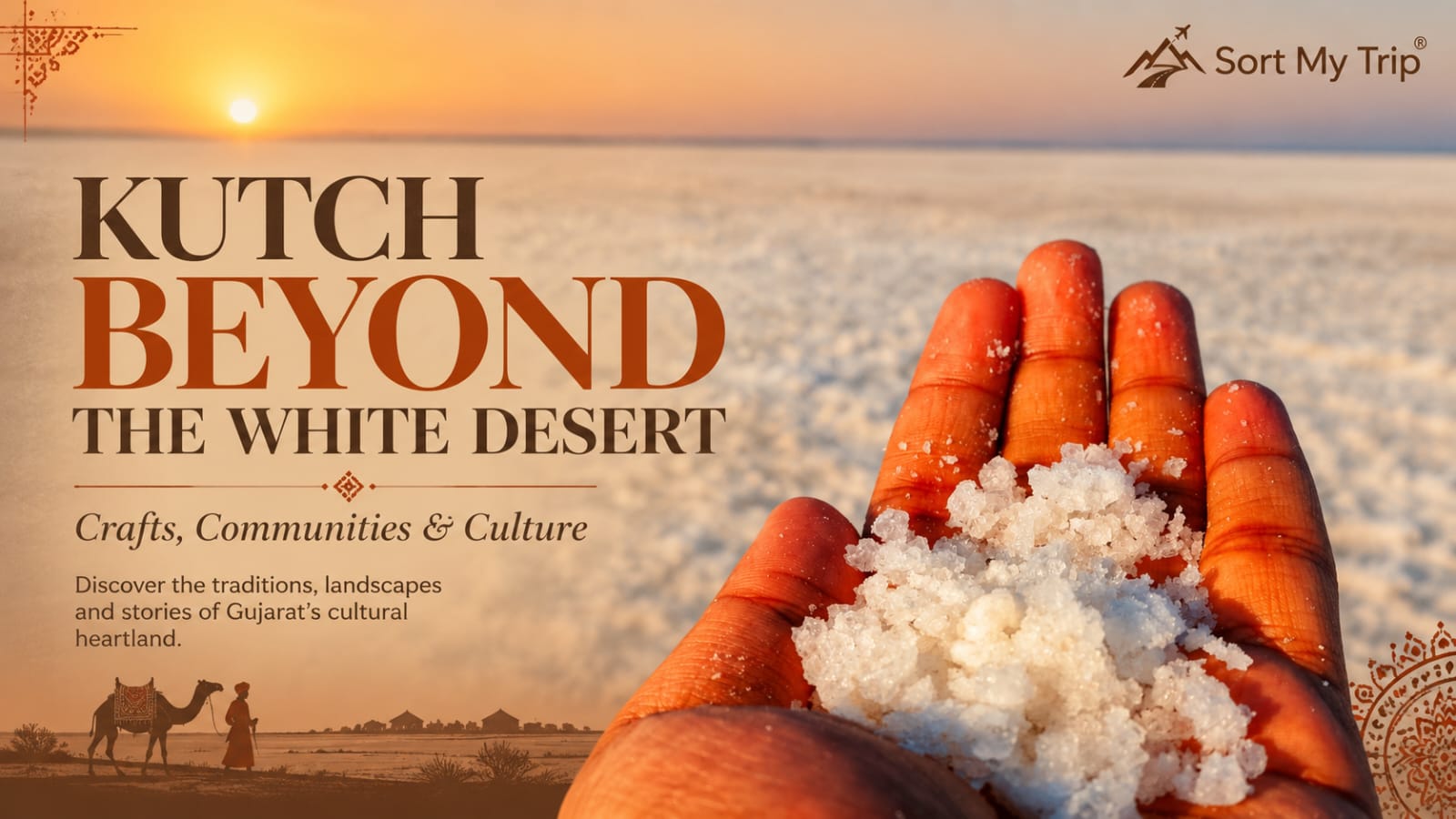
The White Desert of Kutch is one of Gujarat’s most recognisable landscapes. Its vast salt flats, changing colours and spectacular sunsets attract travellers from across India and beyond. But the story of Kutch does not end where the white landscape begins.
Beyond the famous Rann lies a fascinating world of artisan villages, traditional embroidery, colourful textiles, ancient crafts, music, food, architecture and communities that have preserved their cultural identity across generations.
Kutch is one of India’s most culturally diverse regions, and its handicrafts are deeply connected with the everyday lives and identities of local communities. Gujarat Tourism highlights traditions including Ajrakh, Bandhani, metalwork, copper bells, mud work, Soof embroidery, leatherwork and Rogan painting.
This is why exploring Kutch beyond the White Desert can transform a short desert holiday into a much richer cultural journey.
Why Kutch Is More Than the White Desert
For many travellers, a Kutch trip begins and ends with the Great Rann. A visit to the salt desert, especially around sunrise, sunset or a full-moon night, is certainly memorable.
However, the region has much more to offer.
Kutch brings together:
Traditional textile arts
Embroidery and mirror work
Ajrakh block printing
Rogan painting
Copper bell making
Lacquered woodwork
Leather craft
Pottery
Mud architecture
Folk music and dance
Traditional Kutchi cuisine
Historic palaces and museums
Ancient archaeological sites
Artisan villages and rural experiences
The most interesting part is that many of these traditions are not simply displayed in museums. They continue to be practiced by artisan families and communities.
The Craft Villages of Kutch
One of the best ways to understand Kutch is to leave the main tourist route and visit its craft villages.
Villages such as Nirona, Ajrakhpur, Hodka and Bhujodi offer opportunities to see traditional crafts being created and, in some cases, purchase directly from artisans. Incredible India specifically highlights these villages as important craft experiences around Kutch.
Instead of simply buying a souvenir, travellers can watch how a piece of fabric is printed, how a bell is shaped or how a traditional painting slowly comes to life.
That connection makes the object far more meaningful.
Nirona: Where Ancient Crafts Come Alive
Located around 40 kilometres from Bhuj, Nirona is one of the most fascinating craft villages in Kutch. The village is particularly known for Rogan painting, copper bell making and lacquered woodwork.
Nirona’s crafts demonstrate how traditional skills can survive through generations while adapting to modern audiences.
Rogan Art
Rogan painting is one of Kutch’s most distinctive art forms.
The technique has Persian origins and was brought to the region around 300 years ago. The traditional process uses castor oil-based material mixed with pigments to create a thick, colourful medium. Artisans then use a small metal stick to create extraordinarily fine designs on fabric.
One of the most recognisable designs associated with Rogan art is the Tree of Life.
The remarkable detail of the artwork makes it easy to understand why Rogan painting is considered an important part of Kutch’s cultural heritage.
Copper Bell Art
Nirona is also known for its traditional copper bell craft.
These bells were historically associated with livestock, but today they are also purchased as decorative pieces. Artisans shape and finish the metal before carefully tuning each bell to produce its characteristic sound.
A visit to a workshop provides a completely different experience from seeing finished handicrafts in a shop.
Lacquered Woodwork
Another traditional craft of Nirona is lacquer work.
Artisans decorate wooden objects using colourful lacquer while turning the wood on a traditional lathe. The combination of movement, heat and craftsmanship creates vibrant patterns on everyday objects and decorative pieces.
Ajrakhpur: The World of Block Printing
Textiles are an essential part of Kutch’s cultural identity, and Ajrakh is among its most recognisable traditions.
Ajrakh printing involves carefully carved wooden blocks and a series of printing and dyeing processes. The resulting textiles are known for their detailed geometric and floral patterns.
For travellers interested in textile traditions, visiting an artisan workshop can reveal how much patience and precision goes into a piece that may look simple at first glance.
Ajrakh is not merely a fashion trend. It represents a long-standing textile tradition connected with artisan communities and the wider cultural history of the Kutch region.
Bhujodi: Weaving and Textile Traditions
Bhujodi, near Bhuj, is another important stop for travellers interested in Kutch textiles.
The region is associated with traditional weaving and handmade textile products. Exploring local workshops can provide an opportunity to understand the skill behind shawls, fabrics and other woven products.
For a traveller, Bhujodi is especially interesting because it shows another side of Kutch craftsmanship beyond embroidery and printed textiles.
Kutch Embroidery: Stories Told Through Threads
Kutch embroidery is perhaps one of the most visually striking elements of the region’s culture.
Bright colours, intricate stitching, mirrors and geometric patterns transform ordinary fabric into highly detailed artwork.
Different communities have developed distinctive embroidery traditions. Rabari, Ahir, Sindhi and Jat influences are among those associated with the region’s diverse embroidery heritage.
Historically, embroidery was closely connected with clothing, household textiles and ceremonial life.
Today, these techniques can also be seen on contemporary bags, jackets, wall hangings, accessories and home décor.
The Communities Behind the Crafts
The most important thing to remember about Kutch handicrafts is that the crafts are inseparable from the people who create them.
Kutch is home to diverse communities, each with its own traditions, clothing styles, embroidery techniques, music and social history.
Traditional crafts have often been passed from one generation to another.
For many communities, embroidery, weaving, leatherwork, pottery and other crafts have historically been more than decorative arts. They have been part of everyday life and economic activity.
Gujarat Tourism describes Kutch as a region where crafts, traditions and culture are deeply connected with the identity of the land and its people.
This makes responsible cultural tourism particularly important.
How to Experience Kutch Responsibly
A cultural trip should benefit the communities whose traditions make the destination special.
Travellers can contribute by:
Buying directly from artisans whenever possible
Asking before photographing people or workshops
Respecting local customs and clothing
Avoiding aggressive bargaining with individual artisans
Choosing authentic handmade products
Learning about the story behind a craft
Supporting community-based tourism initiatives
Avoiding unnecessary plastic in rural areas
Leaving villages and natural areas clean
Organisations such as Kala Raksha have worked to preserve and promote Kutch arts while supporting artisan communities. Gujarat Tourism notes that Kala Raksha works with embroidery, patchwork and appliqué artisans across multiple communities and villages.
Kutch Food: Taste the Region Beyond the Tourist Trail
Culture in Kutch is not limited to handicrafts.
Food is another important part of experiencing the region.
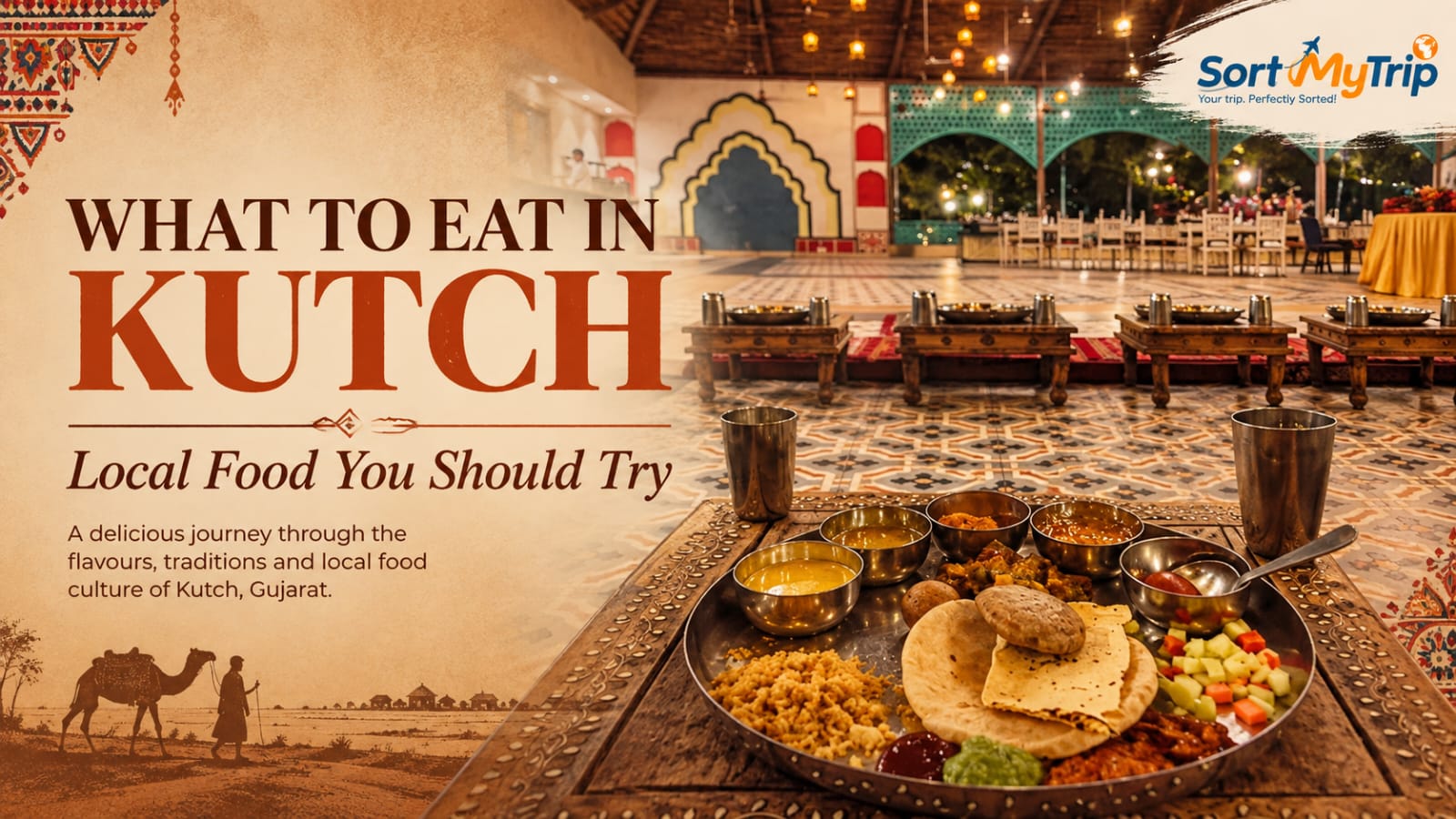
Traditional Gujarati and Kutchi meals can include rotla, vegetables, kadhi, khichdi, bajra-based preparations, buttermilk, pickles, papad and other regional dishes.
A simple village meal can sometimes tell you as much about a destination as a museum.
Rather than looking only for familiar restaurant menus, travellers should take the opportunity to experience local food through trusted homestays, traditional eateries and community experiences.
Bhuj: The Cultural Gateway to Kutch
Bhuj is an excellent base for exploring the wider Kutch region.
The city provides access to historic architecture, museums, craft villages and important cultural attractions.
Among the places associated with Bhuj are Aina Mahal, Prag Mahal, Hamirsar Lake and the historic Chhatardis. Gujarat Tourism also lists heritage sites, museums and historic attractions as part of the wider Kutch experience.
Bhuj is particularly useful as the starting point for travellers planning a combination of heritage, crafts and desert experiences.
Beyond Crafts: History and Heritage of Kutch
Kutch is also an important destination for travellers interested in history.
The region has connections with the ancient Indus Valley civilisation, historic trading networks and princely-era architecture.
Dholavira, one of the major archaeological attractions associated with Kutch, offers a glimpse into the sophistication of the Harappan civilisation.
Historic sites such as Lakhpat and traditional architecture around Bhuj add another layer to the region’s story.
This combination of archaeology, architecture, craft and living traditions makes Kutch particularly interesting for slow travellers.
Kalo Dungar: Views Over the Great Rann
For a different perspective of the landscape, head towards Kalo Dungar, also known as Black Hill.
At approximately 462 metres, Kalo Dungar is recognised as the highest point in Kutch and offers broad views towards the Great Rann.
The contrast is striking.
From the vast white salt landscape to the darker terrain of the hills, Kutch demonstrates how dramatically the landscape can change within the same region.
Hodka and Rural Kutch
Hodka is another popular stop for travellers exploring the cultural side of Kutch.
The village and surrounding area provide opportunities to experience rural landscapes, traditional architecture, local crafts and community-based hospitality.
This is where travellers can slow down.
Instead of rushing between attractions, spend time observing daily life, talking to hosts, exploring craft workshops and enjoying the quiet atmosphere after sunset.
Rann Utsav: Culture in the Desert
The Rann Utsav has become one of Gujarat’s best-known cultural festivals.
It brings together folk music, dance, handicrafts, food and the dramatic landscape of the Rann. Gujarat Tourism describes Kutch as one of Gujarat’s culturally and ecologically diverse regions and presents Rann Utsav as a celebration of its art, crafts, music, dance, people and nature.
However, travellers should remember that the festival is only one way to experience Kutch.
A cultural journey outside the festival period can offer a quieter perspective and more time to engage with artisan villages.
Festival dates can change by season, so always verify the current dates and entry requirements through official Gujarat Tourism sources before planning a trip.
Best Time to Explore Kutch
The cooler months are generally the most comfortable period for exploring Kutch.
October to March is particularly suitable for combining desert sightseeing with outdoor exploration and craft-village visits. Incredible India lists October to March as the best period for visiting Nirona.
Winter also coincides with the broader Rann tourism season, making it a popular time for visitors.
Daytime temperatures, however, can still feel warm, while nights in the desert region may become considerably cooler.
Pack accordingly.
A Suggested Kutch Cultural Itinerary
If you want to experience Kutch beyond the White Desert, consider spending at least four to six days in the region.
Day 1: Bhuj
Arrive in Bhuj and explore the city.
Visit heritage attractions, local markets and museums before settling into your accommodation.
Day 2: Bhuj – Bhujodi – Ajrakh Region
Spend the day exploring textile traditions.
Discover weaving and block printing, meet artisans where possible and shop directly from craft workshops.
Day 3: Nirona – Hodka
Visit Nirona to explore Rogan painting, copper bells and lacquer work.
Continue towards Hodka and experience the rural side of Kutch.
Day 4: Great Rann of Kutch
Dedicate the day to the White Desert.
Plan your visit around sunrise or sunset and check current entry requirements before travelling.
Day 5: Kalo Dungar – Lakhpat
Explore Kalo Dungar and continue towards the historic western Kutch landscape.
If time permits, include Lakhpat for its historic atmosphere and architecture.
Day 6: Dholavira or Extended Cultural Exploration
Travellers interested in archaeology can dedicate a full day to Dholavira.
Alternatively, use the day to revisit craft villages, shop directly from artisans or enjoy a slower rural experience.
What to Buy in Kutch
If you want to take home something meaningful from Kutch, look for authentic regional crafts such as:
Ajrakh textiles
Kutch embroidery
Bandhani textiles
Rogan artwork
Copper bells
Lacquered wooden products
Handwoven textiles
Leather products
Traditional home décor
Handmade accessories
Whenever possible, ask about the craft, artisan and production process.
The story behind the product can be more valuable than the product itself.
Why Kutch Is Perfect for Slow Travel
Kutch rewards travellers who are willing to slow down.
It is not a destination where every experience needs to be completed within an hour.
Sit with an artisan.
Watch a block printer work.
Listen to the sound of handmade bells.
Walk through a village.
Taste a local meal.
Talk to your host.
Watch the desert change colour as the sun goes down.
These moments create a deeper understanding of Kutch than simply photographing the White Desert and moving on.
Travel Tips for Exploring Kutch
1. Plan your route carefully
Kutch is geographically large, so avoid trying to cover every attraction in a single day.
2. Keep cash handy
Smaller villages and artisan workshops may not always have the same payment facilities as large urban businesses.
3. Carry sun protection
Sunglasses, sunscreen, a hat and comfortable clothing are useful, particularly during daytime sightseeing.
4. Respect artisan spaces
Workshops are working environments. Ask before taking photographs or filming.
5. Buy responsibly
Direct purchases from genuine artisans can help support traditional craft communities.
6. Check permits and opening information
Requirements for specific attractions, especially the White Rann, can change. Check official Gujarat Tourism information before travelling.
7. Give yourself enough time
Kutch is much more rewarding when experienced slowly rather than treated as a one-day desert excursion.
Kutch Beyond the White Desert
The White Desert may be the image that introduces travellers to Kutch, but it is the people and their traditions that make the destination unforgettable.
From the delicate lines of Rogan painting in Nirona to the geometric beauty of Ajrakh, from colourful embroidery to the sound of handmade copper bells, Kutch is a living cultural landscape.
Its villages tell stories through textiles.
Its artisans preserve knowledge through craft.
Its food reflects its communities.
Its historic sites connect the present with ancient civilisations.
And its desert landscape provides the dramatic setting for it all.
So, when planning your next Gujarat journey, do not simply ask, “How can I visit the White Desert?”
Ask instead:
“How can I experience Kutch?”
That small change in perspective can turn a desert trip into a journey through one of India’s most fascinating cultural regions.
Let SortMyTrip Help You Explore Kutch
Planning a Kutch holiday can involve much more than arranging a visit to the White Desert.
From Bhuj and Nirona to Hodka, the Great Rann, Kalo Dungar and Dholavira, the region offers a combination of crafts, culture, heritage and landscapes that deserves time and thoughtful planning.
Let SortMyTrip Help you with this curated package and create a Kutch itinerary around your travel dates, preferred hotels, sightseeing interests and budget.
Whether you are looking for a family holiday, cultural journey, couple trip or customised Gujarat tour, a well-planned itinerary can help you experience Kutch beyond the White Desert.
Frequently Asked Questions About Kutch
What is Kutch famous for besides the White Desert?
Kutch is known for its traditional handicrafts, embroidery, Ajrakh printing, Rogan painting, copper bells, lacquer work, historic sites, folk culture, traditional food and diverse communities.
Which villages are famous for crafts in Kutch?
Nirona, Ajrakhpur, Hodka and Bhujodi are among the villages and areas commonly associated with Kutch’s craft traditions.
What is special about Nirona village?
Nirona is particularly known for Rogan painting, copper bell making and lacquered woodwork.
What is Rogan art?
Rogan art is a traditional fabric painting technique using an oil-based medium made from castor oil and pigments. The craft has historical Persian origins and is strongly associated with Nirona in Kutch.
What handicrafts should I buy in Kutch?
Popular options include Ajrakh textiles, embroidery, Rogan paintings, copper bells, lacquered wooden products, handwoven textiles and traditional leather products.
What is the best time to visit Kutch?
October to March is generally a comfortable period for exploring Kutch, particularly for combining outdoor sightseeing with craft and cultural experiences.
How many days are enough for Kutch?
A 4 to 6-day itinerary can provide a good introduction to Bhuj, craft villages and the Great Rann. Travellers interested in Dholavira, Lakhpat and deeper cultural exploration should consider adding more days.
Is Kutch only worth visiting during Rann Utsav?
No. Rann Utsav is an important cultural festival, but Kutch’s craft villages, heritage sites, communities and landscapes can be explored beyond the festival season as well.