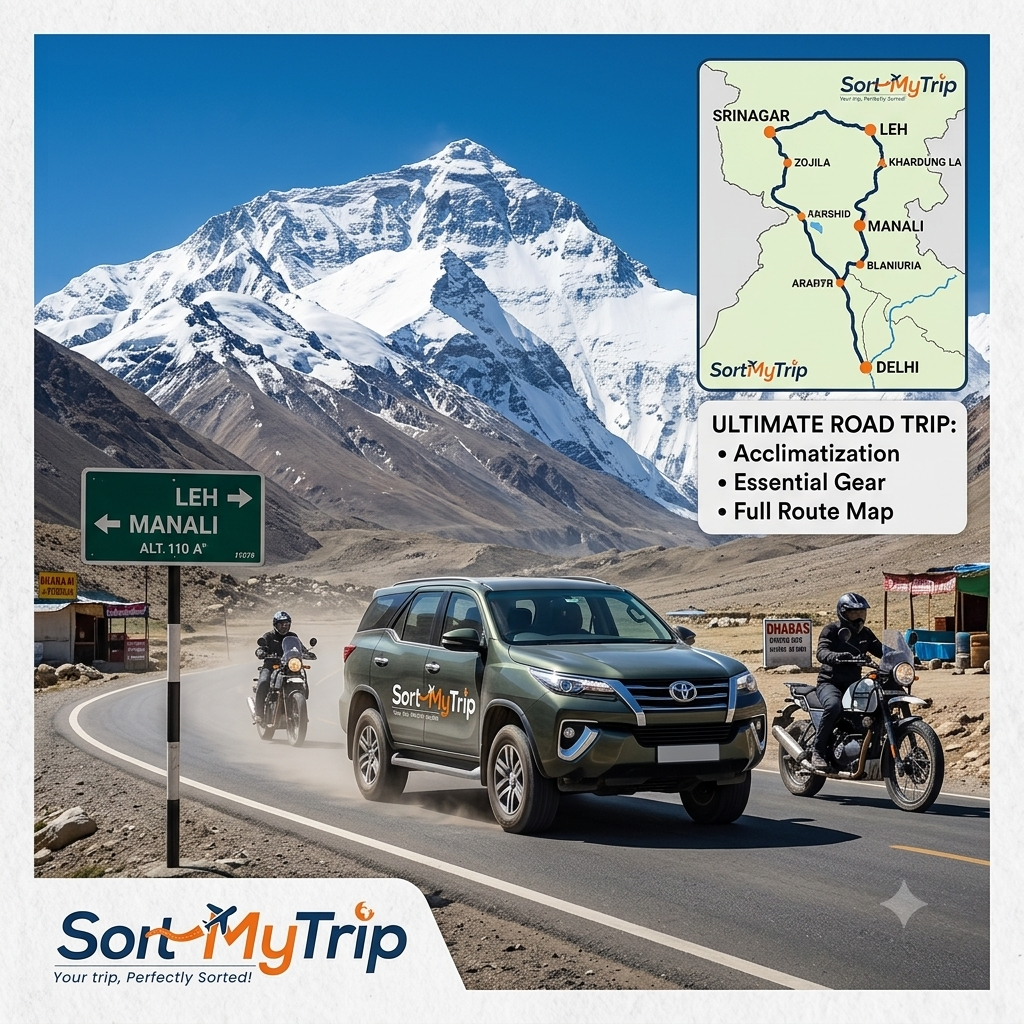
The Ultimate Delhi to Leh Road Trip: Route Map, Acclimatization, and Essentials
For adventure seekers, road trippers, and wanderers alike, a road trip from Delhi to Leh is the ultimate pilgrimage. It is a journey that transforms you, transitioning from the chaotic, buzzing plains of India's capital to the surreal, silent, and high-altitude cold deserts of Ladakh. This isn't just a regular holiday; it is an expedition across some of the highest motorable mountain passes in the world, rugged terrains, unstable weather patterns, and vistas so breathtaking they seem painted by a divine brush.
Driving or riding through this trans-Himalayan landscape requires meticulous planning, absolute respect for nature, physical endurance, and a reliable itinerary. In this ultimate travel guide, we break down everything you need to know to execute a flawless Delhi to Leh road trip—including detailed route options, maps, critical acclimatization strategies, packing essentials, and budgeting guidelines.
Choosing Your Route: The Two Iconic Highways
When planning a road trip from Delhi to Leh, travelers are blessed with two distinctly different routes. Each highway offers a completely unique landscape, road conditions, and acclimatization profiles.
Option 1: The Manali to Leh Highway (The Adventurer’s Choice)
-
Total Distance: Approximately 980 km (via the Atal Tunnel)
-
Ideal Duration: 3 to 4 days
-
Route Outline: Delhi – Chandigarh – Manali – Jispas/Sarchu – Leh
This is the sharper, more dramatic route. The ascent is rapid, throwing you into high-altitude terrain within a single day of leaving Manali.
-
The Highlights: Passing through the structural marvel of the Atal Tunnel, traversing the challenging Gata Loops (a series of 21 hairpin bends), and crossing majestic passes like Baralacha La, Lachung La, and Tanglang La.
-
The Challenge: Because the altitude rises sharply, the risk of Acute Mountain Sickness (AMS) is significantly higher on this route, especially if you choose to sleep at high-altitude transit points like Sarchu.
Option 2: The Srinagar to Leh Highway (The Scenic & Gradual Climb)
-
Total Distance: Approximately 1,230 km
-
Ideal Duration: 4 to 5 days
-
Route Outline: Delhi – Jammu – Srinagar – Kargil – Leh
This route follows a more gradual incline, making it the preferred choice for family travelers, first-timers, or those highly prone to altitude sickness.
-
The Highlights: Driving along the lush green Kashmir valley, crossing the legendary and treacherous Zojila Pass, paying respects at the Kargil War Memorial in Dras (the second coldest inhabited place in the world), and witnessing the unique phenomena of Magnetic Hill.
-
The Challenge: This route passes through sensitive geopolitical zones, meaning you may encounter heavier military convoy traffic and stricter checkpoint screenings.
Expert Recommendation: To experience the absolute best of both worlds, plan a circular loop. Take the Srinagar highway to ascend gradually to Leh, spend a few days exploring Ladakh, and take the Manali highway on your way back down to Delhi.
Detailed Day-by-Day Route Map Blueprint (The Circuit Loop)
To help you visualize and execute this expedition seamlessly, here is a highly recommended 9-day transit blueprint utilizing the complete circuit loop.
Day 1: Delhi to Jammu / Patnitop (Approx. 590 km | 11-12 Hours)
Start long before dawn to escape the notorious Delhi-NCR traffic gridlocks. Cruise along the smooth National Highway 44 (NH44) through Punjab. As you enter Jammu and Kashmir, the flat plains begin to give way to rolling green hills. Stay overnight in Jammu or climb slightly higher to the scenic hill station of Patnitop to escape the low-land heat.
Day 2: Jammu to Srinagar (Approx. 250 km | 7-8 Hours)
This leg takes you through the impressive Chenani-Nashri Tunnel (India's longest bi-directional road tunnel). The drive runs alongside the roaring Chenab River before opening up into the stunning, picture-perfect bowl of the Kashmir Valley. Spend your evening relaxing on a peaceful Shikara ride on Dal Lake in Srinagar.
Day 3: Srinagar to Kargil (Approx. 200 km | 7-8 Hours)
The real mountain driving begins today. You will drive past the golden meadows of Sonamarg before tackling the mighty Zojila Pass. Zojila can be muddy, rocky, and narrow, demanding complete concentration. Once across, the landscape shifts noticeably into a starker alpine environment. Stop by the Dras War Memorial to pay homage to India’s war heroes before resting your head in Kargil.
Day 4: Kargil to Leh (Approx. 220 km | 6-7 Hours)
The roads from Kargil to Leh are a driver's dream—smooth, beautifully banked tarmac maintained by the Border Roads Organisation (BRO). Along the way, cross Namika La and Fotu La (the highest point on the Srinagar-Leh highway). Before reaching Leh, stop to marvel at the ancient Lamayuru Monastery (known for its moonland-like landscape) and experience the gravity-defying illusion of Magnetic Hill. Arrive in Leh by evening.
Day 5: Mandatory Rest & Local Exploration in Leh (Acclimatization Day)
Do not attempt to drive to higher passes today. Keep physical exertion to an absolute minimum. Stroll gently through the Leh Main Market, visit the historic Leh Palace, or watch the sunset from the iconic Shanti Stupa. Your body will thank you for the rest as it adjusts to the thin air at 11,500 feet.
Day 6: Leh to Nubra Valley via Khardung La (Approx. 160 km | 5-6 Hours)
Climb up toward Khardung La, historically celebrated as one of the highest motorable roads in the world. Spend no more than 15-20 minutes at the top to prevent altitude sickness. Descend into the surreal Nubra Valley, characterized by sand dunes flanked by snow-capped peaks. Take a ride on the unique double-humped Bactrian camels at Hunder.
Day 7: Nubra Valley to Pangong Tso via Shyok Route (Approx. 275 km | 7-8 Hours)
Instead of backtracking to Leh, take the direct and adventurous route along the rushing Shyok River to the world-famous Pangong Tso lake. Watch the water shift colors from turquoise to deep indigo as the sun moves across the sky. Sleep in well-insulated lakeside eco-cottages or camps.
Day 8: Pangong Tso to Sarchu / Jispa via Chang La (Approx. 320 km | 9-10 Hours)
A long, demanding day of driving lies ahead. Cross Chang La pass and hit the Manali-Leh highway. Drive across the vast, surreal Moore Plains—a flat, high-altitude plateau stretching for 40 kilometers. Navigate the twin passes of Lachung La and Nakee La before tackling the 21 hairpin loops of Gata Loops. Arrive at Sarchu or push through to Jispa for a more comfortable, lower-altitude sleep.
Day 9: Jispa to Manali and Delhi (Approx. 140 km to Manali + 540 km to Delhi)
Drive through the engineering marvel of the Atal Tunnel, instantly bypassing the chaotic and weather-dependent Rohtang Pass. You will descend into the lush, green pine forests of Manali. From Manali, proceed down the Himalayan foothills back onto the plains, concluding your epic loop as you roll back into Delhi.
Mastering Acclimatization: How to Beat Acute Mountain Sickness (AMS)
The biggest threat to a successful Ladakh road trip isn't mechanical failure or bad roads; it is Acute Mountain Sickness. Leh sits at roughly 11,500 feet above sea level, while surrounding passes cross over 17,000 feet. At these elevations, atmospheric pressure drops, meaning there are fewer oxygen molecules per breath.
If your body isn't given adequate time to adjust to this change, you can become severely ill. Understanding and respecting the rules of acclimatization is non-negotiable.
Common Symptoms of AMS
-
Mild to throbbing headaches
-
Dizziness, lightheadedness, or vertigo
-
Nausea, vomiting, or loss of appetite
-
Shortness of breath during mild physical activity
-
Insomnia or disrupted sleep patterns
Golden Rules for Preventing AMS
-
Ascend Gradually: This is why the Srinagar route is highly recommended for the onward journey. It breaks the altitude gain over several days, giving your lungs a chance to adapt naturally.
-
The Rule of 48 Hours: Once you arrive in Leh, dedicate 36 to 48 hours to complete rest. Avoid long walks, smoking, drinking alcohol, and heavy meals during this initial window.
-
Hydrate Constantly: Drink 4 to 5 liters of water daily. The air in high altitudes is incredibly dry, and your body depletes fluids quickly through rapid breathing. Electoral, ORS, or glucose-infused water can help maintain electrolyte balances.
-
Consider Preventive Medication: Consult your family physician before leaving regarding preventative medications like Acetazolamide (commonly known as Diamox). Diamox helps the body acclimatize faster, but it must be started a day before you begin gaining significant altitude.
-
Carry Portable Oxygen Cylinders: Always keep small, portable oxygen cans (available at pharmacies in Manali or Leh) in your vehicle for emergency situations when a passenger experiences a sudden drop in oxygen levels.
Preparing Your Vehicle for the Ultimate Test
The terrains of Ladakh will push your machine to its absolute limits. Low ground clearance vehicles or poorly maintained rides will struggle.
For Cars / SUVs
-
Ground Clearance matters: A vehicle with high ground clearance (ideally 180mm or more) is highly recommended. Four-wheel drive (4WD) or All-Wheel Drive (AWD) systems are extremely beneficial when crossing muddy water streams (pagal nallahs) or loose gravel slopes, though experienced drivers can handle a front-wheel-drive vehicle with careful line placement.
-
Underbody Protection: Ensure your vehicle has a sturdy engine bash plate installed to protect the oil sump from stray boulders on rough pass crossings.
-
Pre-Trip Servicing: Get a comprehensive service done before departure. Check brake pads, flush the coolant, inspect suspension bushings, and ensure your air filter is clean (thin air requires maximum air inflow for engine combustion).
For Motorcycles
-
Engine Displacement: Royal Enfields (Classic, Himalayan, Bullet) are the traditional choices due to their low-end torque. However, modern adventure tourers and dual-sports bikes are exceptional for handling these terrains.
-
Essential Spares: Carry a spare clutch cable, accelerator cable, chain link tool, extra engine oil, and a portable tire inflator with a puncture repair kit.
Packing Essentials Checklist
When packing for Ladakh, you must prepare for four seasons in a single day. The sun can be harsh enough to cause sunburn, while the shadow can drop below freezing temperatures within minutes.
1. Apparel & Clothing
-
The Layering Principle: Do not rely on one heavy jacket. Pack thermal innerwear, fleece sweaters, windproof jackets, and waterproof outer layers.
-
Footwear: Sturdy, waterproof trekking shoes or riding boots, along with multiple pairs of wool socks.
-
Protection: Polarized UV sunglasses (to prevent snow blindness), a woolen beanie to cover your ears, and a wide-brimmed sun hat.
2. Electronics & Navigation
-
Offline Maps: Mobile networks are spotty to non-existent on the highways. Download extensive offline Google Maps for the entire Jammu-Kashmir-Ladakh-Himachal region.
-
Power Backups: Cold temperatures drain batteries rapidly. Carry heavy-duty power banks (20,000mAh or higher) to keep your phones, cameras, and navigation systems charged.
-
Connectivity: Only Postpaid mobile connections work in the Union Territory of Ladakh. BSNL offers the widest coverage across remote areas, while Airtel and Jio work exceptionally well within Leh town and Nubra Valley.
3. Documentation & Permits
-
Inner Line Permits (ILP): Domestic and international travelers require an Inner Line Permit to visit restricted border areas like Nubra Valley, Pangong Tso, and Tso Moriri. These can be applied for online via the official Ladakh Inner Line Permit portal or arranged via a registered travel agency.
-
Vehicle Papers: Keep your original Driver's License, Vehicle Registration Certificate (RC), valid Pollution Under Control (PUC) certificate, and comprehensive insurance papers handy at every military check-post.
Estimated Budget Breakdown for the Road Trip
To help you manage your finances efficiently, here is an approximate cost breakdown for a 9 to 10-day road trip from Delhi to Leh.
| Expense Category | Estimated Cost (INR) | Notes / Details |
| Fuel (Petrol / Diesel) | ₹15,000 – ₹22,000 | Dependent on vehicle mileage, idling times, and mountain terrain driving. |
| Accommodation | ₹2,500 – ₹6,000 per night | Ranging from budget homestays to mid-range lakeside luxury camps. |
| Meals & Food | ₹800 – ₹1,500 per day | Covers roadside dhabas, local Ladakhi cafes, and hotel buffets. |
| Permits & Tolls | ₹1,000 – ₹2,000 | Includes state border tolls, green taxes, and Ladakh Inner Line Permits. |
| Emergency Buffer | ₹10,000 | Kept aside strictly for unexpected mechanical repairs, flat tires, or medical needs. |
Plan Your Dream Himalayan Expedition with Sortmytrip
Conquering the roads from Delhi to Leh is a monumental milestone for any traveler, but organizing a trip of this scale requires flawless execution. Balancing hotel reservations across remote regions, tracking fluctuating weather and road-closure updates, securing Inner Line Permits, and arranging reliable backup support can turn a dream vacation into an exhausting planning chore. That is where Sortmytrip steps in to streamline your adventure.
At Sortmytrip, we turn complex travel logistics into smooth, stress-free journeys. Whether you want to drive your own vehicle as part of a safely guided convoy, hire a rugged, terrain-tested 4x4 SUV with a seasoned mountain driver, or join an organized group motorcycle tour with an accompanying mechanical crew and medical support vehicle, we have you covered.
Why Choose Sortmytrip for Your Ladakh Road Trip?
-
Seamless Permit Processing: Skip the long government queues and confusing online portals. We handle your Ladakh Inner Line Permits and state transit clearances before you even pack your bags.
-
Vetted, Safe Accommodations: We partner with handpicked hotels, cozy homestays, and well-insulated luxury camps that prioritize safety, clean oxygen provisions, and warm hospitality.
-
Expert Route Mentorship: Our team provides real-time updates on pass conditions, water-stream crossings, and fuel station availability, ensuring you are never caught off guard.
-
Comprehensive Medical Backing: Your health is our highest priority. Our itineraries factor in scientifically backed acclimatization curves, and our premium tours come equipped with oxygen support systems.
-
24/7 Dedicated Concierge: From mechanical breakdowns on the remote Moore Plains to sudden itinerary changes due to weather anomalies, our remote assistance team is just a call away.
Don’t leave an expedition of a lifetime to guesswork and unstable forum reviews. Let the seasoned experts curate a personalized road trip that perfectly balances adrenaline, comfort, and safety.
Contact Sortmytrip today to explore our premium Delhi to Leh road trip packages, customize your trans-Himalayan itinerary, and take the first step toward conquering the roof of the world!