How to Calculate Your Complete Travel Budget Before Booking
Learn how to calculate your complete travel budget before booking. Discover practical tips for transport, hotels, food, sightseeing, activities, shopping, and emergency costs.
H1: How to Calculate Your Complete Travel Budget Before Booking
Introduction
Planning a trip is exciting, but managing the budget can be challenging.
Many travellers calculate only the hotel and flight costs. Later, they realize that food, local transport, sightseeing, activities, shopping, and other expenses can increase the total cost.
A proper travel budget helps you understand how much your trip will actually cost.
It also helps you avoid last-minute financial stress.
Whether you are planning a weekend getaway, a family holiday, honeymoon, backpacking trip, or international vacation, creating a complete travel budget is an important step before booking.
In this guide, we will explain how to calculate your complete travel budget step by step.
H2: Why Should You Calculate Your Travel Budget?
A travel budget gives you a clear idea of your expected expenses.
It helps you decide where to spend more and where to save.
The major benefits include:
Avoiding unexpected expenses
Choosing the right destination
Comparing different travel packages
Selecting suitable hotels
Planning activities according to your budget
Keeping money aside for emergencies
Avoiding unnecessary spending
Managing your overall trip cost
A well-planned budget can make your trip more comfortable and stress-free.
H2: Start With Your Total Travel Budget
Before searching for flights or hotels, decide how much you can comfortably spend.
For example:
Total available budget: ₹60,000
Number of travellers: 2
Trip duration: 5 days
Your budget should cover all major and minor expenses.
A simple formula is:
Total Travel Budget = Transportation + Accommodation + Food + Sightseeing + Activities + Local Transport + Shopping + Emergency Fund
This gives you a basic structure for your trip.
H2: Calculate Transportation Costs
Transportation is usually one of the biggest parts of a travel budget.
You should calculate the cost of reaching the destination and moving around after arrival.
H3: Calculate Flight or Train Costs
Check the approximate round-trip cost before booking your hotel.
Include:
Flight tickets
Train tickets
Bus tickets
Airport transfers
Railway station transfers
Baggage charges
Seat selection charges
Travel insurance, if applicable
For international trips, also consider airport taxes and other applicable charges.
H3: Calculate Local Transportation
Your destination may require taxis, buses, rental cars, bikes, or other local transport.
Estimate the cost based on your itinerary.
For example:
Airport to hotel
Hotel to sightseeing places
Intercity transfers
Local sightseeing
Return transfers
For road trips, include fuel and toll charges.
H2: Calculate Accommodation Costs
Accommodation is another major part of your travel budget.
Do not simply look at the room price.
Check what is included in the booking.
Consider:
Room tariff
Number of nights
Taxes
Breakfast
Extra beds
Resort fees, where applicable
Parking charges
Additional hotel services
For example:
Hotel cost = ₹4,000 per night × 4 nights
Total accommodation cost = ₹16,000
If breakfast is included, you can reduce your daily food budget.
H3: Choose the Right Hotel According to Your Budget
Your hotel should match your travel style.
Budget travellers can consider:
Hostels
Guesthouses
Homestays
Budget hotels
Mid-range travellers can choose:
3-star hotels
Boutique hotels
Comfortable resorts
Luxury travellers may prefer:
4-star or 5-star hotels
Premium resorts
Luxury villas
Do not spend most of your travel budget on accommodation unless the hotel experience is a major part of your trip.
H2: Estimate Your Food Budget
Food expenses are often underestimated.
Calculate your approximate daily food cost before travelling.
Include:
Breakfast
Lunch
Dinner
Snacks
Tea or coffee
Local food experiences
Drinks
For example:
Daily food budget per person = ₹1,000
For 5 days:
₹1,000 × 5 = ₹5,000 per person
For two travellers:
₹5,000 × 2 = ₹10,000
You can reduce food costs by choosing hotels with breakfast included.
H2: Add Sightseeing and Entry Fees
Create a list of places you want to visit.
Check whether each attraction has an entry fee.
Your sightseeing budget may include:
Monument entry tickets
Museum tickets
National park fees
Fort entry fees
Temple or attraction fees
Guide charges
Parking charges
Camera fees, where applicable
Make a simple list before your trip.
This will help you avoid surprises.
H2: Calculate Activity Costs
Activities can significantly increase your travel expenses.
Popular activities may include:
Scuba diving
Paragliding
River rafting
Trekking
Safari
Skiing
Boat rides
Adventure sports
Island tours
Camping
Always check the activity price before adding it to your itinerary.
If you are travelling on a limited budget, select the activities that are most important to you.
H2: Include Shopping Expenses
Shopping is not essential for every traveller, but it should be considered if you plan to buy souvenirs or local products.
Set a fixed shopping budget.
For example:
Souvenirs: ₹2,000
Local handicrafts: ₹2,000
Clothing: ₹3,000
Total shopping budget = ₹7,000
Once you reach your shopping limit, avoid unnecessary purchases.
H2: Keep a Budget for Travel Documents
For international travel, documents can add to your total expenses.
Depending on the destination, you may need:
Passport
Visa
Travel insurance
International driving permit
Vaccination or health documentation, if required
Passport photographs
Other government or travel documents
These costs should be added before finalizing your trip budget.
For domestic travel, documentation costs are usually lower, but you should still carry valid identification.
H2: Don't Forget Travel Insurance
Travel insurance is an important part of international travel planning.
It can help cover certain unexpected situations according to the policy terms.
Depending on the plan, coverage may include areas such as:
Medical emergencies
Trip cancellation
Lost baggage
Travel delays
Emergency assistance
Compare policies carefully before purchasing.
Do not select insurance only because it is the cheapest option.
H2: Create an Emergency Fund
Never plan a trip using your entire available budget.
Keep some money aside for unexpected expenses.
A good approach is to keep around 10% to 15% of your estimated trip cost as an emergency reserve.
For example:
Estimated trip cost = ₹50,000
Emergency reserve at 10% = ₹5,000
Total planned amount = ₹55,000
This reserve can help with unexpected transport, medical needs, booking changes, or other emergencies.
H2: Calculate Your Complete Travel Budget
Once you have estimated every category, combine the costs.
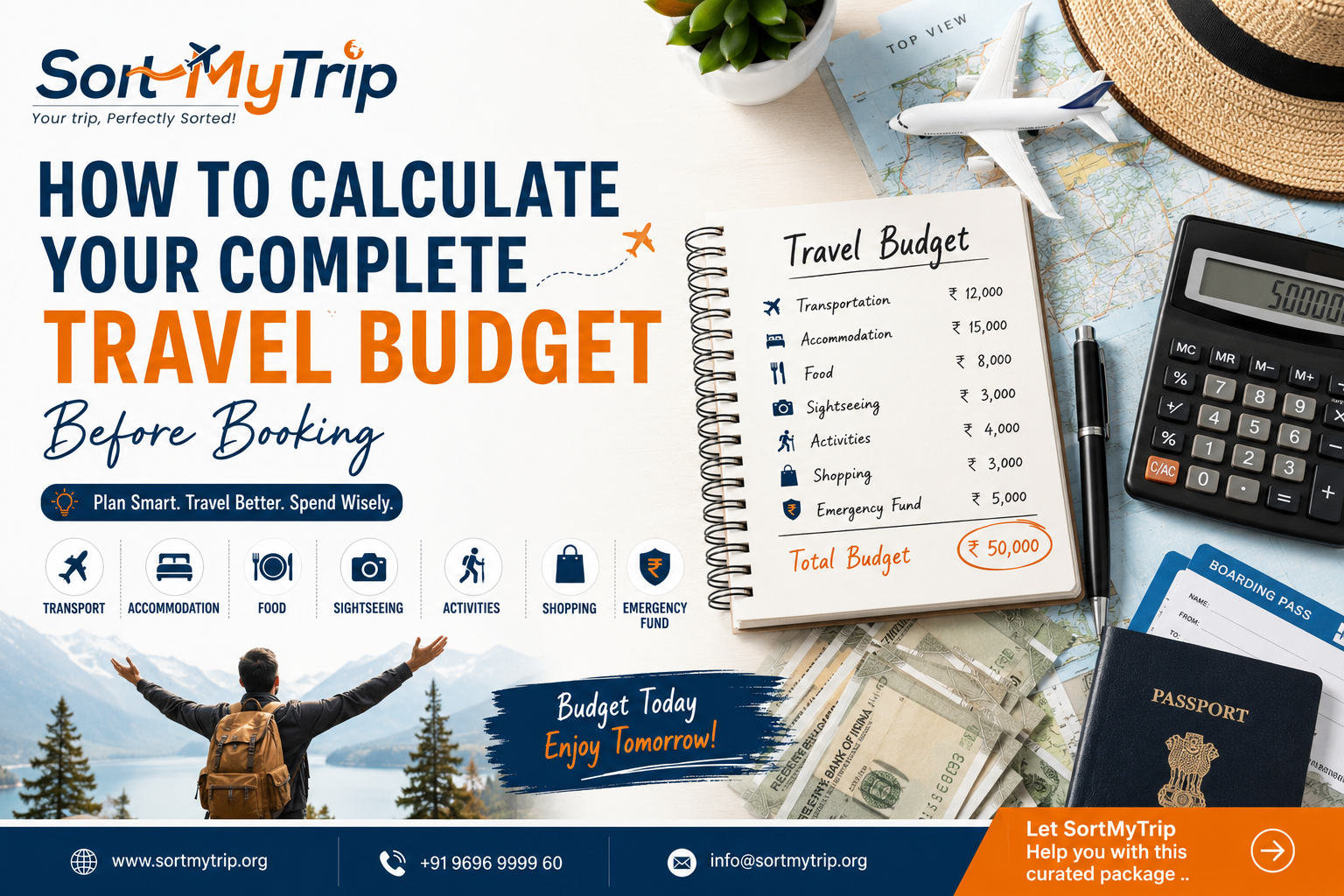
Here is a sample budget for a 5-day domestic trip for two people:
| Expense | Estimated Cost |
|---|---|
| Flights/Train | ₹12,000 |
| Accommodation | ₹15,000 |
| Food | ₹8,000 |
| Local Transport | ₹5,000 |
| Sightseeing | ₹3,000 |
| Activities | ₹4,000 |
| Shopping | ₹3,000 |
| Emergency Fund | ₹5,000 |
| Total | ₹55,000 |
This is only an example.
Actual costs will depend on your destination, travel dates, hotel category, transportation, and activities.
H2: Use a Daily Travel Budget
A daily budget makes it easier to control spending.
For example, if your trip has ₹20,000 available for daily expenses over 5 days:
₹20,000 ÷ 5 = ₹4,000 per day
You can divide this amount between:
Food
Local transport
Sightseeing
Activities
Shopping
You do not have to spend the same amount every day.
Keep more money available for days with expensive activities.
H2: Compare Travel Packages Before Booking
Sometimes booking everything separately may not be the cheapest option.
Travel packages can combine:
Hotels
Transfers
Sightseeing
Meals
Local transportation
Activities
Compare the total package price with the cost of booking each service individually.
Also check what is included and excluded.
A cheaper package is not always better if important services are missing.
H2: Check Inclusions and Exclusions Carefully
Before making any booking, read the inclusions and exclusions.
Look for:
Accommodation
Meals
Transfers
Sightseeing
Entry tickets
Driver charges
Parking
Toll taxes
Permits
Additional activities
Ask the travel company about any unclear charges.
This can prevent unexpected costs later.
H2: Plan for Seasonal Price Changes
Travel costs can change depending on the season.
Peak seasons often have higher:
Hotel prices
Flight fares
Transport costs
Activity charges
During shoulder or off-season periods, you may find better deals.
However, always check the weather and accessibility before choosing an off-season trip.
H2: How to Save Money Without Reducing the Experience
You do not always need a large budget for a memorable trip.
Try these simple tips:
Book flights or trains early
Compare multiple hotels
Travel during shoulder season
Choose hotels with breakfast
Use public transport where practical
Plan sightseeing by location
Avoid unnecessary activities
Set a daily spending limit
Compare travel packages
Keep an emergency reserve
Smart planning is more important than simply spending less.
H2: Common Travel Budget Mistakes
Many travellers make the same budgeting mistakes.
Avoid these common errors:
Calculating only hotel and transport costs
Forgetting local transportation
Ignoring taxes and extra charges
Not keeping an emergency fund
Spending too much on shopping
Booking expensive activities without planning
Forgetting travel insurance
Not checking package inclusions
Making last-minute bookings during peak season
A detailed budget can help you avoid most of these problems.
H2: Travel Budget Checklist
Before booking your trip, check the following:
Destination selected
Travel dates confirmed
Transportation cost calculated
Hotel cost calculated
Food budget estimated
Local transport included
Sightseeing fees checked
Activities included
Shopping budget fixed
Travel insurance considered
Emergency fund reserved
Package inclusions checked
Extra charges confirmed
If all these points are covered, you are ready to make your bookings with greater confidence.
H2: Plan Your Trip With SortMyTrip
Creating a complete travel budget can take time.
You need to compare hotels, transportation, sightseeing, activities, meals, and several other expenses.
This is where professional trip planning can make your travel easier.
Let SortMyTrip Help you with this curated package.
SortMyTrip can help you plan your holiday according to your destination, travel dates, duration, preferences, and budget.
Whether you are planning a family vacation, honeymoon, group tour, adventure trip, or weekend getaway, a properly planned itinerary can help you manage your travel expenses more efficiently.
You can also compare different travel options and choose a package that fits your requirements.
H2: Final Takeaway
A complete travel budget is more than the price of a flight and hotel.
You should consider transportation, accommodation, food, sightseeing, activities, shopping, insurance, and emergency expenses.
Start by deciding your total budget.
Then divide it into different categories.
Keep a small emergency reserve and always check the inclusions before booking.
With proper planning, you can enjoy a memorable trip without putting unnecessary pressure on your finances.
Plan your next holiday smartly with SortMyTrip and make your travel planning simple, transparent, and stress-free.