Travel Tips for Bhutan | Everything You Need Before Visiting in 2026
Bhutan is one of those destinations that feels completely different from anywhere else in the world.
Known for its peaceful monasteries, dramatic Himalayan landscapes, colourful festivals, traditional architecture and unique philosophy of Gross National Happiness, Bhutan offers travellers an opportunity to slow down and experience a different way of life.
But before planning your Bhutan holiday, there are a few important things you should know.
From entry permits and the Sustainable Development Fee to the best time to visit, local customs, money, transportation and what to pack, this complete Bhutan travel guide covers everything you need to know before visiting in 2026.
Why Visit Bhutan?
Bhutan is an excellent destination for travellers looking for a combination of nature, culture, spirituality and adventure.
Some of the biggest reasons to visit include:
Stunning Himalayan scenery
Ancient monasteries and dzongs
Buddhist culture and traditions
Trekking and hiking
Peaceful mountain valleys
Traditional Bhutanese architecture
Colourful festivals
Delicious local cuisine
Wildlife and nature experiences
A slower and more peaceful travel experience
Unlike many conventional tourist destinations, Bhutan places a strong emphasis on sustainable tourism and preserving its cultural and natural heritage.
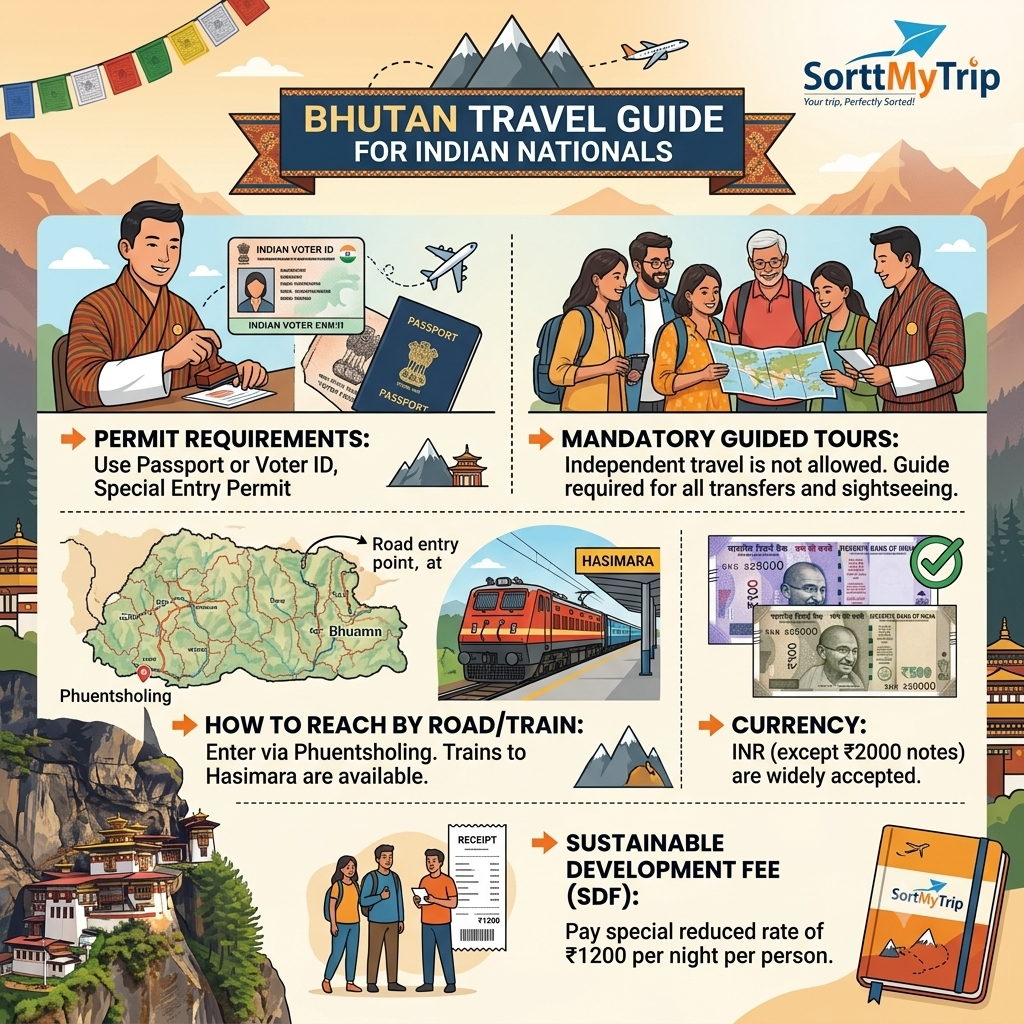
Bhutan Entry Requirements for Indian Travellers
If you're travelling from India, entering Bhutan is relatively straightforward, but you still need the appropriate travel permit.
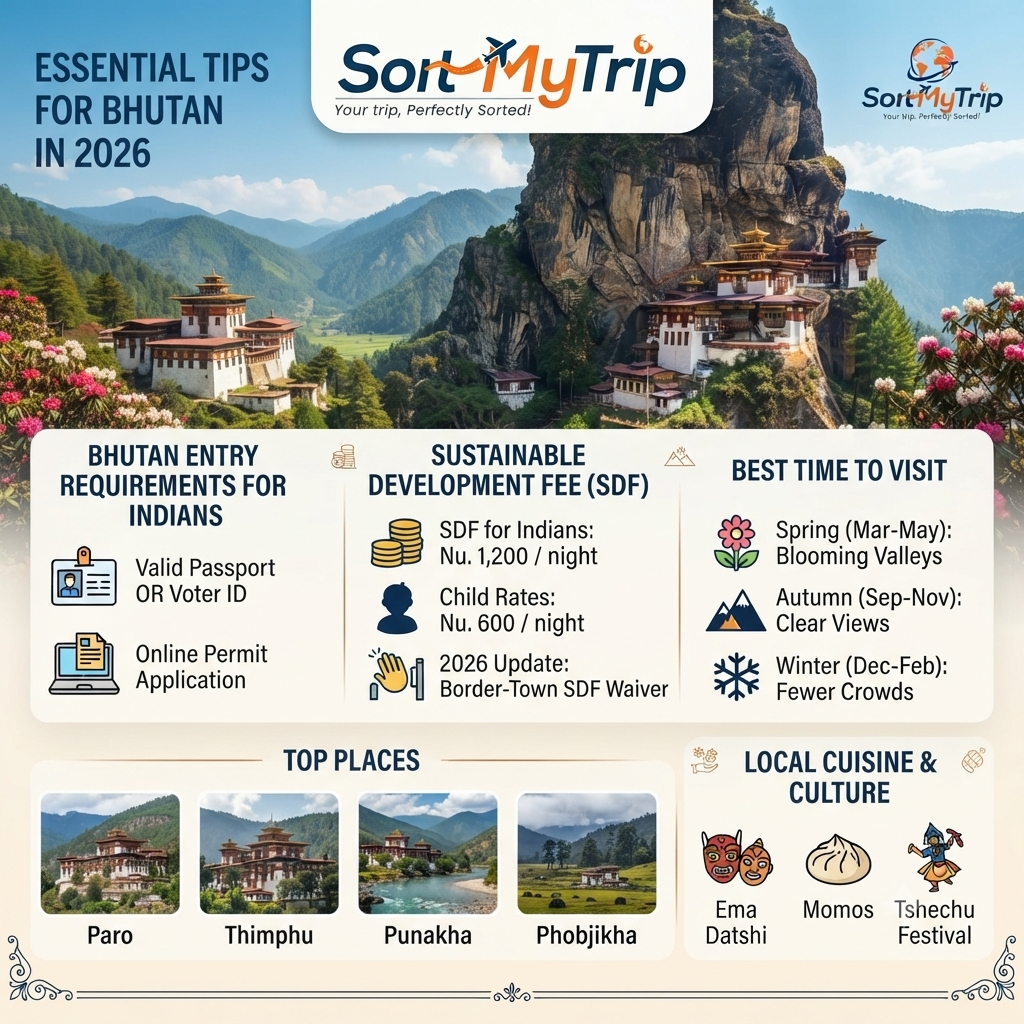
Indian nationals can enter Bhutan using either:
A valid Indian passport, or
A valid Indian Voter ID card
Indian children under 18 can use a passport or birth certificate, provided they are accompanied by a legal guardian.
Indian travellers do not need a Bhutan visa, but they do require a permit.
You can apply for the permit online before travelling or obtain it at a point of entry. Bhutan Tourism recommends arranging the permit in advance to avoid potentially long waits at the border.
What Is the Sustainable Development Fee in Bhutan?
The Sustainable Development Fee, commonly called SDF, is a daily fee paid by tourists visiting Bhutan.
For Indian nationals holding a valid Indian passport or Voter ID, the current SDF is:
Nu. 1,200 per person per night
Children aged 6 to under 12 pay Nu. 600 per night, while children under 6 do not pay the SDF.
The SDF contributes towards Bhutan's development and supports areas such as environmental conservation, cultural preservation, infrastructure, healthcare, education and tourism-related initiatives.
Important 2026 Update: Border-Town SDF Waiver
From 2 June 2026, tourists visiting the designated border towns of Samtse, Phuentsholing, Gelephu and Samdrupjongkhar for up to 24 hours can benefit from an SDF waiver.
The waiver is scheduled to remain in place for one year until August 2027, subject to the applicable conditions.
If you're planning to travel deeper into Bhutan, normal SDF rules apply.
Do You Need Travel Insurance for Bhutan?
Travel insurance is no longer mandatory for visiting Bhutan.
Bhutan officially withdrew the mandatory travel insurance requirement in April 2024. However, the Department of Tourism recommends having travel insurance as a precaution for international travel.
A good policy can be useful for unexpected situations such as:
Medical emergencies
Trip cancellation
Lost baggage
Travel delays
Emergency evacuation
Best Time to Visit Bhutan
Bhutan can be visited throughout much of the year, but the ideal season depends on what you want to experience.
Spring: March to May
Spring is one of the most beautiful seasons in Bhutan.
You can expect:
Pleasant temperatures
Blooming flowers
Green valleys
Clear Himalayan scenery
Excellent conditions for sightseeing
Spring is particularly attractive for nature lovers and photographers.
Summer: June to August
Summer brings the monsoon to Bhutan.
Rain can affect road journeys and mountain visibility, but the countryside becomes incredibly green.
This can be a good period for travellers who prefer quieter destinations and don't mind occasional rain.
Autumn: September to November
Autumn is considered one of the best periods to visit Bhutan.
The weather is generally pleasant, skies can be clear and mountain views are often excellent.
It is also an important festival season.
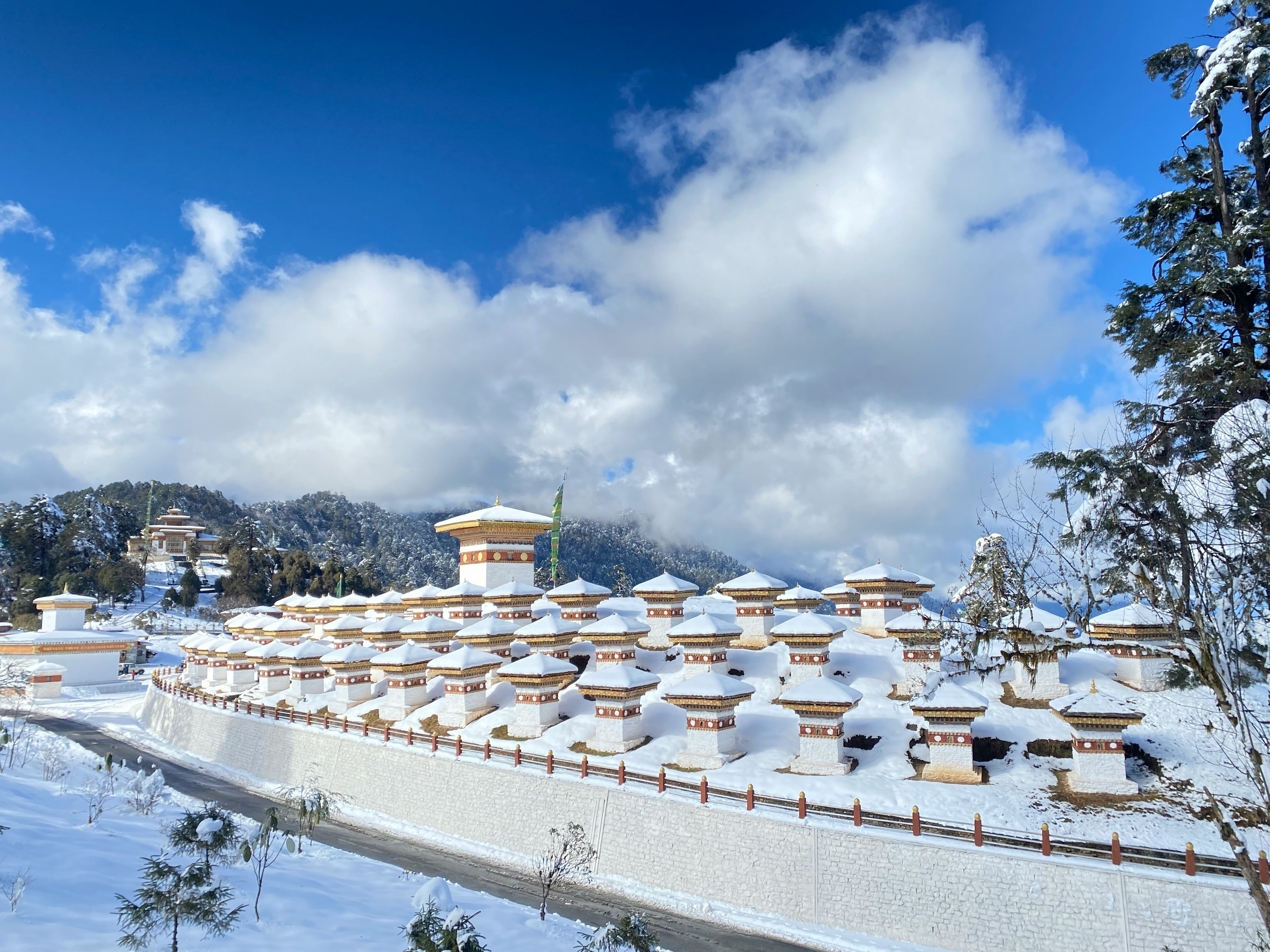
Winter: December to February
Winter can be cold, particularly at higher elevations.
However, lower valleys such as Punakha can remain relatively comfortable, making winter an interesting option for travellers who want fewer crowds.
How Many Days Are Enough for Bhutan?
For a first-time Bhutan trip, 5 to 7 days is a good starting point.
A popular itinerary can include:
Day 1: Phuentsholing / Paro arrival and transfer
Day 2: Paro sightseeing
Day 3: Tiger's Nest hike
Day 4: Paro – Thimphu
Day 5: Thimphu sightseeing
Day 6: Thimphu – Punakha
Day 7: Punakha sightseeing and return journey
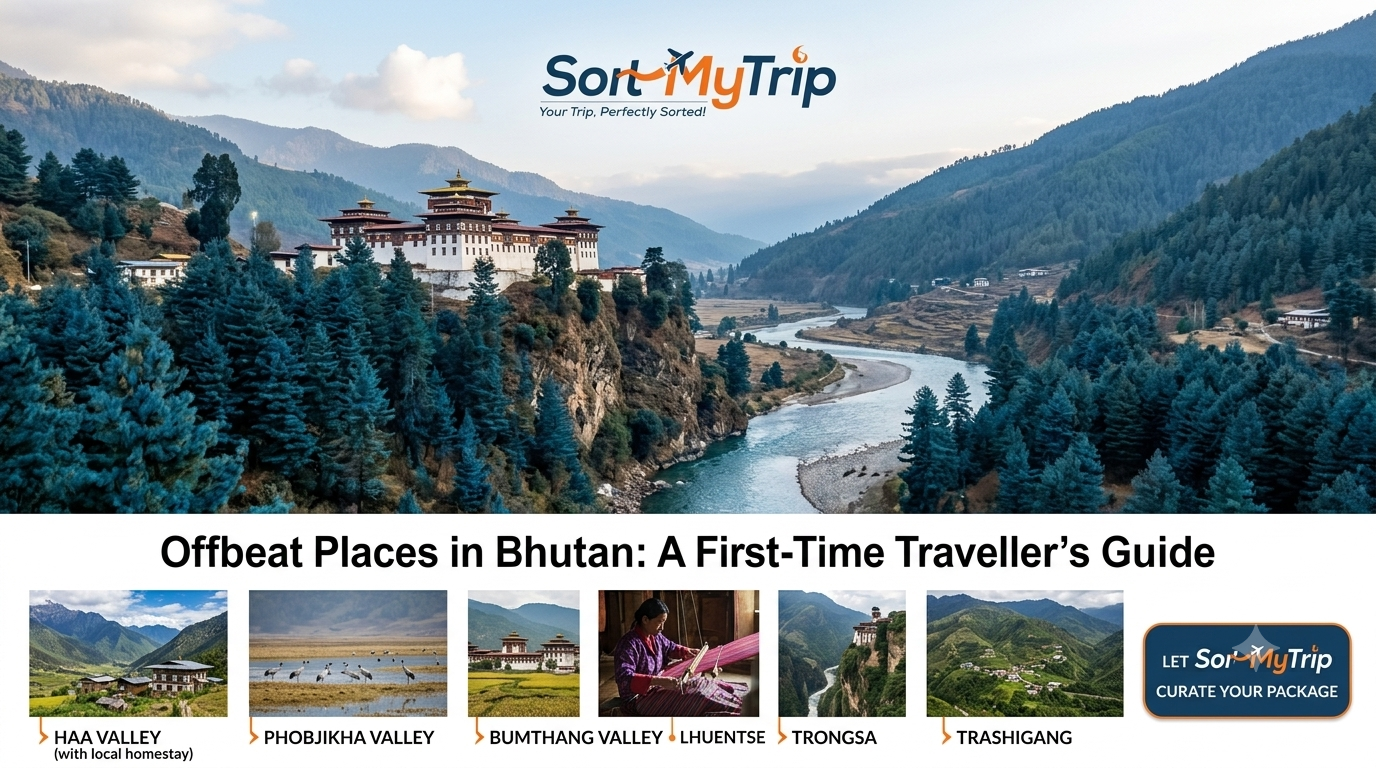
If you have more time, consider extending your trip to destinations such as:
Gangtey
Phobjikha Valley
Bumthang
Haa Valley
Remember that Bhutan is a mountain country, so road journeys can take longer than the distance on a map might suggest.
Top Places to Visit in Bhutan
1. Paro
Paro is usually the first destination for travellers arriving by air.
The valley is famous for:
Paro Dzong
National Museum
Traditional Bhutanese houses
Beautiful mountain landscapes
Tiger's Nest Monastery
2. Tiger's Nest Monastery
The Paro Taktsang, popularly known as Tiger's Nest, is Bhutan's most iconic attraction.
The monastery sits dramatically on a cliffside above the Paro Valley.
The hike generally takes several hours, depending on your fitness level and pace.
Wear comfortable shoes and carry sufficient water.
3. Thimphu
Thimphu is Bhutan's capital and cultural centre.
Popular attractions include:
Buddha Dordenma
Tashichho Dzong
Memorial Chorten
National Folk Heritage Museum
Traditional markets
Motithang Takin Preserve
4. Punakha
Punakha is famous for its spectacular dzong located at the meeting point of two rivers.
The Punakha Valley is also known for its beautiful countryside and relatively warmer climate.
5. Phobjikha Valley
Phobjikha is an excellent destination for nature lovers.
The valley is particularly famous for the endangered Black-necked Cranes that migrate to Bhutan during winter.
6. Bumthang
For travellers with more time, Bumthang offers a deeper cultural experience with monasteries, villages and beautiful mountain landscapes.
What to Eat in Bhutan
Bhutanese food is distinctive and often quite spicy.
Some dishes worth trying include:
Ema Datshi
A famous Bhutanese preparation made with chillies and cheese.
Kewa Datshi
Potatoes cooked with cheese and chillies.
Shakam Paa
A traditional dried-meat preparation cooked with vegetables and spices.
Phaksha Paa
Pork cooked with chillies and other ingredients.
Momos
Bhutanese dumplings are widely available and make an easy snack during sightseeing.
Vegetarian travellers can also find vegetarian dishes, but it is always useful to communicate your dietary preferences clearly when ordering.
Bhutanese Currency and Payments
Bhutan's currency is the Ngultrum (Nu.).
The Indian Rupee is also widely accepted, although travellers should not assume that every merchant will accept every denomination or payment method.
Before travelling, carry some cash for smaller shops, local vendors and places where card payments may not be available.
Bhutan Tourism currently recommends enabling international use on your cards, informing your bank about your travel dates and checking your card network and transaction limits before departure.
Internet and Mobile Connectivity
Wi-Fi is available at many hotels and tourist establishments in major towns.
However, connectivity can become less reliable in remote mountain areas.
If staying outside major towns or travelling through remote valleys, don't rely entirely on mobile internet.
Download important information, maps and booking details before heading into areas with limited connectivity.
What to Wear in Bhutan
Bhutan is culturally conservative, particularly around monasteries and religious sites.
Pack:
Comfortable trousers
Full-length pants
T-shirts and shirts
Light jacket
Warm layers
Comfortable walking shoes
Rain jacket
Sun protection
Modest clothing for temples and monasteries
When entering religious sites, avoid revealing clothing and follow local instructions.
Respect Bhutanese Culture
One of the most important Bhutan travel tips is to respect local customs.
Bhutan has a deeply rooted Buddhist culture.
When visiting monasteries, dzongs and temples:
Dress modestly
Remove hats where appropriate
Follow photography restrictions
Avoid loud conversations
Don't touch religious objects without permission
Walk respectfully around religious sites
Follow instructions from guides and authorities
Remember that some places are sacred rather than simply tourist attractions.
Photography Tips
Bhutan is a photographer's dream.
You can capture:
Himalayan mountains
Monasteries
Dzongs
Traditional houses
Prayer flags
Rural villages
Festivals
Landscapes
Local markets
However, photography may be restricted inside certain religious buildings.
Always ask your guide or check local signs before taking photographs.
Getting Around Bhutan
Bhutan's mountainous geography means road travel is an important part of the journey.
Private cars and tourist vehicles are commonly used for sightseeing.
Major routes connect destinations such as:
Phuentsholing → Thimphu → Punakha → Paro
Road journeys can take longer than expected because of winding mountain roads.
Therefore, avoid planning an itinerary that changes hotels every day unless necessary.
A slower itinerary will allow you to enjoy Bhutan rather than spending most of your holiday inside a vehicle.
Is Bhutan Safe for Tourists?
Bhutan is generally considered a safe destination for travellers.
Nevertheless, normal travel precautions are recommended.
Keep your valuables secure, follow local regulations and take extra care on mountain roads and hiking trails.
If you're trekking or hiking, check weather conditions and follow the advice of your guide.
What to Pack for Bhutan
Here's a useful Bhutan packing checklist:
Travel Documents
Passport / Voter ID
Bhutan permit documents
Flight or transport tickets
Hotel confirmations
Travel insurance details
Clothing
Comfortable walking shoes
Warm jacket
Light layers
Rain jacket
Socks
Modest clothing for religious sites
Essentials
Sunglasses
Sunscreen
Reusable water bottle
Personal medicines
Power bank
Universal travel adapter
Small backpack
For Tiger's Nest
Comfortable trekking shoes
Water bottle
Light snacks
Sunglasses
Sunscreen
Light jacket
Important Bhutan Travel Tips for First-Time Visitors
Book Accommodation in Advance
Popular hotels can become busy during festivals and peak travel seasons.
Don't Overpack Your Itinerary
Bhutan is best enjoyed slowly.
Give yourself enough time to appreciate the landscapes and culture.
Start Early for Tiger's Nest
An early start can make the hike more comfortable and give you more time at the monastery.
Carry Some Cash
Cards and digital payments are useful, but cash remains helpful in smaller establishments.
Keep a Reusable Water Bottle
It reduces plastic waste and is convenient during road journeys.
Respect Local Traditions
A respectful traveller will always have a better experience.
Keep Buffer Time
Mountain roads and weather conditions can affect travel schedules.
Don't make important onward connections too tight.
Is Bhutan Expensive?
Bhutan isn't necessarily a budget destination in the same way as some neighbouring countries.
Your overall cost depends on:
SDF
Accommodation
Transportation
Food
Guide services
Activities
Flights
Shopping
For Indian travellers, the SDF is currently Nu. 1,200 per person per night, which should be included in your overall travel budget.
The good news is that careful itinerary planning can help control your other travel expenses.
Bhutan Travel Checklist
Before leaving for Bhutan, make sure you have:
☑ Valid passport or Voter ID
☑ Bhutan entry permit
☑ Hotel bookings
☑ Transport arrangements
☑ Travel insurance
☑ Sufficient cash
☑ Comfortable walking shoes
☑ Weather-appropriate clothing
☑ Phone connectivity
☑ Important travel documents saved offline
Final Thoughts
Bhutan isn't simply a destination you visit and tick off a list.
It's a place where the journey itself becomes part of the experience.
From hiking to Tiger's Nest and exploring ancient dzongs to driving through peaceful Himalayan valleys and meeting local communities, Bhutan offers a travel experience that is deeply connected to nature and culture.
For Indian travellers, the entry process is relatively straightforward, but understanding the permit requirements and current SDF rules before departure can make the journey much smoother.
Plan slowly, respect the culture, keep your itinerary flexible and allow yourself time to enjoy the journey.
Bhutan isn't just a place to see. It's a place to experience.
Plan Your Bhutan Holiday With SortMyTrip
Planning your Bhutan adventure?
SortMyTrip can help you plan a customised Bhutan holiday with hotels, transportation, sightseeing and memorable experiences.
Whether you're planning a couple's getaway, family holiday, group tour or a spiritual Himalayan escape, create your Bhutan itinerary according to your travel style and budget.
Your Trip, Perfectly Sorted!
Frequently Asked Questions
Do Indians need a visa for Bhutan?
Indian nationals do not need a visa but require a Bhutan entry permit. A valid Indian passport or Indian Voter ID can be used for entry.
How much is the Bhutan SDF for Indians?
The current SDF for Indian nationals is Nu. 1,200 per person per night. Children aged 6 to under 12 pay Nu. 600, while children under 6 are exempt.
Is travel insurance mandatory for Bhutan?
No. Bhutan removed the mandatory travel insurance requirement in April 2024, although travel insurance is still recommended.
How many days are enough for Bhutan?
A 5–7 day trip is suitable for a first visit covering destinations such as Paro, Thimphu and Punakha.
What is the best time to visit Bhutan?
Spring and autumn are generally excellent seasons for sightseeing, while winter offers colder weather and fewer visitors in many areas.
What is Bhutan famous for?
Bhutan is famous for its Himalayan landscapes, Buddhist culture, monasteries, dzongs, festivals, traditional architecture and philosophy of Gross National Happiness.
Is Bhutan good for Indian tourists?
Yes. Bhutan is a popular international destination for Indian travellers, and Indian nationals have a separate permit process and preferential SDF rate.
Can Indians use Indian Rupees in Bhutan?
Indian Rupees are widely accepted in Bhutan, although travellers should carry Bhutanese currency as well for convenience, particularly for smaller purchases.
What should I wear in Bhutan?
Wear comfortable clothing for sightseeing and hiking, and choose modest clothing when visiting temples, monasteries and other religious places.