The Ultimate Western Ghats Monsoon Road Trip: Mumbai to Bhandardara Itinerary
When the relentless summer heat of the plains finally gives way to the first heavy downpours of June, a dramatic transformation sweeps across Maharashtra. The dusty, brown landscapes of the Sahyadri mountain range vanish almost overnight, replaced by an exploding, carpet-of-emerald green. For road trippers and nature lovers, this marks the beginning of the most anticipated travel season of the year: the Indian monsoon.
While popular weekend getaways like Lonavala, Khandala, and Mahabaleshwar draw massive, gridlocked crowds from Mumbai, those looking for an offbeat, deeply serene monsoon experience head elsewhere. Tucked away in the scenic Ahmednagar district, perched at an altitude of approximately 750 meters above sea level, lies the pristine holiday hamlet of Bhandardara.
The road journey from Mumbai to Bhandardara is arguably one of the most visually stunning monsoon driving corridors in India. Think winding mountain passes covered in thick blankets of fog, seasonal waterfalls cascading directly onto the asphalt, and massive, glass-like lakes reflecting stormy monsoon skies.
If you are ready to pack your bags, crank up your favorite driving playlist, and experience the raw, unbridled beauty of the Western Ghats, this comprehensive 2,000-word road trip itinerary is your ultimate blueprint. Here is how to execute the perfect Mumbai to Bhandardara monsoon road trip, along with how to seamlessly sort your travel plans with sortmytrip.
Route Overview and Driving Conditions
The distance between Mumbai and Bhandardara is approximately 165 to 180 kilometers, depending on your exact starting location in the city. Under normal conditions, the drive takes about 4 to 5 hours. However, during the monsoon season, you should budget at least 5 to 6 hours to account for scenic photography pitstops, a relaxed breakfast break, and cautious mountain driving.
The Preferred Route: Mumbai – Kalyan – Shahapur – Kasara Ghat – Ghoti – Bhandardara
This classic route utilizes the well-maintained National Highway 160 (Mumbai-Nashik Expressway) for the majority of the journey. The highway conditions are excellent, featuring multi-lane configurations that make exiting the Mumbai metropolitan region relatively smooth. The true magic of the drive begins after you cross Shahapur and approach the base of the mighty Kasara Ghat (Thal Ghat).
Monsoon Driving Tips for the Sahyadris
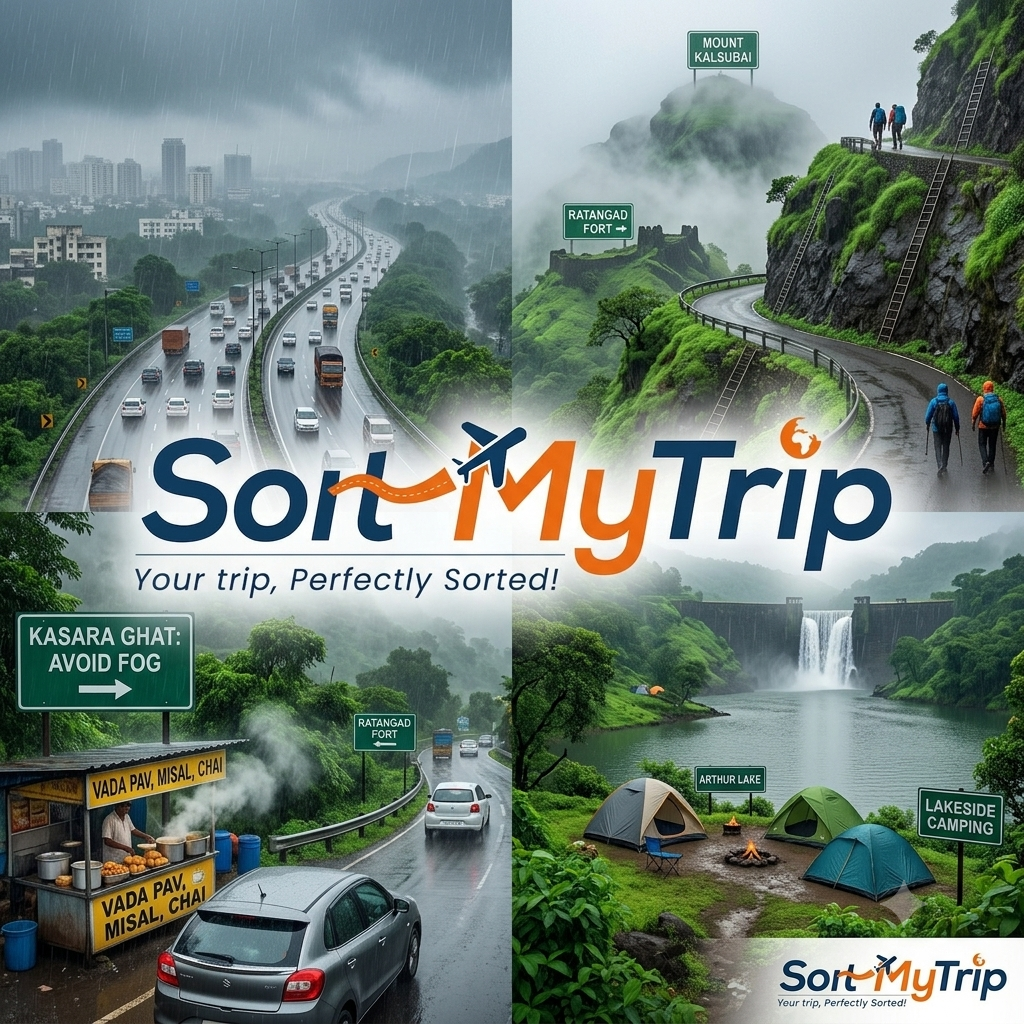
Driving through the Western Ghats in heavy rain requires specialized care and preparation. The Kasara Ghat features sharp, winding turns and can experience sudden, incredibly dense fog banks that drop visibility down to just a few meters. Ensure your vehicle’s wipers, defoggers, brakes, and headlights are in top-notch condition before leaving. Keep your hazard lights ready for zero-visibility zones, maintain a safe braking distance from heavy trucks, and never park your car on blind curves to take photos.
Stage 1: Exiting the Metropolis and the Breakfast Pitstop
To maximize your experience and beat the notorious weekend exit traffic from Mumbai, a departure time of 6:00 AM is highly recommended. As you leave the urban concrete behind and glide past Thane and Kalyan, the air quickly turns noticeably crisper, carrying the scent of wet earth (petrichor).
By the time you reach Shahapur or the outskirts of Igatpuri, your appetite will match the refreshing weather. The highway is lined with excellent local eateries and food plazas. Skip the continental options and go straight for an authentic Maharashtrian monsoon breakfast.
Stop at a local tapri or highway plaza to enjoy piping hot, crispy Kanda Bhajji (onion fritters), spiced Batata Vada, and Misal Pav—a spicy sprout curry topped with crunchy farsan, chopped onions, and lemon zest, served with soft buns. Pair this fiery breakfast with a steaming glass of ginger-cardamom cutting chai. Sitting under a thatched roof stall, watching the rain pour over the surrounding hills while holding a warm cup of tea, is the official initiation ritual of any true Sahyadri road trip.
Stage 2: Ascending the Kasara Ghat and Entering Paradise
As you restart your engine after breakfast, the road begins its steady upward tilt. You are now entering the Kasara Ghat, a majestic mountain pass that cuts directly through the northern crest of the Western Ghats.
During the monsoons, the Kasara Ghat transforms into a mystical wonderland. The dark basalt rock faces of the mountains come alive with hundreds of temporary, wispy waterfalls. At some stretches, the water sprays right onto your car windows, creating a natural car wash experience.
The peak of the ghat section is often enveloped in low-hanging monsoon clouds. Driving through these clouds, with green valley depths plunging down on one side and towering cliffs on the other, offers an exhilarating sense of adventure. Once you successfully navigate the ghats and pass the town of Igatpuri, look out for the exit toward Ghoti. Here, you will leave the broad national highway and turn onto the state roads leading directly into the heart of Bhandardara's rural landscapes.
Stage 3: Exploring the Wonders of Bhandardara
As you wind through narrow, tree-lined village roads past emerald paddy fields where local farmers are hard at work, the massive expanse of Arthur Lake begins to peek through the trees. You have officially arrived in Bhandardara.
This region is completely devoid of commercial mall roads or loud entertainment zones. Instead, nature rules supreme. Here are the iconic attractions you must explore over your weekend stay:
1. Arthur Lake and the Wilson Dam
Arthur Lake is a magnificent, sprawling body of water formed by the damming of the Pravara River. Surrounded by dense, pristine forests and the highest peaks of the Sahyadris, the lake looks breathlessly beautiful when dark, heavy storm clouds hover above it.
The lake is held back by the Wilson Dam, an architectural marvel constructed in 1910 during the British era. Standing at a height of over 150 feet, it is one of the oldest earthen dams in Asia. During peak monsoon periods, when the reservoir hits maximum capacity, the floodgates are opened, releasing a thunderous, spectacular cascade of water known locally as the Umbrella Falls. The sheer volume of water creates a massive, misty spray that can be felt hundreds of meters away on the viewing footbridge.
2. The Majestic Randha Falls
Located about 10 kilometers downstream from the dam, the Randha Falls is a raw display of nature's power. Here, the Pravara River plunges down a sheer, rocky gorge from a height of over 45 feet. During the monsoons, the waterfall turns into a roaring, chocolate-brown torrent of foaming water that creates a deafening echo across the valley. The viewing platforms offer incredible angles for landscape photography, but remember to stay strictly behind the safety railings, as the rocks become extremely slippery.
3. Mount Kalsubai: The Everest of Maharashtra
For those who look at mountains and immediately want to climb them, Bhandardara serves as the base for Mount Kalsubai. Towering at an altitude of 1,646 meters (5,400 feet), Kalsubai is the highest mountain peak in Maharashtra.
The trek to the top starts from the nearby village of Bari. While a summer trek can be exhausting, a monsoon trek to Kalsubai is an epic adventure. The trail takes you through rushing streams, lush meadows, and steep rock faces fitted with iron ladders. At the summit sits a small temple dedicated to the local deity, Kalsubai. Reaching the top during the monsoon means standing on a narrow peak surrounded by a literal sea of white clouds, with fierce winds shaking the mountain—an absolute badge of honor for any trekking enthusiast.
4. The Historic Ratangad Fort
If you prefer a blend of history and adventure, opt for the trek to Ratangad Fort. Overlooking Arthur Lake, this 400-year-old hill fort was one of the favorite fortresses of Chhatrapati Shivaji Maharaj. The fort features unique architectural elements, including natural rock caves and a massive, wind-carved rock cavity known as the Nedhe (Eye of the Needle). The monsoon trek to Ratangad is filled with fields of wild, blooming yellow flowers, making it a dream destination for nature photographers.
Stage 4: The Magical Secret of Bhandardara Night Camping
While day exploration is wonderful, staying overnight opens up a unique opportunity. Bhandardara is highly famous among offbeat travelers for its lakeside camping experiences.
Numerous eco-campsites are situated along the secluded banks of Arthur Lake and the neighboring absolute-wilderness zone of Samrad Village. Camping here in the monsoons involves setting up high-quality, waterproof tents under a canopy of ancient trees.
As night falls and the rain settles into a gentle patter, campsites light up cozy, managed bonfires. You can spend the evening listening to the soothing sounds of the lake water, sharing stories, and enjoying a rustic, open-air dinner prepared by local villagers.
The Fireflies Spectacle (Pre-Monsoon Special)
If you happen to plan this road trip in the transitional weeks of late May or early June—just as the monsoon clouds arrive but before the heavy rains completely settle in—Bhandardara plays host to one of the most magical natural phenomena in India: the Purushwadi Fireflies Festival. Millions of glowing fireflies take over the forest canopy to perform a synchronized mating dance, illuminating entire trees like living Christmas lights. It is a breathtaking visual spectacle that attracts travelers from across the country.
The Eclectic Culinary Flavors of the Sahyadri Hills
No road trip is complete without diving into the local culinary identity, and Bhandardara offers a beautiful rustic palette that reflects the true spirit of rural Maharashtra.
The food scene here is heavily centered around the catch from the fresh waters of Arthur Lake and organic produce from local village farms. When visiting, ensure you sample:
-
Freshwater Fish Thali: Try locally caught fish, such as Kolambi or Chilapi, prepared in a fiery, coconut-based Malvani or Kumaoni style gravy, served alongside hot, hand-patted Bhakris (flatbreads made from jowar, bajra, or rice flour).
-
Varadi Chicken Curry: A highly spiced, deeply flavorful chicken curry made using freshly pounded rustic spices, dry coconut, and garlic, cooked slow over a traditional wood-fired mud stove (chulha).
-
Local Indrayani Rice: The region cultivates Indrayani rice, a local variety known for its intense, sweet aroma and sticky texture. A bowl of steaming Indrayani rice paired with a simple local dal fry or pithla (a thick chickpea flour curry) is ultimate comfort food on a rainy day.
Practical Checklist for a Safe Monsoon Road Trip
To ensure your journey remains entirely pleasant and safe, keep this practical monsoon checklist in mind:
-
Footwear and Gear: Pack high-quality, slip-resistant waterproof shoes or sturdy hiking sandals. Carry a premium raincoat or windcheater, multiple waterproof dry-bags to protect your cameras, smartphones, and electronics, and plenty of quick-dry clothing layers.
-
Cash is Essential: While digital UPI payments are widespread in Mumbai, cellular data networks can become highly erratic or completely drop out in the deep valleys and lakeside zones of Bhandardara during heavy storms. Always carry a sufficient amount of hard cash for fuel, local meals, entry fees, and emergency needs.
-
Environmental Responsibility: Bhandardara is an ecologically sensitive tribal zone. Practice strict responsible tourism. Avoid littering plastic wrappers or bottles along the lake banks, do not play loud music at campsites that can disrupt local wildlife, and respect the traditions of the village communities hosting you.
Plan Your Perfect Monsoon Escape with Sortmytrip
The road from Mumbai to Bhandardara is a pathway to absolute natural rejuvenation. However, organizing an offbeat monsoon trip requires careful logistical oversight. From choosing a campsite that offers truly waterproof, safe setups to hiring reliable local trekking guides for Kalsubai and booking well-maintained vehicles that can effortlessly handle steep mountain ghats, planning everything solo can become stressful.
This is exactly where sortmytrip steps in to turn your monsoon road trip dream into a perfectly sorted reality.
At sortmytrip, we specialize in breaking away from generic, cookie-cutter holiday packages. We design highly personalized, custom itineraries that place your safety, comfort, and unique travel preferences above everything else.
When you book your Western Ghats monsoon adventure with sortmytrip, we manage all the heavy lifting:
-
Handpicked Premium Campsites and Lodges: We connect you with verified, eco-friendly lakeside resorts or highly rated, safe campsites that feature top-grade weatherproof tents, hygienic washrooms, and exceptional local hospitality.
-
Expert Transits and Drivers: If you prefer not to drive your own vehicle, we provide top-tier private SUVs and highly experienced, professional highway drivers who know the twists, turns, and fog conditions of the Kasara Ghat perfectly.
-
Certified Adventure Guides: Want to conquer the peak of Mount Kalsubai or explore the historic ruins of Ratangad Fort safely in the rain? We arrange certified local mountain guides and rescue-trained trackers to lead your way.
-
Comprehensive Regional Circuits: Want to extend your road trip? We can expand your Bhandardara itinerary to include the mist-covered vineyards of Nashik, the ancient rock architecture of the Ellora Caves, or the quiet hill stations of Igatpuri.
Don't let the beautiful Indian monsoon slip away from inside your city apartment. Embrace the mist, the green valleys, and the roaring waterfalls of the Sahyadris. Contact sortmytrip today to design your customized Mumbai to Bhandardara monsoon itinerary, and let us get your next great road trip adventure perfectly sorted.