The Ultimate Guide: Top 25 UNESCO World Heritage Sites in India You Can't Miss
India is a land where history breathes through stone, culture echoes in ancient valleys, and architectural brilliance spans millennia. From the snow-capped fortresses of the north to the intricately carved stone temples of the deep south, the country boasts an incredible array of UNESCO World Heritage Sites. These designated locations represent the absolute pinnacle of human creativity, historical significance, and natural splendor.
For the modern traveler, charting a course through India's vast heritage can feel overwhelming. Planning logistics, ensuring authentic experiences, and finding the perfect balance between comfort and exploration requires expert curation. That is where SortMyTrip comes in. As your premier travel management partner, SortMyTrip transforms complex heritage journeys into seamless, unforgettable vacations.
Pack your bags and prepare for a journey through time as we explore the top 25 UNESCO World Heritage Sites in India you simply cannot miss.
Part 1: Architectural Marvels of Northern India
Northern India boasts a dense concentration of monumental architecture, reflecting the grandeur of imperial dynasties, particularly the Mughals and the Rajputs.
1. The Taj Mahal, Uttar Pradesh: The Ultimate Symbol of Love
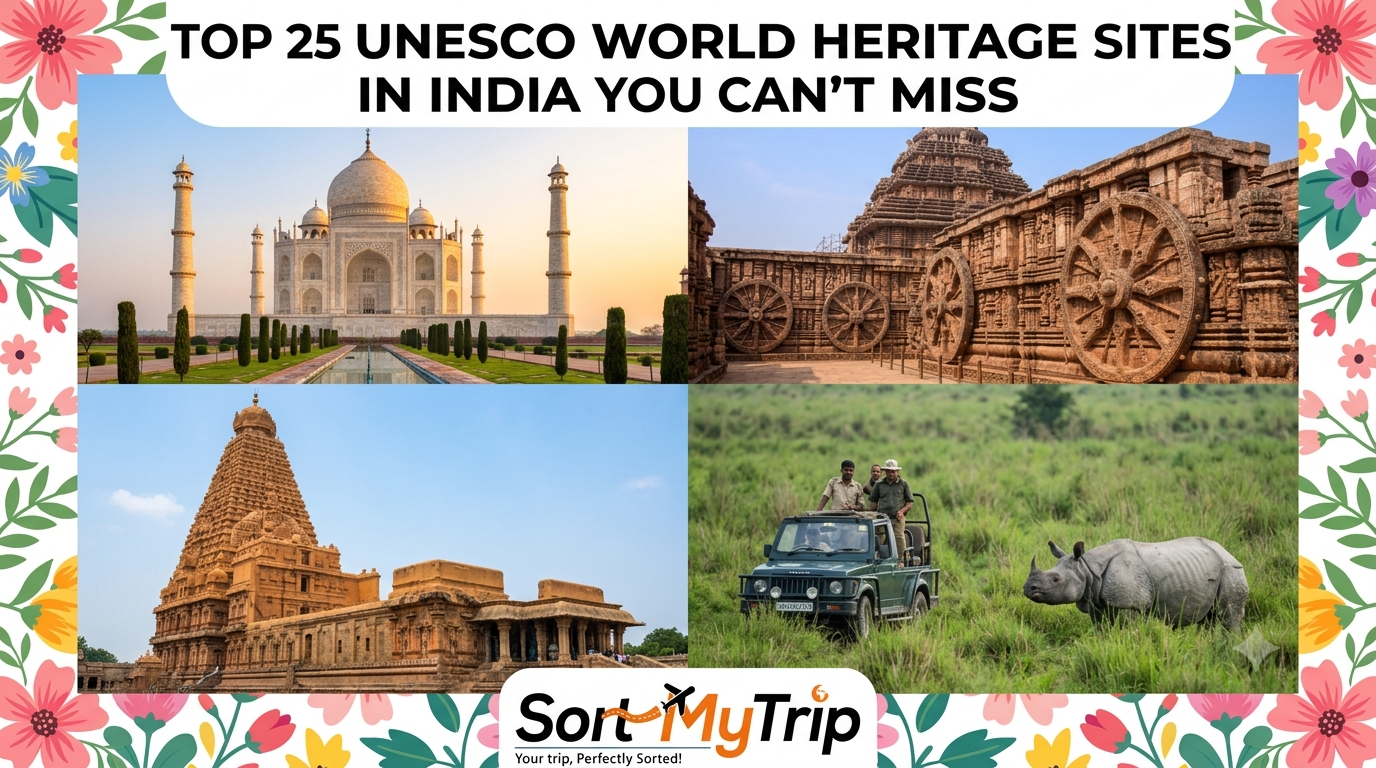
No travel list is complete without the world's most famous monument to love. Built by Mughal Emperor Shah Jahan in memory of his favorite wife, Mumtaz Mahal, this white marble mausoleum is widely considered the jewel of Muslim art in India. The symmetry, delicate Pietra Dura inlay work, and changing colors of the marble from dawn to dusk make it a bucket-list destination.
-
Best Time to Visit: October to March.
-
SortMyTrip Insider Tip: Let us book your sunrise entry ticket well in advance to beat the crowds and experience the marble glowing in soft pink hues.
-
SEO Keyword Focus: Taj Mahal tour packages, historic monuments in Agra.
2. Agra Fort, Uttar Pradesh: The Walled Mughal City
Located just a short distance from the Taj Mahal, Agra Fort is a massive 16th-century red sandstone fortress. It served as the main residence of the emperors of the Mughal Dynasty until 1648. Within its high walls lie spectacular palaces like the Jahangir Mahal, Khas Mahal, and the Diwan-i-Khas, offering an immersive look into royal court life.
-
Best Time to Visit: October to March.
-
SEO Keyword Focus: Agra heritage tours, best Mughal architecture India.
3. Fatehpur Sikri, Uttar Pradesh: The Ghost City of Akbar
Built by Emperor Akbar in the late 16th century to serve as his capital, Fatehpur Sikri was abandoned just a few years later due to water shortages. Today, it stands perfectly preserved as a ghost city. The site features the massive Buland Darwaza (the highest gateway in the world), the Jama Masjid, and the delicate white marble tomb of Salim Chishti.
-
Best Time to Visit: November to February.
-
SEO Keyword Focus: Fatehpur Sikri day trip, offbeat historical sites near Delhi.
4. The Red Fort Complex, Delhi: The Epicenter of Independent India
Constructed by Shah Jahan when he shifted his capital from Agra to Delhi, the Red Fort represents the peak of Mughal architectural creativity. Its massive red sandstone walls enclose beautiful pavilions, including the Diwan-i-Aam and the Shah Burj. It remains a powerful symbol of Indian sovereignty today.
-
Best Time to Visit: October to March.
-
SEO Keyword Focus: Delhi sightseeing tours, UNESCO sites in Delhi.
5. Humayun’s Tomb, Delhi: The Inspiration for the Taj Mahal
Built in 1570, this grand monument was the first garden-tomb on the Indian subcontinent. Commissioned by Humayun’s chief consort, Bega Begum, its grand double-dome design and sprawling Charbagh garden layout served as the primary architectural inspiration for the Taj Mahal decades later.
-
Best Time to Visit: October to March.
-
SEO Keyword Focus: Historical places to visit in Delhi, Mughal garden tombs.
6. Qutub Minar and its Monuments, Delhi: The Tower of Victory
Soaring 73 meters into the sky, the Qutub Minar is the tallest brick minaret in the world. Built starting in 1192 by Qutb-ud-din Aibak, the complex features early Islamic architecture, beautifully carved red sandstone calligraphic inscriptions, and the famous 4th-century rust-resistant Iron Pillar of Chandragupta II.
-
Best Time to Visit: October to March.
-
SEO Keyword Focus: Qutub Minar entry tickets, ancient monuments Delhi.
Part 2: The Regal Fortresses and Temples of Western and Central India
The rugged terrain of Rajasthan and the heart of Madhya Pradesh hold structural wonders that showcase incredible military engineering and spiritual artistry.
7. The Hill Forts of Rajasthan: Six Defensive Masterpieces
Spread across different districts of Rajasthan, this serial UNESCO site includes six majestic forts: Chittorgarh, Kumbhalgarh, Ranthambore, Gagron, Amber, and Jaisalmer. These massive structures reflect the defensive military power, lavish court cultures, and exquisite artistic styles of the Rajput kingdoms from the 8th to the 18th centuries.
-
Best Time to Visit: November to February.
-
SortMyTrip Insider Tip: Kumbhalgarh Fort features the second-longest continuous wall in the world, right after the Great Wall of China. Let us arrange a private walking tour along its massive ramparts.
-
SEO Keyword Focus: Rajasthan fort tour, Rajput history tour packages.
8. Jaipur City, Rajasthan: The Planned Pink Paradise
The historic walled city of Jaipur was founded in 1727 by Maharaja Sawai Jai Singh II. Unlike other medieval towns in the region, Jaipur was planned according to ancient Vedic architectural principles. With its grid-like streets, uniform pink facades, and iconic structures like the Hawa Mahal, the entire old city is a living museum.
-
Best Time to Visit: October to March.
-
SEO Keyword Focus: Jaipur weekend tour packages, cultural tourism Rajasthan.
9. Khajuraho Group of Monuments, Madhya Pradesh: Masterpieces of Stone Art
Built by the Chandela Dynasty between 950 and 1050 CE, the Khajuraho temples are world-famous for their stunning architectural integration and expressive erotic sculptures. Beyond the popular depictions, these temples represent a beautiful balance of Hindu and Jain spiritual traditions, featuring incredibly complex carvings of daily life, music, dance, and celestial beings.
-
Best Time to Visit: October to February.
-
SEO Keyword Focus: Khajuraho temple tours, Central India heritage packages.
10. Rani ki Vav (The Queen’s Stepwell), Gujarat: An Inverted Underground Temple
Located in Patan, this breathtaking 11th-century stepwell was built by Queen Udayamati as a memorial to her late husband. Designed as an inverted temple highlighting the sanctity of water, it features seven levels of stairs adorned with over 500 primary sculptures depicting the avatars of Lord Vishnu.
-
Best Time to Visit: October to March.
-
SEO Keyword Focus: Gujarat tourism packages, stepwells of India.
11. Archaeological Site of Nalanda Mahavihara, Bihar: The World’s First Residential University
Dating back to the 5th century CE, Nalanda was a thriving center of learning that attracted scholars from all over Asia, including Xuanzang from China. The vast ruins include stupas, shrines, viharas (residential blocks), and massive classrooms built entirely of brick, standing as a testament to ancient India's academic brilliance.
-
Best Time to Visit: November to February.
-
SEO Keyword Focus: Buddhist circuit tours India, historic universities Asia.
Part 3: The Ancient Caves and Rock-Cut Wonders of Western India
Carved out of solid volcanic basalt rock cliffs, these sites hide some of the most sophisticated art and sculpture found anywhere in the ancient world.
12. Ajanta Caves, Maharashtra: The Masterpieces of Buddhist Art
Dating from the 2nd century BCE to about 480 CE, the Ajanta Caves consist of 30 rock-cut Buddhist cave monuments. These caves are globally renowned for their masterpieces of Buddhist religious art, featuring expressive wall paintings and frescoes that depict the Jataka tales and royal court scenes with incredible emotion.
-
Best Time to Visit: November to March.
-
SEO Keyword Focus: Ajanta Ellora cave tour, rock-cut architecture India.
13. Ellora Caves, Maharashtra: A Symbol of Religious Harmony
Comprising 34 monasteries and temples carved side-by-side out of the Charanandri hills, Ellora showcases exceptional religious tolerance in ancient India, featuring Buddhist, Hindu, and Jain monuments. The crown jewel is Cave 16, the Kailash Temple—the largest single monolithic rock excavation in the world, carved from the top down out of a single mountain cliff face.
-
Best Time to Visit: November to March.
-
SEO Keyword Focus: Kailash temple Ellora, architectural tours Maharashtra.
14. Elephanta Caves, Maharashtra: The Abode of Shiva
Located on a quiet forested island in the Arabian Sea, just a short ferry ride from the Gateway of India in Mumbai, the Elephanta Caves contain a collection of rock-cut temples dating back to the 5th century. The main cave is famous for its massive, 7-meter-tall Trimurti sculpture, depicting three faces of Lord Shiva representing creation, preservation, and destruction.
-
Best Time to Visit: November to February.
-
SEO Keyword Focus: Elephanta island tour Mumbai, Mumbai historical sightseeing.
Part 4: The Sacred Spaces and Coastal Wonders of Southern and Eastern India
The southern kingdoms of the Pallavas, Cholas, and Vijayanagara rulers created expansive temple complexes that served as the social and cultural hearts of their empires.
15. Group of Monuments at Hampi, Karnataka: The Ruins of Vijayanagara
Hampi was the spectacular capital of the wealthy Vijayanagara Empire in the 14th century. Spread across a dramatic, boulder-strewn landscape along the Tungabhadra River, the ruins feature massive temple complexes, royal pavilions, treasury buildings, and aquatic structures. The iconic Stone Chariot at the Vittala Temple stands as the proud symbol of this architectural marvel.
-
Best Time to Visit: October to February.
-
SEO Keyword Focus: Hampi travel itinerary, ancient ruins South India.
16. Great Living Chola Temples, Tamil Nadu: Imperial Devotion
This imperial collection includes three magnificent 11th and 12th-century temples: Brihadisvara Temple at Thanjavur, Brihadisvara Temple at Gangaikondacholapuram, and Airavatesvara Temple at Darasuram. Built by the Chola kings, these operational temples feature massive granite towers (Vimanas), intricate bronze sculptures, and beautiful stone reliefs.
-
Best Time to Visit: November to February.
-
SEO Keyword Focus: Chola temple architecture, Tamil Nadu cultural packages.
17. Group of Monuments at Mahabalipuram, Tamil Nadu: Pallava Rock Masterpieces
Carved along the Coromandel Coast in the 7th and 8th centuries by the Pallava kings, this open-air museum features sanctuaries carved out of solid rock cliffs. Key highlights include the beachside Shore Temple, the five monolithic monolithic structures shaped like chariots (Pancha Rathas), and the giant open-air rock relief known as "Descent of the Ganges."
-
Best Time to Visit: October to March.
-
SEO Keyword Focus: Mahabalipuram day tour, coastal heritage sites India.
18. Sun Temple, Konark, Odisha: The Chariot of the Sun God
Shaped like a colossal chariot with 24 intricately carved stone wheels drawn by seven horses, the 13th-century Konark Sun Temple is a masterpiece of Kalinga architecture. Built by King Narasimhadeva I, every square inch of the structure is covered in detailed relief carvings depicting deities, battles, erotic scenes, and daily life.
-
Best Time to Visit: October to March.
-
SEO Keyword Focus: Odisha temple tours, Konark sun temple history.
19. Churches and Convents of Goa: The Rome of the East
Reflecting the rich European history of India, the historic churches of Old Goa represent the introduction of Manueline, Baroque, and Mannerist architectural styles to Asia. The Basilica of Bom Jesus, which houses the sacred mortal remains of St. Francis Xavier, remains a major global pilgrimage destination.
-
Best Time to Visit: November to February.
-
SEO Keyword Focus: Old Goa church heritage, Goa holiday packages.
Part 5: Breathtaking Natural and Ecological World Heritage Sites
Beyond human creations, India's geographical diversity includes pristine eco-zones that hold global importance for biodiversity conservation.
20. Kaziranga National Park, Assam: The Stronghold of the One-Horned Rhino
Located in the fertile floodplains of the Brahmaputra River, Kaziranga is home to the world's largest population of the great Indian one-horned rhinoceros. This pristine wilderness of tall elephant grass and dense forests also features a high density of Bengal tigers, wild water buffalo, and thousands of migratory birds.
-
Best Time to Visit: November to April.
-
SEO Keyword Focus: Assam wildlife safaris, Kaziranga safari booking.
21. Sundarbans National Park, West Bengal: The Mangrove Wilderness
Forming the world's largest mangrove forest delta at the mouth of the Ganges and Brahmaputra rivers, the Sundarbans is a unique eco-system. It is globally famous for hosting a significant population of swimming Royal Bengal Tigers, estuarine crocodiles, and the rare Irrawaddy dolphin.
-
Best Time to Visit: September to March.
-
SEO Keyword Focus: Sundarbans cruise packages, wildlife tours West Bengal.
22. Western Ghats: A Global Biodiversity Hotspot
Older than the Himalayan mountains, the Western Ghats mountain chain runs parallel to India’s western coast through six states. This massive mountain range represents exceptionally high levels of biodiversity and endemism, housing thousands of unique species of flowering plants, birds, amphibians, and mammals.
-
Best Time to Visit: July to October (for monsoons) or November to March.
-
SEO Keyword Focus: Eco-tourism Western Ghats, hill stations South India.
23. Keoladeo National Park, Rajasthan: The Wetland Sanctuary
Formerly known as the Bharatpur Bird Sanctuary, this artificial wetland oasis serves as a crucial wintering ground for thousands of rare and endangered waterbirds migrating from Siberia, Central Asia, and Europe, making it a paradise for international birdwatchers.
-
Best Time to Visit: October to March.
-
SEO Keyword Focus: Bharatpur birdwatching tours, wildlife photography India.
24. Great Himalayan National Park Conservation Area, Himachal Pradesh
Located in the Kullu region, this spectacular national park features high alpine peaks, pristine glacial meadows, and deep river valleys. It protects the natural habitats of several endangered mountain animal species, including the elusive snow leopard, Himalayan brown bear, and the blue sheep.
-
Best Time to Visit: April to June and October to November.
-
SEO Keyword Focus: Trekking packages Himachal, eco-tourism national parks.
25. Mountain Railways of India: Engineering Marvels of the Hills
This unique serial site includes three historic narrow-gauge railways built during the colonial era: the Darjeeling Himalayan Railway, the Nilgiri Mountain Railway, and the Kalka Shimla Railway. These vintage trains still pass through spectacular mountain landscapes, tunnels, and old stone bridges, offering an iconic, slow-travel heritage experience.
-
Best Time to Visit: Year-round (depending on the specific region).
-
SEO Keyword Focus: Toy train booking India, Darjeeling Shimla packages.
Conclusion: Plan Your Heritage Journey with SortMyTrip
India’s UNESCO World Heritage Sites are much more than tourist attractions; they are portals into the incredible artistic, spiritual, and historical achievements of human civilization. However, visiting these legendary sites—many of which are spread across remote corners of the country—requires meticulous planning, proper permits, reliable transport, and high-quality local guidance to truly appreciate their history.
This is exactly why smart travelers trust SortMyTrip to handle their heritage holiday plans.
Why Choose SortMyTrip for Your Next Adventure?
-
Expertly Curated Itineraries: Whether you want to explore the grand Mughal monuments of Delhi and Agra, embark on an ancient cave expedition in Maharashtra, or take a deep dive into the historic temples of South India, SortMyTrip creates customized plans tailored to your exact pacing and style.
-
Seamless Transportation: Enjoy stress-free travel with pre-booked luxury trains, flights, and clean, private vehicles accompanied by professional, courteous drivers who know the local routes perfectly.
-
Handpicked Quality Stays: We partner exclusively with top-rated heritage hotels, luxury boutique resorts, and highly vetted properties, ensuring you experience premium hospitality and comfort at the end of every sightseeing day.
-
Certified Local Storytellers: True exploration requires context. SortMyTrip connects you with government-approved, highly knowledgeable local guides who bring stone carvings and ancient ruins to life with authentic stories.
Do not let your dream of exploring India's historic wonders remain just a plan on paper. Get in touch with SortMyTrip today, share your preferred heritage checklist, and let our travel experts craft a smooth, beautifully organized journey for you. Your next great encounter with history is just a click away—let SortMyTrip take care of the details while you enjoy the journey.