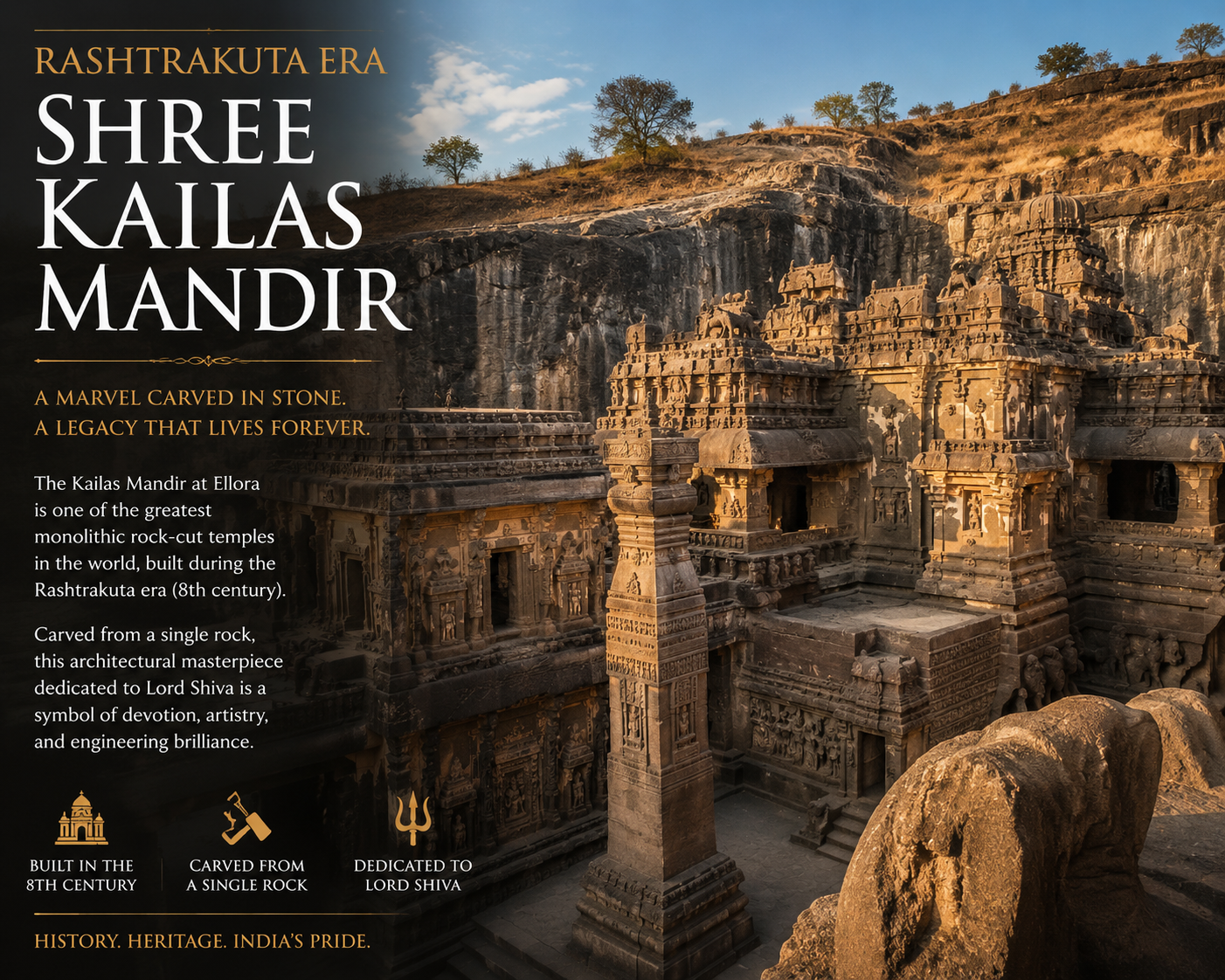
India is home to Rashtrakuta Era Shree Kailas Mandir: The Timeless Wonder of Ancient India | SortMyTripcountless architectural marvels, but few monuments can match the grandeur, mystery, and engineering brilliance of the Shree Kailas Mandir at Ellora. Carved entirely from a single rock, this extraordinary temple stands as one of the greatest achievements in human history. Built during the Rashtrakuta era, the Kailas Temple continues to amaze historians, architects, archaeologists, and travelers from around the world.
Located in the Ellora Caves complex near Aurangabad in Maharashtra, the temple is more than just a religious monument. It is a masterpiece of devotion, engineering, and artistic excellence that has survived for over 1,200 years. Every carving, pillar, sculpture, and corridor tells a story of India's rich cultural heritage and the remarkable vision of the Rashtrakuta rulers.
At SortMyTrip, we believe that travel is not only about visiting destinations but also about discovering the stories, history, and wonders that shaped civilizations. In this comprehensive guide, we explore the fascinating history, architecture, significance, and travel experience of the magnificent Rashtrakuta-era Shree Kailas Mandir.
The Historical Legacy of Shree Kailas Mandir
The Kailas Temple, also known as Kailasa Temple or Cave 16 of the Ellora Caves, was commissioned during the reign of Rashtrakuta King Krishna I in the 8th century CE. Historians believe construction began around 756 CE and continued for several decades.
The Rashtrakutas were one of the most powerful dynasties in medieval India. Their empire extended across large parts of the Deccan region and played a crucial role in promoting art, architecture, literature, and religion.
The Kailas Temple was designed to represent Mount Kailash, the sacred abode of Lord Shiva. Unlike traditional temples built stone by stone, this monument was carved downward from a massive basalt cliff, making it one of the world's largest monolithic structures.
The Engineering Miracle of Ancient India
What makes the Kailas Temple truly extraordinary is its construction method.
Instead of assembling stones, ancient craftsmen removed approximately 200,000 tons of rock from the mountain to create the temple. The entire structure was carved from a single rock using a top-down excavation technique.
Modern engineers continue to study this construction process because of its astonishing precision. The builders had no modern machinery, computer modeling, or advanced tools. Yet they created a monument that remains structurally sound after more than a millennium.
Experts estimate that millions of cubic feet of rock were carefully removed without causing major structural damage. This achievement demonstrates the advanced knowledge of geometry, planning, and engineering possessed by ancient Indian craftsmen.
Architectural Splendor of Kailas Mandir
As visitors enter the temple complex, they are immediately struck by its massive scale and intricate details.
The temple rises approximately 30 meters high and stretches across a vast courtyard surrounded by elaborately carved walls. Every surface features sculptures, relief panels, pillars, and decorative motifs depicting scenes from Hindu mythology.
Major architectural highlights include:
The Grand Entrance
The entrance gateway welcomes visitors into a vast open courtyard where the temple stands majestically at the center.
Nandi Mandap
A separate pavilion houses a magnificent sculpture of Nandi, the sacred bull and vehicle of Lord Shiva.
Main Sanctum
The central shrine contains the sacred Shiva Lingam and serves as the spiritual heart of the temple.
Multi-Level Design
The structure includes multiple floors, halls, corridors, balconies, stairways, and chambers carved directly from the rock.
Monolithic Pillars
Massive pillars support various sections while showcasing intricate carvings and artistic excellence.
Mythological Sculptures and Carvings
One of the most fascinating aspects of Kailas Mandir is its extensive collection of sculptures.
The temple walls narrate stories from Hindu epics such as:
Ramayana
Visitors can witness scenes depicting Lord Rama's journey, battles, and victories.
Mahabharata
Several panels illustrate key moments from the epic war and the lives of the Pandavas.
Shiva Purana
Many sculptures celebrate Lord Shiva's divine acts and cosmic significance.
One of the most famous carvings shows Ravana attempting to lift Mount Kailash while Lord Shiva calmly presses it down with his toe. This dynamic sculpture showcases the exceptional artistic capabilities of Rashtrakuta artisans.
Religious Significance of Kailas Temple
The temple is dedicated to Lord Shiva, one of the principal deities of Hinduism.
For devotees, Kailas Mandir symbolizes Mount Kailash, believed to be the divine residence of Shiva and Goddess Parvati. The temple's layout and design reflect cosmic symbolism and spiritual concepts central to Hindu philosophy.
Pilgrims visit throughout the year to seek blessings, perform rituals, and experience the sacred atmosphere that has endured for centuries.
UNESCO World Heritage Recognition
The Ellora Caves complex, including Kailas Mandir, has been designated as a UNESCO World Heritage Site.
This recognition highlights the monument's global significance as a masterpiece of human creativity and cultural heritage.
Visitors from every corner of the world travel to Ellora to witness one of humanity's most extraordinary architectural accomplishments.
Best Time to Visit Kailas Mandir
The ideal time to visit is between October and March when Maharashtra experiences pleasant weather.
Winter Season (October to February)
Comfortable temperatures make sightseeing enjoyable.
Monsoon Season (July to September)
The surrounding landscape becomes lush and green, offering beautiful views.
Summer Season (March to June)
Temperatures can become quite high, making daytime exploration challenging.
How to Reach Shree Kailas Mandir
By Air
The nearest airport is Aurangabad Airport, offering connections to major Indian cities.
By Train
Aurangabad Railway Station provides convenient rail connectivity.
By Road
Ellora is well-connected by highways and can be reached comfortably from Aurangabad, Pune, Mumbai, and Nashik.
Travel Tips from SortMyTrip
Wear comfortable walking shoes as the complex requires extensive exploration.
Carry water, especially during warmer months.
Visit early in the morning to avoid crowds.
Hire a knowledgeable guide to understand the temple's fascinating history.
Allocate at least three to four hours for a complete experience.
Photography enthusiasts should carry wide-angle lenses to capture the monument's grandeur.
Nearby Attractions to Explore
While visiting Kailas Mandir, travelers can also explore:
Ellora Caves
A collection of Hindu, Buddhist, and Jain cave temples showcasing centuries of artistic evolution.
Daulatabad Fort
A magnificent medieval fortress known for its military architecture.
Bibi Ka Maqbara
Often called the Mini Taj Mahal of Maharashtra.
Grishneshwar Jyotirlinga
One of the twelve sacred Jyotirlingas dedicated to Lord Shiva.
Why Kailas Mandir Should Be on Every Traveler's Bucket List
Few destinations in the world combine history, spirituality, architecture, engineering, and artistry as seamlessly as Kailas Mandir.
It is not merely a temple but a testament to human imagination and determination. The monument challenges modern understanding of ancient construction techniques while inspiring awe in every visitor.
Whether you are a history enthusiast, architecture lover, spiritual seeker, photographer, or cultural explorer, Kailas Mandir offers an unforgettable journey into India's glorious past.
Plan Your Heritage Journey with SortMyTrip
At SortMyTrip, we specialize in creating unforgettable travel experiences that connect travelers with India's rich heritage and cultural treasures.
From historical monuments and UNESCO World Heritage Sites to spiritual destinations and architectural wonders, our customized travel packages ensure a seamless and enriching experience.
If you are planning a visit to the magnificent Rashtrakuta-era Shree Kailas Mandir, let SortMyTrip help you design the perfect itinerary. Discover ancient India's engineering marvel, immerse yourself in centuries of history, and experience one of the world's most extraordinary monuments with confidence and comfort.
Book your next heritage adventure with SortMyTrip and uncover the timeless legacy of Shree Kailas Mandir.