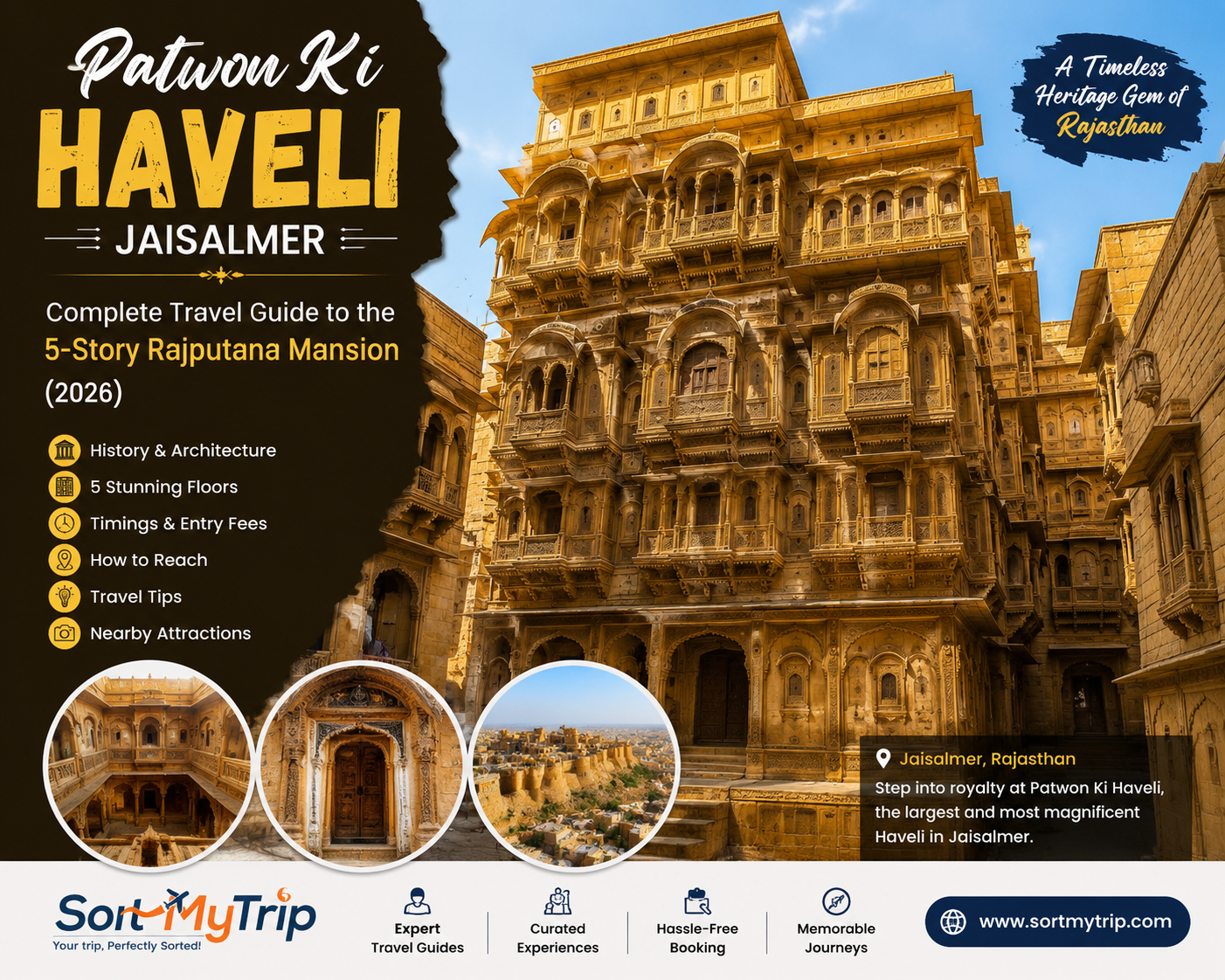
Discover Patwon Ki Haveli in Jaisalmer, Rajasthan's most magnificent 5-story Rajputana mansion. Explore its history, architecture, timings, ticket prices, best time to visit, travel tips, and everything you need to know in this complete travel guide by SortMyTrip.
Patwon Ki Haveli is one of the most iconic architectural masterpieces in Rajasthan and a must-visit attraction in the Golden City of Jaisalmer. Standing proudly amidst the narrow lanes of the historic city, this magnificent five-story mansion showcases the grandeur, craftsmanship, and luxurious lifestyle of wealthy merchants during the 19th century. With its intricately carved sandstone facades, beautifully decorated balconies, ornate jharokhas, and mesmerizing courtyards, Patwon Ki Haveli is more than just a historical monument—it's a living testament to Rajasthan's rich cultural heritage.
Often mistaken as a single haveli, Patwon Ki Haveli is actually a cluster of five grand mansions built by a prosperous Jain trader for his sons. Every corner of this architectural marvel tells stories of royal elegance, artistic excellence, and timeless traditions.
Whether you're a history enthusiast, architecture lover, photographer, or traveler exploring Rajasthan, Patwon Ki Haveli deserves a prominent place on your itinerary.
This comprehensive travel guide by SortMyTrip covers everything you need to know, including its fascinating history, architecture, timings, ticket prices, best photography spots, nearby attractions, travel tips, and the best time to visit.
Why Visit Patwon Ki Haveli?
Patwon Ki Haveli is considered one of the finest examples of Rajputana architecture and remains among the most photographed landmarks in Jaisalmer.
Reasons to visit include:
• Magnificent five-story sandstone architecture
• Intricately carved balconies and windows
• Rich history of Rajasthan's merchant families
• Beautiful mirror work and wall paintings
• Museum showcasing royal artifacts
• Excellent photography opportunities
• Traditional Rajasthani craftsmanship
• Walking distance from Jaisalmer Fort
History of Patwon Ki Haveli
Patwon Ki Haveli dates back to the early 19th century.
Construction began in 1805 under the supervision of Guman Chand Patwa, one of Jaisalmer's wealthiest Jain merchants. Rather than building one palace, he commissioned five separate havelis for each of his five sons.
The construction took nearly fifty years to complete, making it one of the largest and most elaborate residential complexes in Rajasthan.
The Patwa family earned their wealth through trading gold, silver, precious stones, brocade, textiles, and banking. Their immense prosperity is reflected in every detail of the haveli, from exquisitely carved facades to luxurious interiors decorated with mirrors, paintings, ivory, and imported European glass.
Today, part of the haveli is managed by the Archaeological Survey of India, while another section has been converted into a museum displaying historical artifacts, furniture, paintings, costumes, and antique household items.
Architecture of Patwon Ki Haveli
Patwon Ki Haveli is widely regarded as one of India's finest examples of Rajputana architecture blended with Mughal influences.
Built entirely from golden-yellow sandstone, the haveli glows beautifully under the sunlight, creating the magical golden appearance for which Jaisalmer is famous.
Architectural highlights include:
• Five interconnected mansions
• Over 60 beautifully carved balconies
• Hundreds of decorative jharokhas
• Intricate sandstone latticework
• Ornamental pillars
• Beautiful courtyards
• Mirror-work ceilings
• Painted walls
• Decorative arches
• Handcrafted wooden doors
One of the most remarkable aspects is the extraordinary stone carving. Skilled artisans transformed sandstone into delicate lace-like patterns, making every window and balcony appear almost weightless.
The Five Havelis
Each haveli was built for one of Guman Chand Patwa's sons.
Although connected externally, every mansion has its own unique layout, rooms, staircases, courtyards, and decorative elements.
Visitors can explore multiple floors while admiring the luxurious lifestyle of Rajasthan's merchant families during the 19th century.
Inside Patwon Ki Haveli
Walking through the haveli feels like stepping back in time.
Visitors can explore:
• Royal living rooms
• Private chambers
• Beautiful courtyards
• Antique furniture
• Decorative ceilings
• Traditional kitchens
• Historic artifacts
• Vintage mirrors
• Fine paintings
• Ancient utensils
Every room showcases remarkable craftsmanship and attention to detail.
Photography at Patwon Ki Haveli
Patwon Ki Haveli is one of the most Instagram-worthy places in Rajasthan.
Best photography spots include:
• Main sandstone facade
• Intricate jharokhas
• Decorative balconies
• Courtyard interiors
• Carved windows
• Narrow heritage lanes
• Rooftop viewpoints nearby
The warm golden hues during sunrise and sunset create breathtaking photographs.
Museum Highlights
The museum inside Patwon Ki Haveli displays an impressive collection of historical objects.
Highlights include:
• Traditional costumes
• Coins
• Antique furniture
• Paintings
• Musical instruments
• Household items
• Stone carvings
• Decorative artwork
History lovers will enjoy learning about the lifestyle of affluent merchant families in Rajasthan.
Timings
Patwon Ki Haveli is generally open daily.
Opening Hours:
9:00 AM to 5:00 PM
Morning visits are recommended to avoid crowds and enjoy pleasant weather.
Entry Fee
Ticket prices may change over time.
Approximate charges:
• Indian visitors: ₹20–₹100 (depending on museum sections)
• Foreign tourists: Higher entry fee
Camera charges may apply in certain areas.
Best Time to Visit
The ideal time to explore Patwon Ki Haveli is between October and March.
Winter (October–March)
Pleasant weather makes sightseeing comfortable.
Summer (April–June)
Extremely hot temperatures can exceed 40°C, so early morning visits are recommended.
Monsoon (July–September)
Occasional rainfall offers cooler weather and fewer crowds.
Nearby Attractions
A visit to Patwon Ki Haveli can easily be combined with other famous attractions in Jaisalmer.
Jaisalmer Fort
One of the world's few living forts, home to temples, shops, hotels, and local families.
Salim Singh Ki Haveli
Known for its distinctive peacock-shaped roof and elegant architecture.
Nathmal Ki Haveli
Famous for its detailed carvings and unique blend of Rajput and Islamic architectural styles.
Gadisar Lake
A peaceful lake surrounded by temples and chhatris, perfect for boating and sunset photography.
Bada Bagh
A historic garden complex featuring beautiful royal cenotaphs.
Best Things to Do at Patwon Ki Haveli
• Explore the museum
• Admire intricate sandstone carvings
• Learn about Rajputana merchant history
• Capture stunning photographs
• Walk through heritage lanes
• Visit nearby havelis
• Shop for handicrafts nearby
• Taste authentic Rajasthani cuisine
Shopping Nearby
Local markets around Patwon Ki Haveli are excellent for shopping.
Popular items include:
• Camel leather products
• Handcrafted jewelry
• Wooden souvenirs
• Puppets
• Embroidered textiles
• Silver ornaments
• Marble handicrafts
• Traditional paintings
Local Food to Try
While exploring Jaisalmer, don't miss these delicious dishes:
• Dal Baati Churma
• Gatte Ki Sabzi
• Ker Sangri
• Laal Maas
• Pyaaz Kachori
• Mirchi Vada
• Ghewar
• Rabri
• Makhaniya Lassi
Travel Tips
• Visit early in the morning for the best photography.
• Wear comfortable walking shoes.
• Carry drinking water during summer.
• Respect museum rules.
• Hire a local guide to understand the history.
• Carry sunglasses and sunscreen.
• Keep your camera fully charged.
• Combine your visit with Jaisalmer Fort and Gadisar Lake.
How to Reach Patwon Ki Haveli
By Air
The nearest airport is Jaisalmer Airport, with seasonal flights. Jodhpur Airport is the nearest major airport.
By Train
Jaisalmer Railway Station is well connected to Delhi, Jaipur, and Jodhpur.
By Road
Jaisalmer has excellent road connectivity with major cities in Rajasthan and Gujarat.
Frequently Asked Questions
Why is Patwon Ki Haveli famous?
Patwon Ki Haveli is famous for its magnificent sandstone architecture, intricate carvings, rich merchant history, and being the largest haveli complex in Jaisalmer.
Who built Patwon Ki Haveli?
It was commissioned by the wealthy Jain merchant Guman Chand Patwa in 1805 for his five sons.
How much time is required to visit?
Around 1–2 hours are sufficient to explore the haveli and museum comfortably.
Is photography allowed?
Photography is generally allowed in most areas, although some museum sections may have restrictions or additional camera charges.
What is the best season to visit?
October to March is the best time to visit due to pleasant weather and comfortable sightseeing conditions.
Conclusion
Patwon Ki Haveli is far more than just a historical monument—it is a masterpiece that reflects the artistic brilliance, architectural excellence, and prosperous heritage of Rajasthan's merchant era. Every intricately carved balcony, ornate jharokha, and beautifully decorated courtyard tells a story of craftsmanship that has stood the test of time for over two centuries.
Whether you're captivated by history, fascinated by architecture, or simply looking for the perfect photo spot in Jaisalmer, Patwon Ki Haveli promises an unforgettable experience. Its timeless beauty, cultural significance, and remarkable design make it one of the most treasured landmarks in the Golden City.
Plan Your Jaisalmer Trip with SortMyTrip
Ready to explore the timeless beauty of Patwon Ki Haveli and the enchanting Golden City of Jaisalmer? Let SortMyTrip make your journey seamless and memorable. From customized Rajasthan tour packages and comfortable accommodations to reliable transportation and guided sightseeing experiences, we handle every detail so you can travel stress-free.
Whether you're planning a romantic getaway, a family vacation, a cultural exploration, or a photography tour, SortMyTrip offers personalized itineraries tailored to your interests and budget.
Book your Jaisalmer adventure with SortMyTrip today and experience the royal heritage, magnificent architecture, vibrant culture, and unforgettable desert landscapes of Rajasthan like never before.
.png)