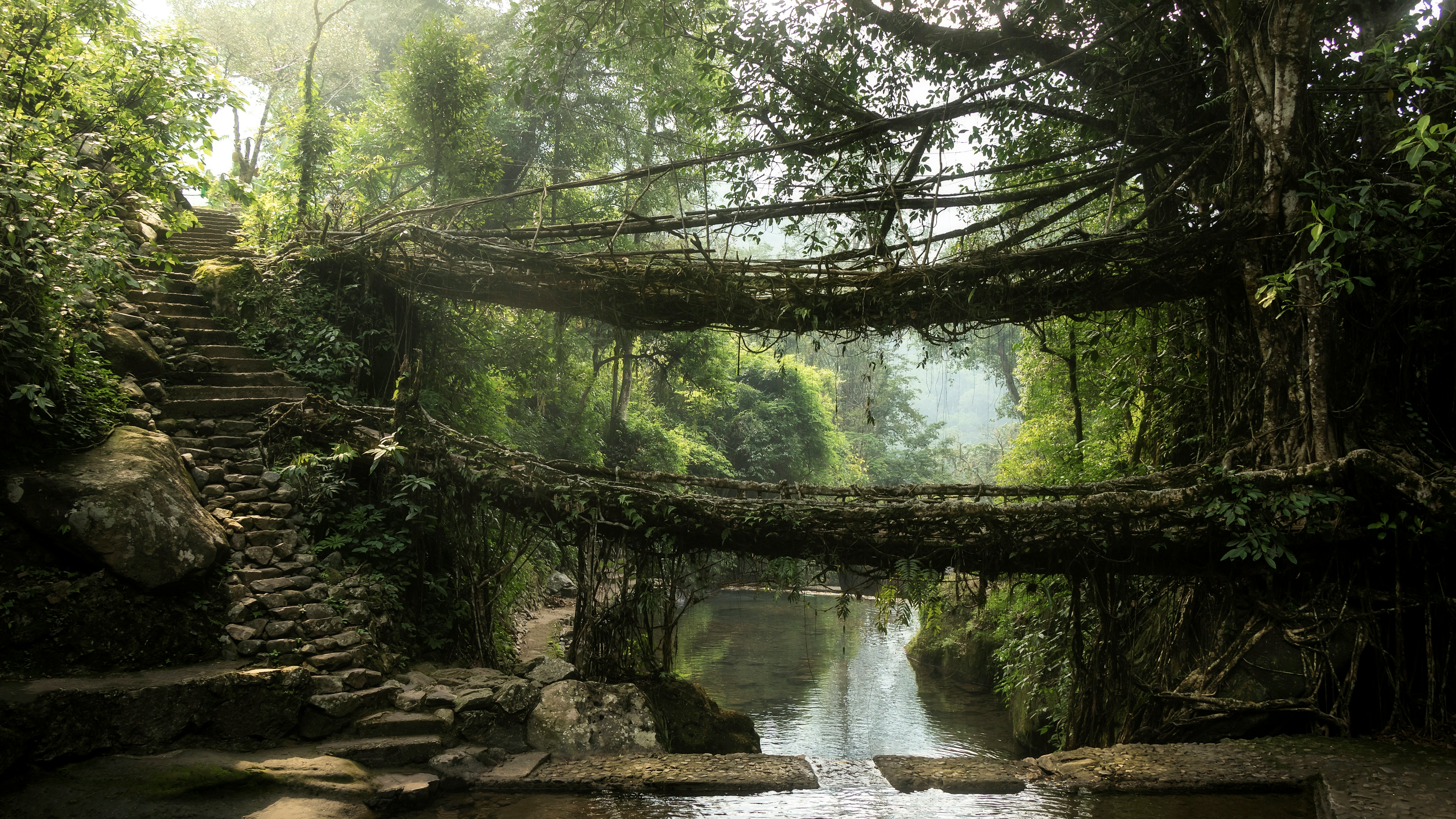
If there is one experience that truly defines Meghalaya, it is the trek to the Living Root Bridges. These living structures, formed by guiding the roots of ancient rubber trees, are more than just natural wonders. They are proof of the deep connection between the Khasi community and their forested homeland. Many travellers ask whether the trek is worth the effort. The honest answer is yes, absolutely.
At Sort My Trip, we have planned hundreds of Meghalaya itineraries, and almost every traveller who completed the Living Root Bridge trek came back saying it was the highlight of their entire trip.
Why the Trek Is Worth It
1. The Bridges Are Unique to Meghalaya
You will not find these living bridges anywhere else in the world. Built over generations, they are a blend of natural engineering and local tradition. Walking across them feels like stepping into a different era.
2. The Trek Takes You Deep Into Nature
The path to the famous Double Decker Root Bridge in Nongriat takes you through dense forests, mountain streams, butterflies, natural pools, and small local villages. You experience the real Meghalaya, not just the tourist-centred areas.
3. The Reward Is Beyond the Destination
Every traveller talks about the same moment. The point where, after hundreds of steps and forest trails, the Double Decker Bridge appears between layers of greenery. It feels earned. And it makes the entire trek feel meaningful.
4. You Can Swim in Natural Pools
Clear blue pools lie beneath the bridges and along the trail. Many visitors enjoy a refreshing swim after the trek. Sort My Trip often suggests carrying extra clothes just for this moment.
5. Connect With Local Culture
You meet villagers who have lived here for generations and understand how the bridges are formed, maintained, and protected. It gives you a deeper appreciation for Meghalaya’s traditions.
How Difficult Is the Trek
The trek involves many steps, especially on the way back. It is not extremely difficult but requires stamina and patience. Sort My Trip usually guides travellers on the best timings, ideal weather conditions, and what to carry to make the trek comfortable.
Best Time to Visit
November to April is ideal because the trail is dry and the pools are clear. If you travel in the monsoon, be prepared for slippery paths and heavy rain, though the forest looks more vibrant.
Tips for the Trek
-
Wear good quality trekking shoes
-
Carry water and light snacks
-
Avoid heavy luggage
-
Start early in the morning
-
Take breaks in shaded areas
-
Hire a local guide for better navigation
If you are booking your trip with Sort My Trip, our team provides personalised trekking guidance and connects you with trusted local guides in Nongriat.
Frequently Asked Questions
Is the Living Root Bridge trek difficult
It is moderately challenging because of the number of steps, but absolutely doable for anyone with average fitness.
How long does the trek take
The entire journey usually takes four to six hours depending on pace, breaks, and weather.
Can families or beginners do it
Yes, many families complete it comfortably. Taking breaks along the way helps a lot.
Is the Double Decker Bridge worth the effort
Yes, it is one of the most rewarding sights in Meghalaya. Most travellers consider it the best part of their trip.
Is there a place to stay near the bridges
Yes, Nongriat has homestays for those who prefer staying overnight. Sort My Trip often arranges these stays during customised itineraries.