How to Visit Pangong Lake: Permits, Taxi Fares, and Acclimatization Tips
Imagine standing at 14,270 feet above sea level, watching an endless stretch of water change its color from deep turquoise to a brilliant azure right before your eyes. This is Pangong Tso, a breathtaking endorheic lake that spans over 134 kilometers from India into Tibet. Nestled deep within the rugged mountains of Ladakh, Pangong Lake has rightfully become a crown jewel for travelers worldwide.
However, visiting this high-altitude marvel isn't a typical road trip. It requires meticulous planning, an understanding of the fragile mountain landscape, and compliance with border regulations.
To help you turn your dream Himalayan vacation into a reality, we have put together the ultimate guide detailing everything you need to know about permits, taxi fares, and crucial health safety guidelines.
Understanding Acclimatization: Your Absolute Top Priority
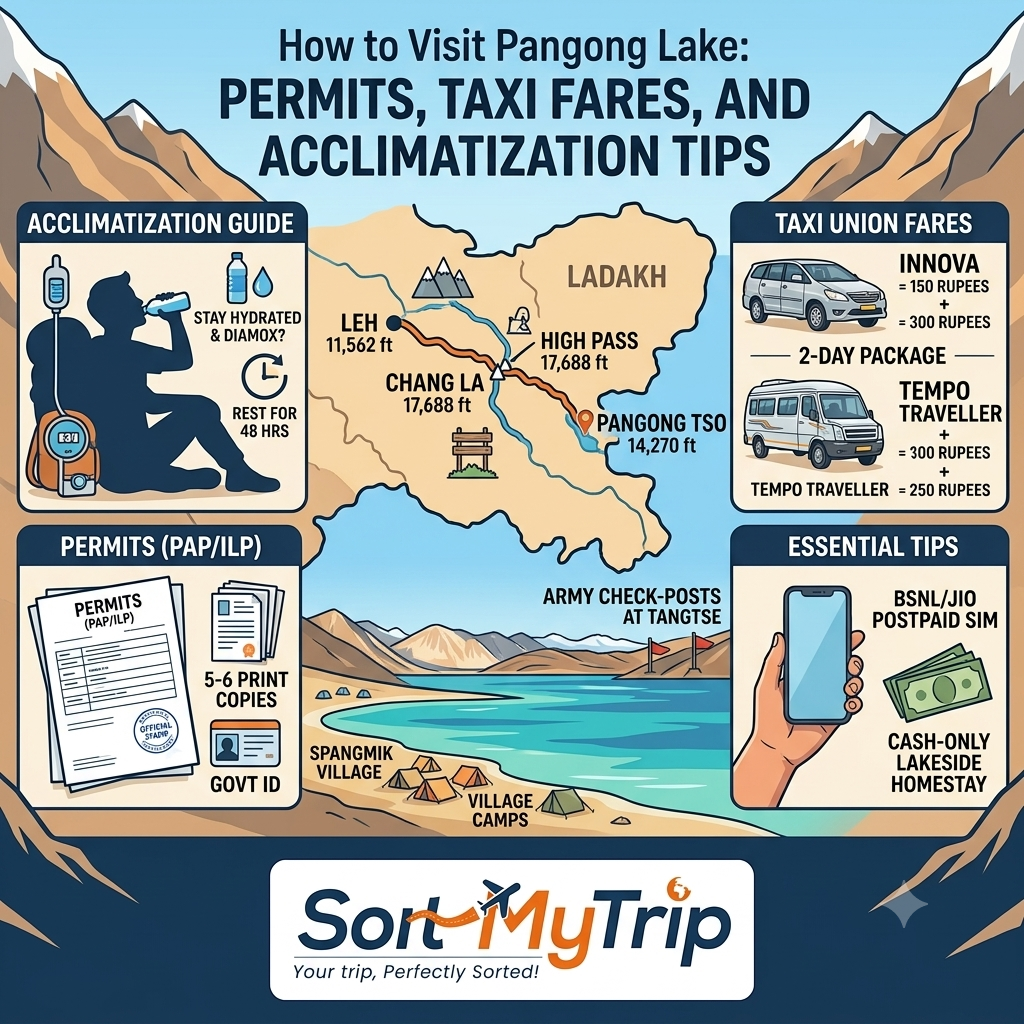
The most critical factor of a successful Ladakh trip is understanding how your body reacts to high altitudes. When you fly into Leh’s Kushok Bakula Rimpochee Airport, you instantly land at 11,562 feet above sea level. Pangong Lake sits significantly higher at 14,270 feet, and the journey requires crossing the mighty Chang La Pass, which stands at an intimidating 17,688 feet.
At these elevations, the atmospheric pressure drops and the amount of oxygen molecules per breath decreases. Failing to prepare can lead to Acute Mountain Sickness (AMS), which can completely disrupt your vacation.
The 48-Hour Golden Rule in Leh
When you land in Leh, do absolutely nothing for the first 24 to 48 hours. Even if you feel perfectly healthy and full of energy, your internal organs are working overtime to produce more red blood cells.
Spend your first two days resting at your hotel, drinking plenty of water, and taking short, gentle evening walks around the local Leh Main Market. Avoid strenuous activities, heavy climbing, and alcohol consumption during this initial adjustment period.
Practical Tips to Keep AMS at Bay
-
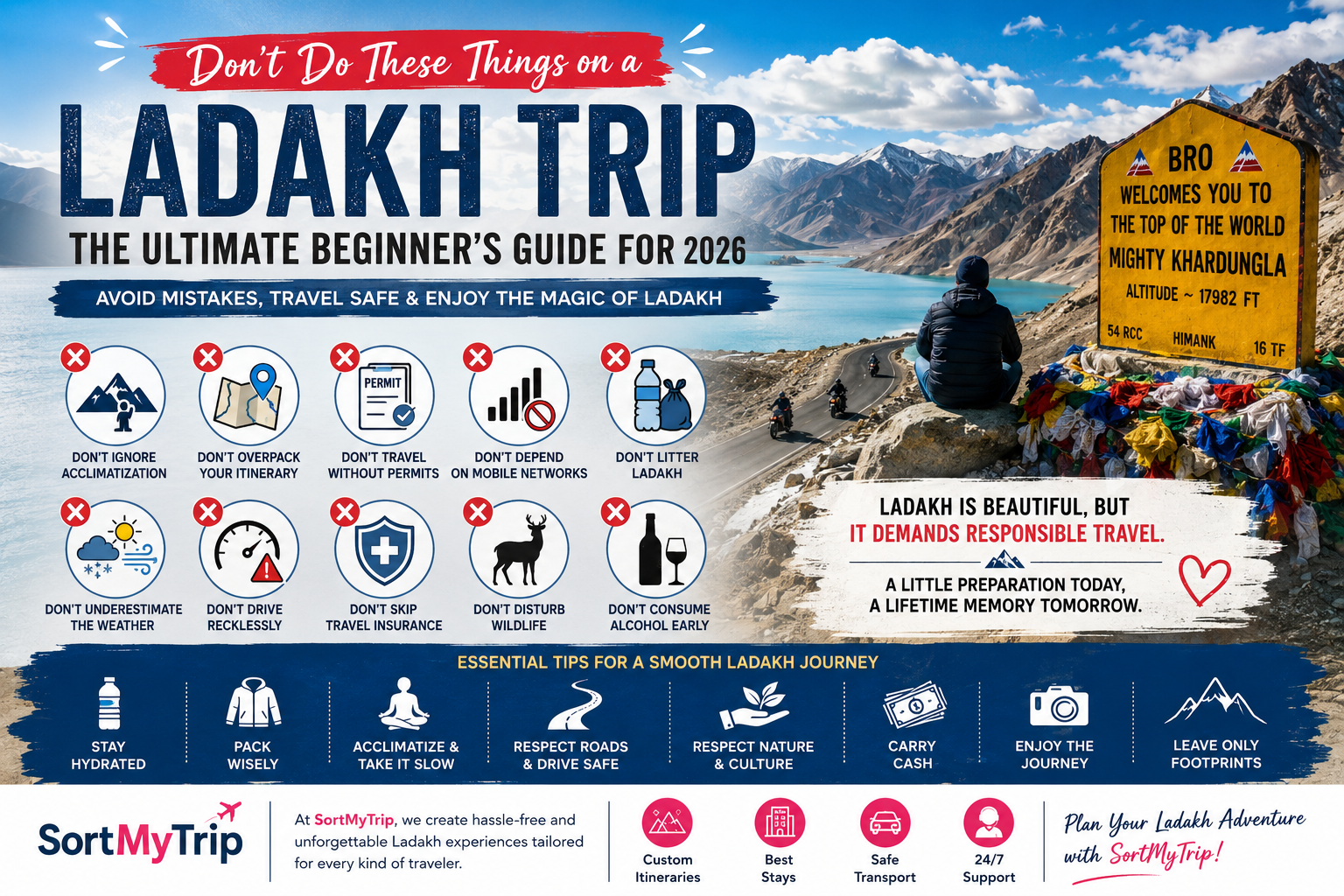
Hydrate, But Don't Overdo It: Drink 3 to 4 liters of water daily. Adding electoral packets or ORS to your water bottles helps maintain your body's essential electrolyte balance.
-
Consider Prophylactic Medication: Many travelers take Acetazolamide (commonly known as Diamox) to assist their bodies with the acclimatization process. It is highly recommended to consult your physician before starting your journey to see if this is right for you.
-
Ascend Gradually: Avoid the temptation of doing a single-day return trip from Leh to Pangong Lake. The rapid ascent and descent put an immense amount of pressure on your cardiovascular system.
Navigating the 2026 Ladakh Permit Regulations
Because Pangong Lake borders an international frontier, entry into the zone is strictly monitored by the Indian military and local administrations.
For Indian Travelers: The Environment Fee Workflow
The old-style paperwork has been replaced by a streamlined, digital system designed to fund local conservation efforts. Indian tourists no longer require a separate physical Inner Line Permit (ILP) document for standard sight-seeing routes.
Instead, you must log onto the official LAHDC Leh permit portal and pay the mandatory regional fees:
-
Green Environment Fee: A flat fee of 400 Rupees per person.
-
Wildlife Conservation Fee: 20 Rupees per person, calculated per day.
-
Red Cross Society Contribution: An optional payment of 50 Rupees.
Once the payment is completed online, the system generates an environment fee receipt containing a unique QR code. While the system is entirely digital, network tower access along the mountain passes can be completely unpredictable. You must print at least 5 to 6 physical paper copies of this cleared receipt alongside your government-issued ID (like an Aadhaar Card or Passport) to present at the strict army check-posts in North Pullu, South Pullu, and Tangtse.
For International Travelers: The Protected Area Permit (PAP)
Foreign national passport holders are still strictly required to obtain a valid Protected Area Permit (PAP).
Unlike domestic tourists, international travelers cannot apply for this document individually on the self-service web portal. You must coordinate your booking through a government-registered local travel agency. The agency will gather copies of your passport and valid Indian visa, physically submit the documents to the District Magistrate office in Leh town, pay the associated environment and wildlife fees, and secure the mandatory official ink stamp on your physical permit form.
Navigating Local Taxi Fares and Transport Logistics
To support the local economy and protect the fragile ecology, the Ladakh Taxi Union strictly regulates all commercial vehicle operations within the region. Outside commercial vehicles and self-drive cars rented outside of Ladakh are strictly prohibited from operating sightseeing routes to restricted locations like Pangong Lake or Nubra Valley. You must hire a local union-registered taxi or book your tour through an authorized local platform.
The official Ladakh Taxi Union rates are transparent, ensuring no hidden surprises during your mountain journey. Here is a clear breakdown of the standard taxi fare structure for traveling from Leh to Pangong Lake:
Standard SUV Rates (Innova, Xylo, Scorpio, Aria)
An SUV is the most popular, practical option for traveling across high-altitude terrain, providing superior ground clearance and excellent shock absorption across rocky river crossings.
-
1-Day Return Package (Leh to Pangong and back): 10,470 Rupees. This involves nearly 9 to 10 hours of intense mountain driving, leaving you with very little time to actually relax and experience the lake.
-
2-Day Package (Overnight Stay at Spangmik/Pangong): 12,464 Rupees. This is the highly recommended choice, giving you ample time to rest and see the stunning sunrise.
-
3-Day Circuit (Leh to Nubra Valley, then directly to Pangong via the Shyok River route, and back to Leh): 22,410 Rupees.
Large Group Rates (Tempo Traveller)
Perfect for larger family groups, photography teams, or corporate retreats traveling together.
-
1-Day Return Package: 13,087 Rupees.
-
2-Day Overnight Package: 16,288 Rupees.
-
3-Day Nubra-Pangong Circuit: 29,529 Rupees.
Premium Luxury SUV Rates (Toyota Fortuner / Innova Crysta)
For travelers who prefer premium comfort and specialized 4x4 off-roading capabilities along demanding paths.
-
1-Day Return Package: 13,000 to 15,000 Rupees.
-
2-Day Overnight Package: 15,000 to 19,000 Rupees.
Crucial Additional Transport Fees to Keep in Mind
-
Driver Night Halt Fee: For all multi-day overnight itineraries, a mandatory fee of 385 Rupees per night must be provided to cover your driver’s basic accommodations and food.
-
Air Conditioning on Demand: Because driving up steep mountain passes puts immense pressure on a vehicle's engine, using the AC during uphill climbs requires extra fuel. Drivers charge an additional standard rate of 9 Rupees per kilometer if air conditioning is requested.
Critical On-The-Road Survival Tips
To make your mountain expedition completely seamless, prepare for the realities of traveling through one of the most remote, underdeveloped geographical zones in the world.
The Postpaid Power Rule
Due to strict Department of Telecommunications safety regulations across international border zones, all external prepaid mobile SIM cards will immediately stop working once you cross into Jammu & Kashmir and Ladakh.
Ensure you convert your primary number to a postpaid connection before your trip, or purchase a local BSNL or Jio postpaid connection upon arriving in Leh. Jio offers excellent 4G and 5G connectivity within Leh town, but if you are venturing to the farthest corners of Pangong Lake or Hanle, only BSNL provides reliable, life-saving calling connectivity.
The Cash Economy Reality Check
While digital payments like UPI, Google Pay, and credit cards are widely accepted inside Leh’s main markets and high-end hotels, cellular data thins out rapidly as you gain altitude.
Do not expect to find working ATMs or digital network terminals near Pangong Lake. Furthermore, increased regulatory oversight on small rural businesses means that remote lakeside homestays and small roadside tea stalls are strictly cash-only. Ensure you withdraw at least 15,000 to 20,000 Rupees in cash per person while you are in Leh town, keeping smaller denominations on hand for quick snacks and water purchases along the way.
Plan Your Perfect Ladakh Journey with SortMyTrip
Planning an expedition to a high-altitude border zone shouldn't feel like a logistical puzzle. From securing your environment fee receipts and mandatory government permits without any processing delays to organizing experienced, reliable mountain drivers who navigate the treacherous curves of Chang La Pass with absolute ease, SortMyTrip takes all the guesswork out of your itinerary.
Whether you are looking for a perfectly balanced multi-day tour package, cozy lake-facing luxury camps at Spangmik, or premium SUV arrangements for your group, our dedicated travel specialists ensure your entire Himalayan holiday runs smoothly. Let us handle the complex paperwork, permits, and transport union bookings while you focus your energy on taking in the deep blue waters and pristine mountain air.
Contact SortMyTrip today to customize your tailor-made Ladakh travel package. Your dream journey to the edge of the world is just a click away.