WHY NAGGAR IS THE NEW MANALI: A 7-DAY GUIDE TO SLOW TRAVEL IN THE KULLU VALLEY
Manali has long been the crown jewel of Himachal Pradesh, drawing millions of travelers seeking snowy peaks, vibrant markets, and alpine adventures. However, as urban sprawl, heavy traffic, and commercialization take over the bustling streets of Mall Road, a quiet revolution is happening just twenty kilometers down the road. Discerning travelers, writers, artists, and digital nomads are turning their gaze across the Beas River to a ancient town that feels frozen in time.
Welcome to Naggar.
Perched gracefully on the left bank of the Beas River at an altitude of roughly 1,800 meters, Naggar is rapidly earning the title of the new Manali. But unlike its loud, crowded neighbor, Naggar offers something far more precious: the luxury of slow travel. It is a destination where the itinerary is dictated by the movement of the sun, where centuries-old wooden castles stand guard over apple orchards, and where the air is still thick with the scent of pine needles rather than exhaust fumes. This comprehensive 7-day guide will take you deep into the heart of the Kullu Valley, showing you exactly why Naggar deserves a spot at the top of your travel bucket list and how to experience it at a meditative pace.
THE SOUL OF NAGGAR: TRADITIONAL ARCHITECTURE AND CULTURAL HERITAGE
To understand why Naggar is capturing the hearts of modern travelers, one must understand its rich historical weight. Long before Manali became a tourist hub, Naggar was the proud capital of the Kullu Rajas for over 1,400 years. This royal heritage has left behind an incredible architectural legacy that defines the town’s landscape.
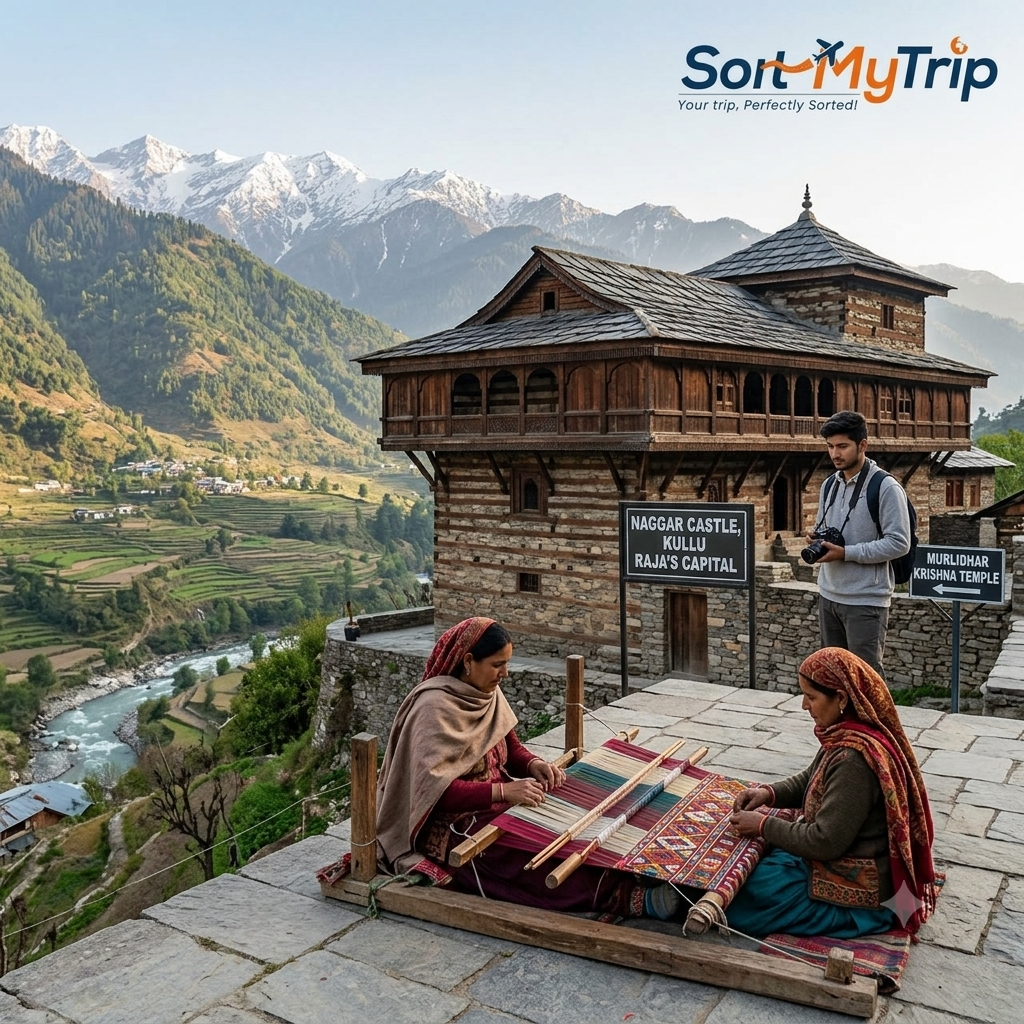
The centerpiece of the settlement is the iconic Naggar Castle, a magnificent structure built around 1460 AD by Raja Sidh Singh. What makes this castle extraordinary is its resilience; it survived a massive earthquake in 1905 that leveled most surrounding towns. The secret lies in its unique Kathkuni architecture, a traditional Himalayan building style that alternates layers of thick local stone with massive deodar wood beams without using any iron nails or mortar. This flexible, interlocking design allows the structures to absorb seismic shocks. Walking through its wooden corridors feels like stepping back into a medieval fairytale, offering panoramic views of the valley below.
Beyond the royalty, Naggar boasts a fascinating connection to international art. In the early 20th century, the legendary Russian painter, philosopher, and explorer Nicholas Roerich chose Naggar as his permanent home after traveling extensively across Central Asia. Captivated by the ethereal light of the Himalayas, he spent the remaining decades of his life capturing the spiritual essence of the mountains on canvas. Today, his estate has been preserved as a museum, drawing art enthusiasts from across the globe who want to experience the exact landscapes that inspired his world-renowned masterpieces.
THE 7-DAY SLOW TRAVEL ITINERARY FOR KULLU VALLEY
Slow travel is not about rushing from one viewpoint to another; it is about completely immersing yourself in the rhythm of a place. This seven-day guide balances cultural exploration, easy hiking, culinary discoveries, and deep relaxation.
Day 1: Arrival, Settling in, and Golden Hour at the Castle
Your journey begins with a scenic drive winding away from the chaotic main highway. As you enter Naggar, the immediate shift to quiet roads and terraced farms instantly drops your heart rate. After checking into a cozy local homestay or heritage property, spend your afternoon slowly exploring the grounds of Naggar Castle. Sit on the wooden balconies with a hot cup of local chai, watching the sun dip behind the snow-capped peaks of the Pir Panjal range. End your evening with a traditional Himachali dinner at a local café.
Day 2: The Artistic Footsteps of Nicholas Roerich
Dedicate your second day to exploring the intellectual and artistic hub of Naggar. Walk up the winding, pine-lined road to the Nicholas Roerich Art Gallery and Estate. Wander through the beautifully maintained gardens, visit the historic house filled with original paintings, and see the vintage car used by the family. Afterward, continue hiking slightly upward to the ancient Tripura Sundari Temple, a stunning multi-tiered wooden pagoda temple showcasing masterful wood carvings. Spend the afternoon journaling or reading under the shade of massive deodar trees.
Day 3: The Ancient Village of Thawa and Krishna Temple
Take a step further back in time by taking a morning walk to the old settlement of Thawa, located on a hill above Naggar. Here you will find the 11th-century Murlidhar Krishna Temple, an elegant stone structure surrounded by ancient ruins. The views from this vantage point offer a sprawling view of the entire Kullu Valley. Spend your afternoon interacting with the friendly villagers, observing the traditional lifestyle, and watching the local women weave famous Kullu shawls on handlooms right from their verandas.
Day 4: Day Trip to the Hidden Village of Rumsu
Put on your sturdy walking shoes for an excursion to Rumsu, a pristine heritage village located about five kilometers from Naggar. Rumsu serves as the traditional starting point for the famous Chanderkhani Pass trek. The village is filled with beautiful, multi-story Kathkuni houses and features an ancient courtyard dedicated to Jamlu Devta, a powerful local deity. The atmosphere here is deeply sacred; visitors are strictly forbidden from touching the temple walls to preserve its sanctity. Walk back to Naggar through dense forests of oak and horse chestnut trees.
Day 5: Riverside Relaxation and Trout Tasting in Patlikuhal
Head down toward the valley floor to Patlikuhal, located right along the banks of the rushing Beas River. This area is famous for its fresh cold-water trout farms. Spend your morning sitting by the riverside, listening to the roar of the water and soaking in the mountain sun. For lunch, treat yourself to a freshly prepared pan-fried Himalayan trout seasoned with local herbs at a riverside eatery. In the afternoon, visit the sprawling apple orchards that line the valley floor, learning about the local fruit economy.
Day 6: Café Hopping and the Creative Community
Naggar has quietly transformed into a haven for alternative artists, chefs, and coffee enthusiasts. Spend Day 6 exploring the vibrant culinary landscape of the town. Visit local institutions like the Nightingale Restaurant for authentic wood-fired pizzas, or stop by the Wool Café for incredible artisanal coffee and handmade bakes. Use this day to shop for authentic, sustainable souvenirs such as raw organic honey, hand-knitted woolen socks, and locally pressed apricot oil from community co-operatives.
Day 7: Farewell to the Hills and Integration
On your final morning, wake up early to catch the mountain mist rising off the valley floor one last time. Take a quiet meditative walk through the nearby pine forests, breathing in the crisp, clean Himalayan air. After a hearty breakfast featuring local dishes like Siddu, pack your bags and prepare for your departure, carrying a profound sense of mental clarity, inner peace, and a renewed appreciation for life lived in the slow lane.
NAGGAR VS. MANALI: WHY THE SHIFT IS HAPPENING
For decades, Manali was the default choice for anyone visiting the Kullu Valley. However, changing travel trends have highlighted a stark contrast between the two neighboring towns.
Manali has evolved into a high-energy adventure hub. While it is perfect for those seeking bustling nightclubs, crowded shopping streets, paragliding hubs, and quick access to the Atal Tunnel, it can often feel overwhelming. Traffic congestion along the narrow valley roads means travelers frequently spend hours stuck in jams, breathing in fumes rather than fresh air.
Naggar, on the other hand, prioritizes peace, preservation, and sustainability. Because it is located away from the primary commercial highway, it sees a fraction of the commercial vehicle traffic. The accommodation options here lean heavily toward intimate family-run homestays, beautifully restored wooden heritage properties, and eco-cabins rather than massive concrete multi-story hotels. It provides an environment where you can actually hear the birds chirping, watch the stars at night without light pollution, and build meaningful connections with the local community.
ESSENTIAL PACKING TIPS FOR THE KULLU VALLEY
To enjoy a slow travel experience in Naggar, packing smartly is essential to navigate the mountain terrain and changing weather patterns.
The weather in the mountains can be highly unpredictable, even during the summer months. Always pack efficient layers, including a windproof jacket, a couple of warm fleece sweaters, and thermal innerwear if you are visiting during autumn or winter. Because Naggar is best explored on foot along cobblestone paths and forest tracks, high-quality walking shoes or lightweight trekking boots with excellent grip are an absolute necessity.
Additionally, carry a reusable water bottle to reduce plastic waste in the fragile mountain ecosystem; most local homestays provide safe, mountain-spring filtered drinking water. Bring a canvas tote bag for your local market purchases, a high SPF sunscreen to protect against intense high-altitude UV rays, and any personal medication you might need, as pharmacy choices inside the smaller villages are basic.
THE CULINARY DELIGHTS OF NAGGAR
No travel experience is complete without diving into the local food scene, and Naggar offers a delightful mix of traditional Himalayan flavors and global bohemian café culture.
The absolute must-try dish is Siddu, a traditional Himachali steamed bread made from wheat flour dough raised with yeast. It is stuffed with a savory mixture of crushed poppy seeds, walnuts, spices, and green chilies, and served hot drenched in a generous pool of local clarified butter or ghee. It is the ultimate comfort food designed to keep you warm in the chilly mountain air.
Simultaneously, because of the influx of global travelers and long-term artists, you can find phenomenal international cuisine. From authentic Italian pastas and wood-fired pizzas made with local cheeses to decadent traditional Russian baked goods and perfectly brewed kombuchas, the local food scene is an absolute treat for food lovers who love to slow down and savor every bite.
PLAN YOUR PERFECT MOUNTAIN RETREAT WITH SORTMYTRIP
Transitioning from a fast-paced urban lifestyle to a mindful, slow travel journey requires deliberate coordination. You should not have to spend your vacation worrying about booking reliable drivers, verifying the quality of local homestays, or getting lost on unmarked forest trails.
This is where Sortmytrip steps in as your ideal travel companion. As an expert professional travel company, Sortmytrip specializes in designing slow travel itineraries that match your personal pace, budget, and lifestyle goals. We understand that a trip to Naggar isn't about checking items off a tourist checklist; it's about deeply experiencing the soul of the Kullu Valley without stress.
When you plan your Himalayan escape through Sortmytrip, every single operational detail is fully managed. We connect you with top-rated, highly authentic heritage stays and family-run homestays that offer spectacular views and genuine hospitality. Sortmytrip organizes smooth, reliable private taxi transfers from Chandigarh airport, Bhuntar airport, or your local bus terminal straight to your property. We also provide certified, respectful local guides who can share hidden historical stories about the ancient temples and guide you safely through the scenic forest trails of Rumsu and Thawa.
Let go of travel stress and embrace the healing peace of the mountains. Contact the dedicated destination experts at Sortmytrip today to curate your customized 7-day slow travel itinerary to Naggar, and experience the Kullu Valley exactly the way it was meant to be seen.