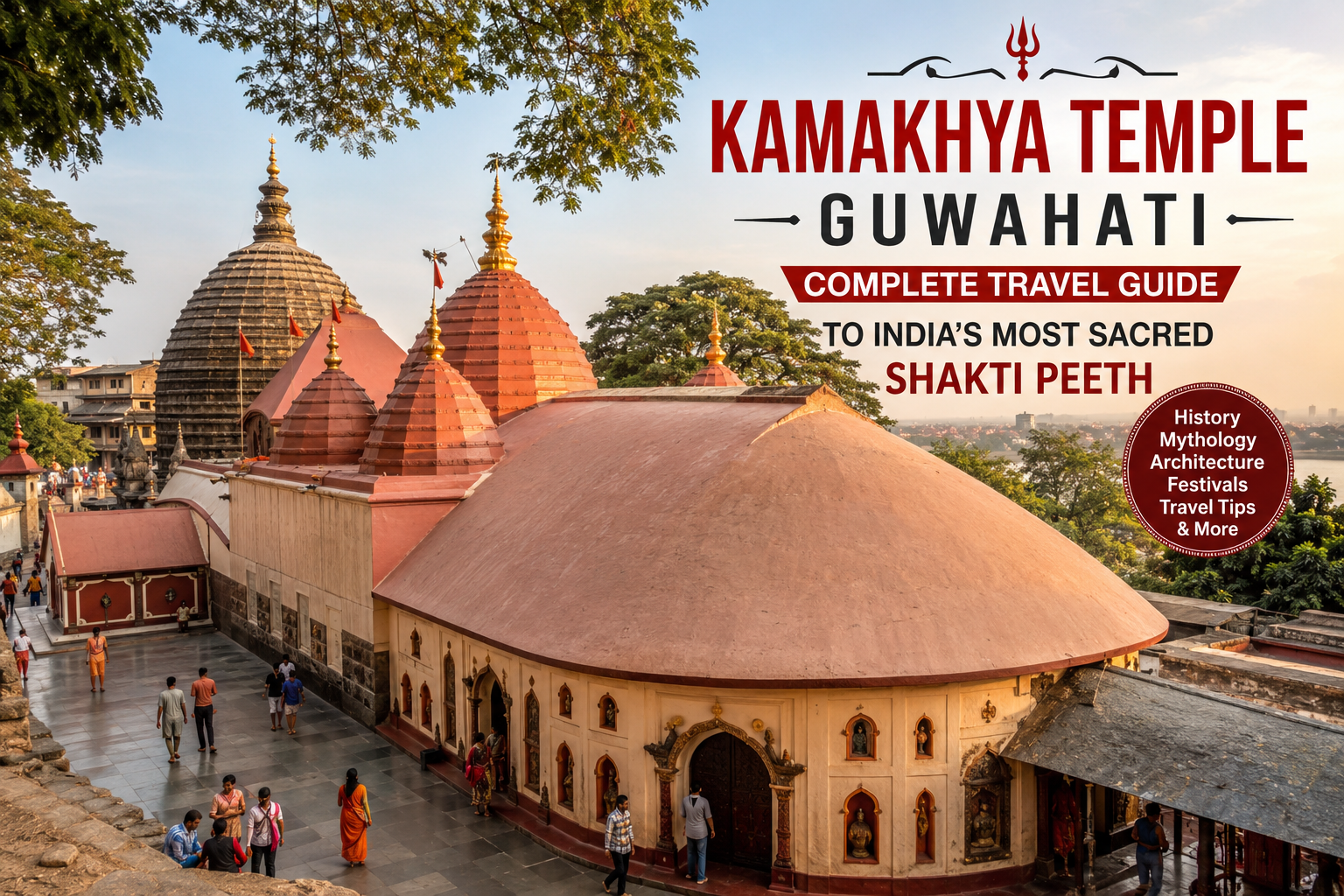
Perched atop the picturesque Nilachal Hills in Guwahati, Assam, Kamakhya Temple stands as one of the most revered and spiritually significant Hindu temples in India. Renowned as one of the 51 Shakti Peeths, this ancient temple attracts millions of devotees, pilgrims, history enthusiasts, and travelers every year. Beyond its religious importance, Kamakhya Temple offers visitors a unique blend of mythology, spirituality, history, architecture, and breathtaking natural beauty.
For travelers exploring Northeast India, a visit to Kamakhya Temple is more than just a pilgrimage; it is a journey into centuries-old traditions and beliefs that continue to shape the cultural identity of Assam. Whether you are seeking divine blessings, exploring India's spiritual heritage, or discovering the hidden gems of Guwahati, Kamakhya Temple deserves a prominent place on your itinerary.
In this comprehensive travel guide by Sort My Trip, we will explore everything you need to know about Kamakhya Temple, including its history, mythology, architecture, festivals, travel tips, nearby attractions, accommodation options, and the best time to visit.
Why Kamakhya Temple is Famous
Kamakhya Temple is one of the most important pilgrimage sites in India and holds immense significance among devotees of Goddess Shakti. The temple is dedicated to Goddess Kamakhya, a manifestation of Goddess Sati and the embodiment of feminine power, fertility, and creation.
Unlike traditional Hindu temples that feature idols, Kamakhya Temple worships a natural rock formation located inside a cave-like sanctum. This sacred rock is continuously nourished by an underground spring and symbolizes the creative and life-giving energy of the divine feminine.
The temple is also recognized as one of the world's most important centers for Tantric worship. Spiritual seekers, saints, and practitioners of Tantra from various parts of India visit Kamakhya Temple to perform rituals and seek spiritual enlightenment.
The temple's unique traditions, deep-rooted mythology, and powerful spiritual atmosphere make it one of the most visited religious destinations in Northeast India.
History of Kamakhya Temple
The origins of Kamakhya Temple date back to ancient times and are closely linked to the history of the ancient Kamarupa Kingdom. Historians believe that the temple existed as early as the 8th century, although references to the sacred site can be found in even older texts.
Over the centuries, the temple underwent several phases of destruction and reconstruction. Historical records indicate that the original temple structure was damaged during invasions. Later, in the 16th century, King Nara Narayan and his brother Chilarai of the Koch dynasty rebuilt the temple and restored its prominence as a major center of worship.
The present-day structure reflects a remarkable combination of indigenous Assamese architecture and classical Hindu temple design. The temple has survived political changes, invasions, and natural challenges while maintaining its spiritual significance.
Today, Kamakhya Temple remains one of Assam's most treasured cultural and religious landmarks, drawing visitors from across the globe.
The Mythological Story Behind Kamakhya Temple
The mythology associated with Kamakhya Temple forms the foundation of its spiritual importance.
According to Hindu mythology, Goddess Sati, the daughter of King Daksha, married Lord Shiva against her father's wishes. Daksha organized a grand yajna and deliberately chose not to invite Shiva. Feeling insulted by her father's disrespect toward her husband, Sati attended the ceremony and eventually sacrificed herself in the sacred fire.
Heartbroken by her death, Lord Shiva carried Sati's body and wandered across the universe in grief. To restore cosmic balance, Lord Vishnu used his Sudarshan Chakra to cut Sati's body into multiple pieces.
These body parts fell at different locations across the Indian subcontinent, which later became known as the Shakti Peeths.
Kamakhya Temple is believed to be the place where Goddess Sati's womb and reproductive organ fell. Therefore, the temple symbolizes fertility, motherhood, feminine energy, and the eternal cycle of creation.
This unique association makes Kamakhya Temple one of the most sacred pilgrimage destinations for devotees of Goddess Shakti.
Architecture of Kamakhya Temple
Kamakhya Temple is not only a spiritual marvel but also an architectural masterpiece.
The temple showcases the distinctive Nilachal style of architecture, characterized by a dome-shaped structure resembling a beehive. The exterior walls are adorned with intricate carvings depicting gods, goddesses, celestial beings, and mythological scenes.
The temple complex consists of multiple shrines dedicated to different forms of Goddess Shakti and various Hindu deities. Visitors can explore numerous smaller temples spread across the Nilachal Hills.
One of the most fascinating features of Kamakhya Temple is its underground sanctum. Instead of an idol, devotees descend a series of stone steps to reach a natural rock crevice fed by an underground spring. This sacred formation is worshipped as Goddess Kamakhya herself.
The temple's location atop Nilachal Hill offers spectacular panoramic views of Guwahati city and the mighty Brahmaputra River, enhancing the overall spiritual experience.
Religious Importance of Kamakhya Temple
Kamakhya Temple occupies a unique position in Hindu spirituality. It is regarded as one of the most powerful centers of Shakti worship and Tantra practices.
The temple represents the union of creation and divine feminine energy. Devotees believe that worshipping Goddess Kamakhya brings prosperity, fertility, success, and spiritual growth.
Thousands of couples visit the temple seeking blessings for marriage and children. Many pilgrims also come to pray for health, happiness, and protection from negative influences.
The temple's spiritual energy and sacred atmosphere create a profound sense of devotion that leaves a lasting impression on visitors.
Best Time to Visit Kamakhya Temple
The ideal time to visit Kamakhya Temple is between October and March.
During these months, Guwahati experiences pleasant weather, making sightseeing and temple visits comfortable.
Winter Season (October to March)
• Cool and pleasant temperatures
• Clear skies
• Comfortable travel conditions
• Ideal for exploring nearby attractions
Summer Season (April to June)
• Warm temperatures
• Early morning visits recommended
• Fewer crowds compared to festival seasons
Monsoon Season (June to September)
• Lush green surroundings
• Ambubachi Mela celebrations
• Heavy rainfall possible
For most travelers, winter offers the best overall experience.
Kamakhya Temple Timings
Visitors should check temple timings before planning their visit.
Temple Opening Time: 5:30 AM
Temple Closing Time: 10:00 PM
Darshan Timings:
Morning Session: 8:00 AM to 1:00 PM
Afternoon Session: 2:30 PM onwards
Special rituals and ceremonies are conducted throughout the day.
Ambubachi Mela: The Biggest Festival of Kamakhya Temple
Among all festivals celebrated at Kamakhya Temple, Ambubachi Mela holds special significance.
This annual festival usually takes place in June and marks the symbolic menstruation cycle of Goddess Kamakhya. During this period, the temple remains closed for three days and reopens after elaborate purification rituals.
The festival attracts:
• Devotees from across India
• Sadhus and saints
• Tantric practitioners
• Spiritual seekers
• International tourists
Ambubachi Mela is considered one of India's most unique religious festivals and offers visitors a rare opportunity to witness ancient traditions and spiritual practices.
How to Reach Kamakhya Temple
By Air
The nearest airport is Lokpriya Gopinath Bordoloi International Airport, located around 20 kilometers from the temple. Regular flights connect Guwahati with major Indian cities.
By Train
Kamakhya Railway Station is the nearest railway station. It offers excellent connectivity to Delhi, Kolkata, Mumbai, Chennai, Bengaluru, and other major destinations.
By Road
Kamakhya Temple is well connected by road. Visitors can easily hire taxis, auto-rickshaws, or use local buses from different parts of Guwahati.
Sort My Trip recommends booking a reliable local taxi for a comfortable and hassle-free experience.
Nearby Tourist Attractions in Guwahati
Umananda Temple
Located on Peacock Island in the Brahmaputra River, Umananda Temple is dedicated to Lord Shiva. Visitors can enjoy a scenic ferry ride while admiring the river's beauty.
Assam State Museum
History lovers can explore Assam State Museum to learn about the region's rich cultural heritage, archaeological treasures, and traditional art forms.
Brahmaputra River Cruise
A sunset cruise on the Brahmaputra River offers stunning views of Guwahati and creates unforgettable travel memories.
Navagraha Temple
Dedicated to the nine celestial bodies of Hindu astrology, Navagraha Temple is another important religious site in Guwahati.
Basistha Temple
Situated amidst lush greenery, Basistha Temple provides a peaceful escape from the city's hustle and bustle.
Local Food to Try in Guwahati
A visit to Guwahati is incomplete without tasting authentic Assamese cuisine.
Popular dishes include:
• Assam Laksa
• Khar
• Masor Tenga
• Pitha
• Duck Curry
• Bamboo Shoot Preparations
Food lovers will find numerous restaurants serving traditional Assamese delicacies alongside North Indian and international cuisines.
Shopping in Guwahati
Travelers can purchase souvenirs and local handicrafts from popular shopping areas such as:
• Fancy Bazaar
• Paltan Bazaar
• Pan Bazaar
Popular items include:
• Assam Silk Sarees
• Handwoven Textiles
• Bamboo Crafts
• Traditional Jewelry
• Assamese Tea
Accommodation Near Kamakhya Temple
Guwahati offers accommodation options for every budget.
Budget Hotels
Ideal for backpackers and budget-conscious travelers.
Mid-Range Hotels
Comfortable rooms with modern amenities at reasonable prices.
Luxury Hotels
Premium accommodations offering exceptional comfort and hospitality.
Sort My Trip can help travelers choose suitable accommodations based on their budget and travel preferences.
Travel Tips for Visiting Kamakhya Temple
• Visit early in the morning for shorter queues.
• Wear modest clothing.
• Carry drinking water.
• Follow temple regulations.
• Respect local customs and traditions.
• Avoid peak festival crowds if seeking a peaceful visit.
• Keep sufficient time for darshan.
• Book accommodation in advance during Ambubachi Mela.
Why Kamakhya Temple Should Be on Your Travel Bucket List
Kamakhya Temple is not just a religious destination but a place where spirituality, mythology, history, and nature come together. The sacred atmosphere, fascinating legends, unique rituals, and stunning hilltop location create a truly unforgettable experience.
Whether you are a devotee, a history enthusiast, a cultural explorer, or a traveler seeking meaningful experiences, Kamakhya Temple offers something extraordinary.
Conclusion
Kamakhya Temple in Guwahati stands as one of India's most sacred and spiritually powerful destinations. Its rich mythology, ancient traditions, remarkable architecture, and breathtaking surroundings make it a must-visit attraction in Assam.
From seeking divine blessings to exploring the cultural heritage of Northeast India, a visit to Kamakhya Temple promises memories that last a lifetime. As you plan your journey to Assam, let Sort My Trip help you create a seamless and unforgettable travel experience.
Discover the spiritual soul of Guwahati, witness the divine energy of Goddess Kamakhya, and immerse yourself in one of India's most extraordinary pilgrimage destinations with Sort My Trip.